
The Fall of Orbán: How Tisza Defeated Europe’s Illiberal Trailblazer
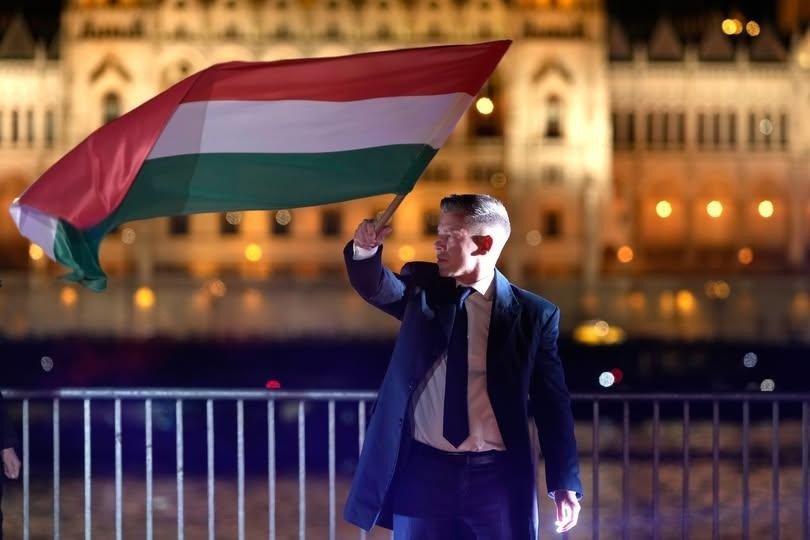
The Hungarian parliamentary elections on Sunday, 12 April, were closely watched around the world, despite the normally limited geopolitical significance of this landlocked country of fewer than 10 million inhabitants. The reason was Viktor Orbán, the incumbent who ultimately lost: long celebrated by far-right populists worldwide, he had become notorious as the leader who first provided a blueprint for illiberal electoral autocracy within a Western democracy (Reuters). His international significance was further amplified by his loyalty to Vladimir Putin, reflected in his repeated obstruction of EU measures supporting Ukraine.
Election day passed amid tense expectations. Independent survey organisations had shown a strong and growing lead for the oppositional challenger, Tisza, over Orbán’s party, Fidesz. There were, however, fears of electoral fraud on a large scale by Fidesz. Moreover, for days government media had warned that Ukraine was preparing to send violent provocateurs to topple the Fidesz government on election day. Analysts like András Rácz, who had previously correctly predicted Russian-style psychological operations in the course of the Fidesz campaign, interpreted this allegation as preparation for a false-flag provocation. In the event of a narrow result, post-electoral violence by Russian agents posing as Ukrainians could have provided the government with a pretext to crack down violently on Tisza and its supporters. In the end, and despite the government’s vast financial, structural, media, and coercive advantages, Tisza won with a resounding 13% lead over Fidesz. Already, around 9:30pm Orbán conceded defeat and people in the streets began to celebrate the end of 16 years of Fidesz rule.
Orbán and Fidesz
Viktor Orbán, like many in his closest circle of followers, comes from the Hungarian province, from a small village 47 km from Budapest. In his early years he appears as a conformist pro-regime careerist. He is alleged to have been an informant of the Hungarian counter-intelligence services in the early 1980s, and a secretary of KISZ, the youth organisation of the communist party, during his first years at university. Then in the time of early democratisation in the late 1980s he founded Fidesz, the Association of Young Democrats, which rapidly transformed itself into a political party representing radical liberal and passionately anti-communist positions. In the first free parliamentary elections in spring 1990, Fidesz gained 9% of the vote (giving it 21 out of 386 seats). With the leading conservative party in disarray after the death of its founder, in 1995 Fidesz suddenly moved to the centre right shedding many of its liberal supporters but gaining the centrist conservative block. In the 1998 elections the rebranded Fidesz already gained 29% of the vote, thus becoming the second largest party in parliament.
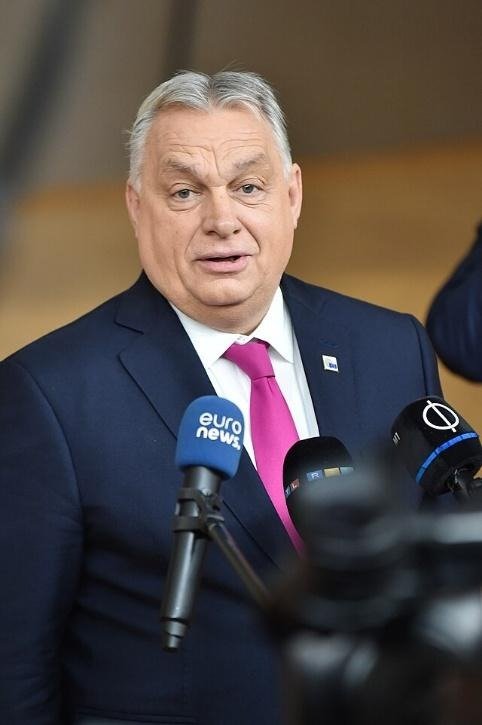
The 2010 elections brought Fidesz a 2/3 super majority allowing it to bring laws and even rewrite the Constitution without any effective opposition. This is when Fidesz began its gradual shift to the far-right thereby inventing the now common toolbox of far-right illiberal electoral autocracies. With the increasingly visible failure of its unorthodox economic policy, Fidesz began to abandon positive political messaging focusing instead on ever more divisive hate and fear campaigns, while simultaneously deconstructing democratic checks and balances and taking almost complete control of the Hungarian media landscape. He used the 2016 Syrian migrant crisis to launch a vitriolic anti-migration campaign challenging EU-policy on the subject. This campaign, based on fear of migration and an only thinly disguised anti-semitic agitation against a global liberal conspiracy against Hungary led by Soros (for a critique of the campaign as anti-semitic see), gained Fidesz a renewed 2/3 majority in the 2018 elections. From now on, opposing EU “dictatorship”, conspiracies by Soros and migration became a fixture of Orbán’s posturing.
Amidst flagging popularity and faced with an oppositional alliance to topple him in the April 2022 elections, he used the climate of fear amidst the recent outbreak of the war in Ukraine in February 2022 to accuse the opposition of Hungarian soldiers to fight alongside with Ukraine against Russia. This (false) accusation blasted out at the public through practically all media outlets and constantly even popping up on online advertisement resonated and brought Fidesz a renewed 2/3 majority – its last. From now on Orbán added anti-Ukraine and pro-Russia agitation to his repertoire of far-right tropes: migration, EU-dictatorship, liberal world conspiracy against patriots, homosexuals (usually referred to as paedophiles). The shift to the far-right cost him most of his centrist supporters who couldn’t tolerate Orbán’s open endorsement of Russia, but gained him the far-right and opened up so far apolitical population segments.
Orbán’s system of rule
Orbán’s system of rule, now copied by several illiberal populists among them Donald Trump, consists of a broad array of interlinked strategies, attitudes, and mechanisms all geared towards the preservation of power in highly controlled and pro-incumbent electoral autocracy. The capture of all public media and an up to 80% share of all non-state media (RSF) and their submission to Fidesz propaganda was central to this system. Equally central were the constant mobilisation of fear and hatred and the deliberate division of society disseminated by this pliant propaganda apparatus. The Facebook post of Zsolt Bayer, a government propagandist and regime insider, shortly after the victorious 2018 parliamentary elections is emblematic: “In Hungary there live 2.8 million decent Hungarian people, who voted for Fidesz. The remaining rotten animals can just get the fuck out of here” (quoted in Népszava).
The system further relied on a highly focused clientelistic network to deliver targeted benefits down to the lowest levels to regime supporters while excluding others. At the same time, rapid and ruthless retribution against dissenters within the party, within state administration and within all other state-influenced sectors including businesses owned by state-affiliated businesses helped to maintain discipline and loyalty. Fidesz’ system also included the capture of the judicial system including the supreme court and of parts of the prosecution, the police, the army and the secret services. There were also persistent suspicions that parts of the opposition were compromised, co-opted, or tactically manipulated by the regime.
His attempt to build up an efficient and competitive domestic sphere of entrepreneurs and businesses through the preferential allocation of contracts, legal concessions granting semi-monopolies and other benefits failed miserably but allowed it to recycle money to the party and to buy up and dominate the media landscape. As a side effect, it also resulted in a feeding frenzy of corruption and embezzlement of the Fidesz elite. Orbán’s former schoolmate, Lőrinc Mészáros, generally considered Orbán’s frontman, is now the richest man in Hungary and #823 on the Forbes list of billionaires with an estimated wealth of $4.8B. István Tiborcz, Orbán’s son-in-law is also considered as one of the richest in Hungary (Direkt36).
As we shall see, despite its overwhelming emphasis on power-preserving pragmatism, the Orbán system contained a number of in-built weaknesses that in the longer run undermined its own capacity for effective governance, economic performance, and public service delivery – and thus to stay in power.
Hubris
In 2024, following Fidesz’ sweeping victory in the elections two years earlier Orbán’s position seemed unassailable. The opposition was frustrated and in disarray and the growing frustration had no outlet. This was the moment Péter Magyar first entered the scene. Magyar comes from a conservative Hungarian family and through his marriage to the then Minister of Justice, Judit Varga, he was a member of Fidesz’ inner circle though without a political executive position.
The immediate trigger was a scandal surrounding President Katalin Novák’s pardon of the deputy director of the Bicske children’s home convicted for helping to cover up sexual abuse in his institution, a decision countersigned by Varga. Familiar with the functioning of the Orbán system, large parts of the public assumed that the pardon could not have happened without Orbán’s explicit order. The pardons led to a massive public outcry galvanising discontent with the government.
Magyar appears on the scene
Magyar, in the meantime divorced from Varga, seized this moment to break publicly with Fidesz, denouncing the regime from within and, within weeks, transforming himself from a little-known insider into the most serious new opposition challenger Orbán had faced. As his movement grew, he turned to the recently registered but still little-known party, Tisztelet és Szabadság Párt (Tisza, or the Party of Respect and Freedom) which he joined in July 2024 and was immediately elected as its president. Tisza’s popularity continued to grow. By autumn 2024, opinion polls by independent survey firms consistently showed the party leading Fidesz.
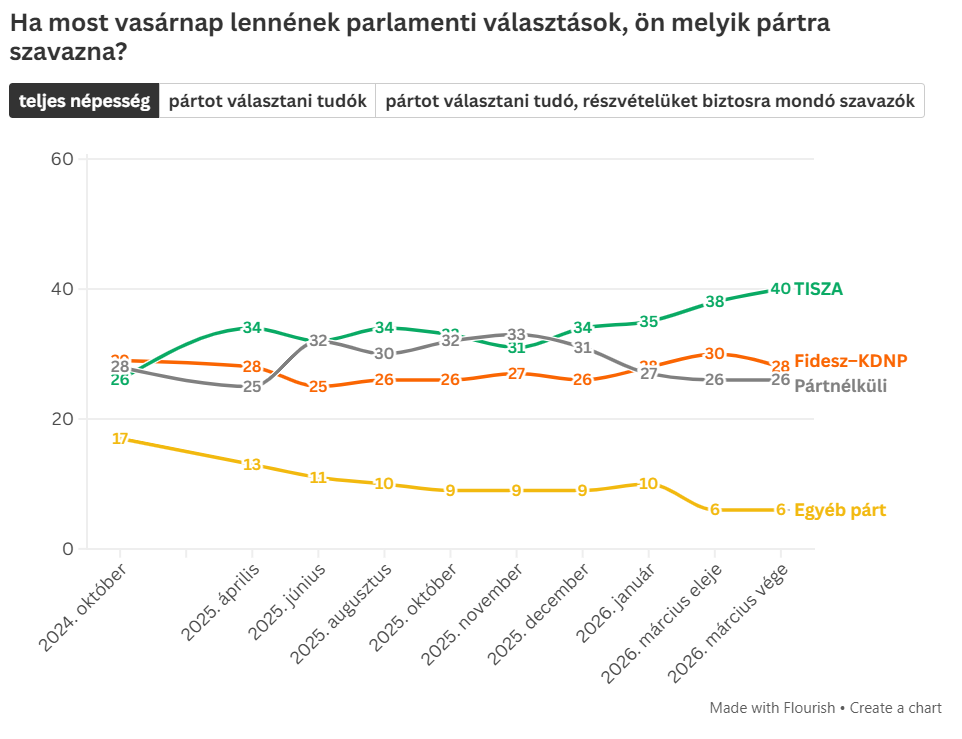
As Tisza’s popularity grew, it refused to cooperate with other opposition parties claiming that they were compromised and infiltrated by the government sucking instead their supporters away. Some parties, such as Momentum, quickly announced that they would not contest the 2026 election in order to help Tisza win the elections. A whole subculture of opposition voters who in the last 10 years moved from one party to next to oppose Fidesz now rallied around Tisza.
The 2025-26 election campaign
The election campaign that heated up from autumn 2025 proved to be one of the dirtiest in Hungary’s post-1989 history. One of its lowest points was the appearance of secretly recorded compromising footage in February 2026 involving a consensual sexual encounter between Magyar and his former girlfriend. Subsequent reporting based on police documents and investigative journalism suggested that, at the time, Evelin Vogel was in contact with figures close to Fidesz’s innermost circle (Telex). As in the 2022 election, the Fidesz propaganda machine campaigned on false accusations against Tisza: that it wanted to send Hungarian troops to fight alongside Ukraine against Russia and, on the basis of a falsified document later challenged successfully in court (Telex), that it planned sweeping tax increases for the population. Late February government propaganda began to speak about having received information about an imminent Ukrainian attack on Hungary’s energy infrastructure – interpreted by experts as the psyops preparation of a false flag attack (Rácz). In the end, an odd incident indeed materialised in the form of an explosive find in Serbia close to the gas pipeline leading to Hungary (source). However, only 23% of the Hungarian population interpreted this as serious threat while 61% believed that it was a deceptive operation. Even Fidesz voters were partly sceptical (59% serious threat, 18% deceptive operation; Medián).
The campaign was also marked the constant emergence of scandals linked to Fidesz, even accelerating in March, when almost on a daily basis outrages broke. It started with new reports on child abuse and even the prostitution of children in a children’s home ignored by authorities due to alleged links to high level political backers (source).
By March 2026, credible reporting and public assessments by András Rácz indicated that at least three Russian state or state-linked organisations were interfering in Hungary’s election campaign in support of Fidesz (e.g. VSqaure). Contrary to previous campaigns, Fidesz didn’t just allow itself to “be helped” by Russia but cooperated actively in these intelligence operations (Telex). Also in March Bence Szabó a captain-ranked senior investigator in the National Bureau of Investigation’s cybercrime division turned to the public that Hungary’s domestic security service had pressured him to fabricated a child-pornography lead against two IT specialists linked to Tisza and to ignore evidence that the real operation aimed to infiltrate or compromise the party’s IT system (Direkt36). On 23 March, the investigative journalist Szabolcs Panyi, published the transcript of a discussion between Hungarian Foreign Minister, Péter Szijjártó, and Russian Foreign Minister Sergei Lavrov in which Szijjártó asks Russia to support rabid anti-Hungarian far-right Slovak party to the reach the 5% limit in upcoming elections. Other transcripts followed in which Szijjártó directly reported to Lavrov on ongoing negotiations in the EU. The transcripts appear very likely to have reached Panyi via European intelligence channels.
Lastly, on April 2, Captain Szilveszter Pálinkás also blew the whistle reporting that upon the request of Gáspár Orbán, the Prime Minister’s son, the government was planning to send a contingent of soldiers to The Chad, to fight on behalf of the government against rebels (Telex). The internal planning of the Ministry of Defence calculated with up to 50% casualties among its soldiers – this revelation was particularly damning in light of the false accusations against Tisza that it wanted to join the Ukraine-Russia war.
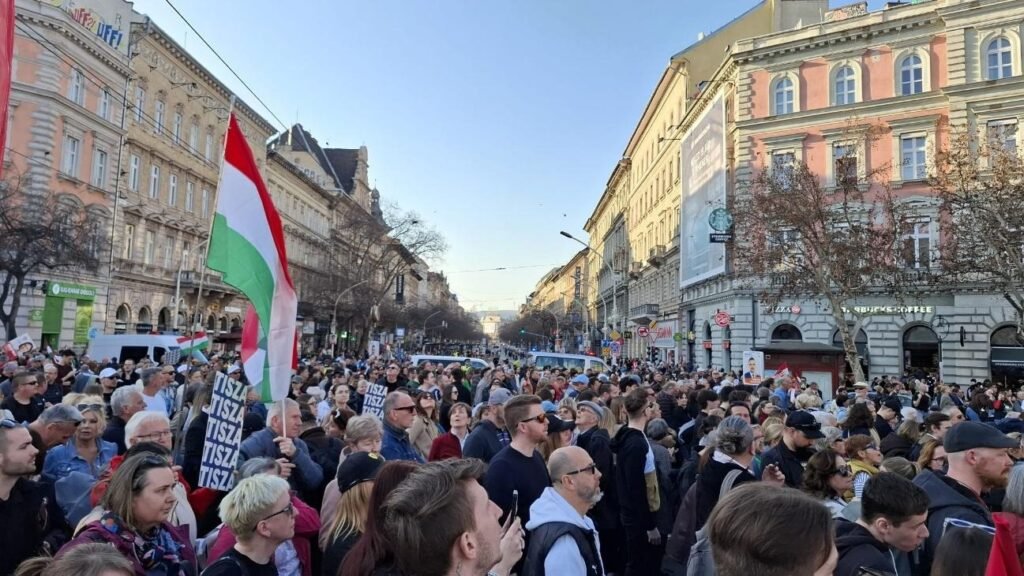
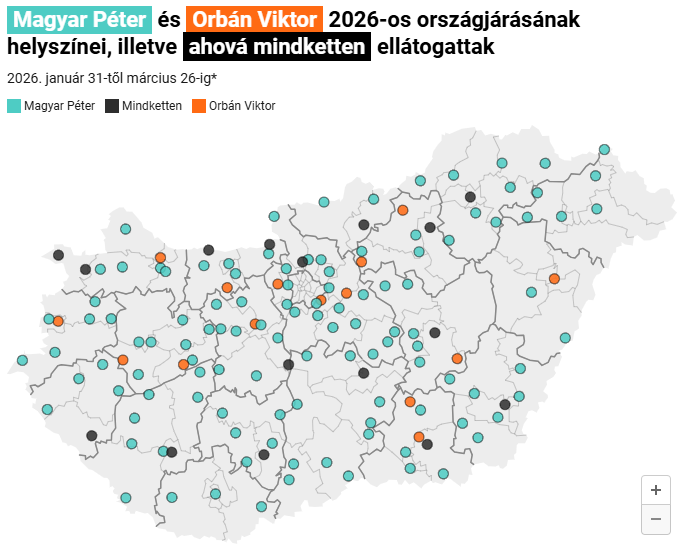
While Fidesz was running smear campaigns against Péter Magyar and Tisza, Magyar was constantly touring the country visiting provincial towns, and small villages with practically no access to media other than the state controlled public tv and radio emitting Fidesz propaganda. During the final phase of the campaign, he visited up to seven settlements a day often starting at 7am or 8am. When Orbán finally also started to campaign with open access stages (something he hadn’t done for years), he was regularly booed by young counterdemonstrators chanting “mocskos Fidesz” (dirty Fidesz).
Magyar also showed a special ability to react and parry Fidesz smear campaigns – often with the help of, as he alluded to, Fidesz-insiders providing him advance warning. For example, just before the bedroom video showing him and his ex-girlfriend was made public, he came out with an announcement that he had information about such a video. “I am a 45-years old man, I do have a sex life” (Telex).
It is possible that Fidesz and its Russian supporters considered more robust, even kinetic measures to hold on to power. There were constant rumours about the elections being cancelled, false flag operations (which materialised in a very harmless way) and of a violent crackdown on the opposition. However, faced with constant whistleblowing and defections even from within Fidesz and the security institutions, Orbán must have had doubts, to what extent he actually controlled his own apparatus. As on election night results showed – despite possible Fidesz fraud (Euronews) – a 13% lead for Tisza, he gave up and conceded defeat.
The reasons for Tisza’s success
How can Tisza’s success be explained? At the broadest level, it reflected the convergence of three developments: a political and socio-economic context that had become increasingly ripe for change, the gradual exhaustion of Fidesz’s long-dominant model of far-right hate and fear mobilisation, and the delayed but ultimately effective adaptation of an opposition challenger to that model. The factors discussed below should be read within this broader shift.
Context
Turning to the context, the moment was ripe. For years many Hungarians could live tolerably, Fidesz supporters even well, under Fidesz. However, by the time TISZA emerged in 2024, the deterioration of everyday life and the general decay had become painfully visible.
In an important sense, this decay was not merely a contingent failure of the Orbán system, but a latent consequence of its inner logic. The regime was built above all on power preservation: on political control, personal loyalty, the weakening of institutional constraints, and the subordination of expertise to partisan objectives. For a considerable period, this model proved highly effective politically. Over time, however, the erosion of checks and balances, the politicisation of administration, and repeated intervention in the economy to reward loyalists and disadvantage opponents contributed to mounting inefficiencies, corruption, and declining state capacity.
A May 2025 survey of Policy Solutions found that out of 23 policy fields ranging from “supporting families” to the “state of health care” only in two did a plurality perceive improvement “over the past 15 years”, that is since Fidesz gained office, whereas in all others a plurality (8 cases) or even a majority (13 cases) perceived a worsening. The worst assessments related to health care (67%), social inequalities (63%) and the real value of wages (61%). These perceptions are linked to negative objective indicators. Here just two examples: Hungary had gone through a severe inflation shock with total cumulative inflation over 2020–2024 reaching 52.3% (European Commission 2025). Hungary also has one of the lowest health expenditures in the EU (6.3% of GDP in 2023 as compared to 10% for the EU as a whole; World Bank).
Moreover, corruption and the conspicuous accumulation of wealth by the Fidesz elite had become widely known and plainly visible across the country, a perception reflected in Transparency International’s ranking of Hungary as the EU’s most corrupt member state with its score continuously deteriorating for several consecutive years. Lastly, though less indicative of the relative pain felt by Hungarians, a comparison with a peer group of neighbouring EU member states still underlined the extent of Hungary’s stagnation: across the range of economic and social indicators Hungary emerges as the consistently worst-performing case in the group.
Second, Tisza certainly benefitted from the fact that despite of Orbán’s constant incitement against “Brussels” a large majority of Hungarians still favour EU-membership (e.g. 84% in October 2024) and generally a Western orientation of the country. Orbán’s turn towards the East, and especially towards Russia, has remained deeply unpopular: in June 2025 84% didn’t trust Putin and 79% had a negative view of Russia (hvg.hu citing PEW Research). This was clearly reflected in one of the most common chants at Tisza demonstrations: “Ruszkik haza!” (Russians, go home!).
A third contextual factor that merits consideration is Fidesz’ move to the far right. Until about 2015 Fidesz always took care of presenting itself as the reasonable conservative option always having a viable party to its far-right. By moving to the far-right itself, it opened up space for a conservative-centre-left-and-liberal cooperation. This was already attempted as a cooperation project in 2022. The dismal failure of this project is partly at least likely due to the outbreak of the Russia-Ukraine war and the sense of insecurity and fear that prevailed in Hungary, a neighbour to Ukraine, in the first weeks of the conflict. Fidesz masterfully adjusted its election campaign to make use of the opportunity, accusing the opposition of dragging Hungary into the conflict and offering himself as the only option to keep Hungarians safe. By 2025-26 the war had become more predictable and the sense of imminent danger was not prevalent diminishing the plausibility of the escalation claims.
Lastly, Fidesz never actually had the support of the majority of Hungarians. Non-Fidesz supporters were always a majority despite Fidesz’s repeated 2/3 majorities. It was more about uniting a fractious oppositional sentiment and mobilising the non-voters. In this, Tisza finally succeeded.
Saturation and exhaustion of alt-right hate mobilisation
These two suggestions are still highly speculative, but they merit investigation as a possible powerful mechanism contributing to Fidesz’ defeat – and more broadly suggesting a vulnerability of contemporary far-right consolidation.
For one, Hungarian society appears to have grown increasingly immune to fake news (also thematised by András Rácz) with Fidesz experiencing diminishing returns to its hate, fear and smear campaigns. Investigative reporting by Telex/Direkt36 suggested that even within Fidesz there was surprise at the declining effectiveness of its usual smear tactics: by spring 2025 party figures had concluded that even the campaign linking Tisza to Ukraine had failed to inflict any serious political damage, and some admitted they had underestimated Magyar for too long. Moreover, Tisza’s communication quickly identified emerging Fidesz false news hate and fear campaigns, ridiculed them, predicted their intended trajectory and blunted them.
In the same vein, Hungarians appear to have had enough of divisive rhetoric and mobilisation through hate. Accordingly, one of Magyar’s consistent key messages was conciliatory – with exception of the Fidesz elite, which he repeatedly promised to persecute. His victory speech he prominently stated: “Love defeated the contempt and arrogant lust for power that the swaggering tyrants of our age feel toward the Hungarian people” (444). Here, too, one can find parallels to Márki-Zay and to the Serbian student movement also campaigned and in the case of the Serbian movement, continue campaign on a message of conciliation.
Oppositional adjustment
However, it was not just a matter of timing and not just a question of saturation with hate propaganda. Magyar’s and Tisza’s strategy also played a key role in their electoral victory. Looking at Tisza’s choices and comparing them, albeit cursorily, to the previous opposition effort in the 2022 elections and to the choices and dilemmas faced by other democratic opposition movements, for example in Serbia or Georgia, reveals strong similarities in both the dilemmas and, in part, the solutions, though not always in the quality of execution. Here a brief overview:
- The question of cooperating with established opposition parties who due to previous defeat, constant internal squabbles have often lost their credibility for large parts of the oppositional electorate. Moreover, there is widespread suspicion, in my opinion often justified, that they are infiltrated by the ruling party. Tisza decided against all cooperation with existing parties and very seriously vetted all applicants. Momentum, a Hungarian youth party with some remarkable success in the late 2010s also attempted but its base appears to have been to narrow and had to give this stance. The Serbian student movement currently also seems to have chosen a similar approach of minimal case-by-case cooperation only.
- Challenging the ruling far-right party from the centre-right, avoiding too liberal positions and topics that are sensitive to more conservative voters; using national symbols “but reinventing their meaning” (as some in the Serbian student movement have said; personal interview); Magyar, as the candidate for 2022 elections, Péter Márki-Zay was a conservative Christian who challenged Fidesz from a centre-right position. Magyar, in addition to using all symbols of Hungarian patriotism, constantly avoided statements on issues such as homosexual marriage usually only stating that we are all Hungarians and never criticising such oppositionals who participated, for example, in Pride.
- Constantly touring the country visiting even small villages, not remaining in the comfort zone of the large cities, where opposition movements enjoy broad sympathies. As mentioned before, Magyar dedicated a great amount of energy and time for such visits in his campaign. Some in the Serbian student movement consider such an outreach to the villages as one of its most important assets and consolidated it in a programme “one student for every village”.
- Building up a highly professional party and campaign organisation and motivating highly trained professionals to participate.
- Attracting high-profile professionals such as Romulusz Ruszin-Szendi, the former supreme commander of the Hungarian military, István Kapitány, a former Shell CEO or Anita Orbán, former deputy CEO of Vodafone Hungary. All these professionals signalled to the electorate that Tisza did not just criticize Fidesz, but was in fact capable of taking over the country and to govern.
- Lastly, oppositional PR appears to have correctly identified the shifting mood in Hungarian society and discredited government-linked fake news initiatives and emphasised reconciliation and mutual respect.