Bolivia and Its Difficulty in Building Democracy
Bolivia has once again appeared on the international stage. It is no wonder; imagine fifty days of road blockades, empty supermarkets, people suffering because they do not have access to the minimum supplies, hospitals on the verge of collapse, more than ten deaths due to the inability to reach clinics, and economic damage in a bankrupt country.
It is easy to fall into quick interpretations that explain little, particularly those circulating on social media seeking heroes and villains. To think, for example, that this is an ultra-right neoliberal government seeking to subjugate noble Indigenous peoples who have been dominated for 500 years. Nothing could be more caricatured. The problem is complex and has many variables.
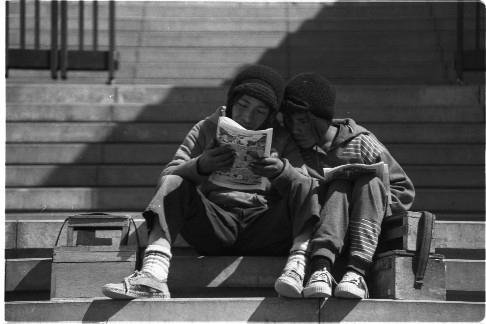
The two main actors in the conflict are the government of Rodrigo Paz and the blockaders. The government, democratically elected with more than 54% of the vote, is characterized as slow, unimaginative, weak, and sustained by fragile alliances. The blockaders represent different sectors with specific demands, ranging from complaints about the quality of gasoline that damaged several vehicles to criticism of broader laws. The only demand on which they converged was the resignation of the president. Furthermore, in many cases they are trade groups fighting for their sectoral interests and for the privileges they enjoyed years ago. Their strategy has been to block roads at strategic locations and engage in uncontrolled violence (burning offices, attacking passersby, assaulting public officials).
The third silent actor is the unorganized civilian population that watches the spectacle of the blockades while suffering their consequences on a daily basis. Since it is not an organized group, it does not act as a collective body, does not protest, and does not speak out except through alternative formats with little influence, and its rights are violated while enduring dramatic consequences.
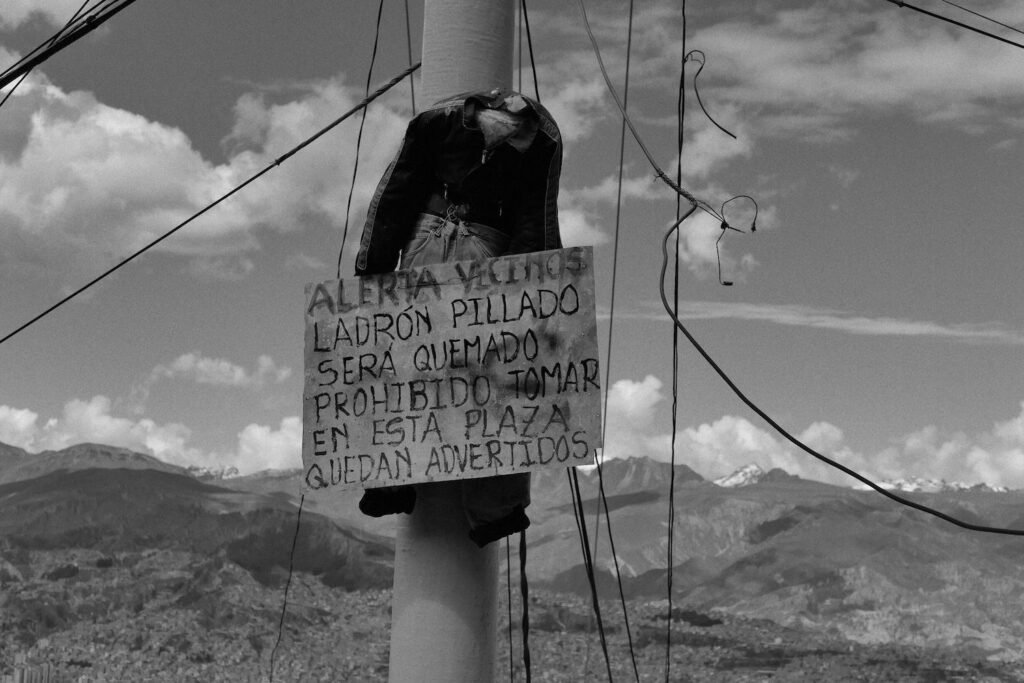
It should be noted that Bolivia has been going through a multidimensional crisis inherited from the period of government of Evo Morales and his party, the Movement Toward Socialism, after twenty years in power. It is an economic, political, ecological, and societal crisis. President Paz received a dying country, and most of his initiatives during his short term in office were rejected, forcing him to repeal strategic decrees; it is clear that he has only resolved some urgent matters, nothing more.
Nor should it be forgotten that one of the actors promoting the current blockade—although not the only one—is former president Evo Morales, who faces serious accusations of pedophilia and corruption. In addition, the factors of drug trafficking and irregular armed groups are at play, although there is very little information available on either issue.
International interventions have not helped resolve the crisis. From Colombian president Gustavo Petro, who made clumsy statements, to the outbursts of Donald Trump’s administration, or the supposed Argentine human rights observers who arrived in La Paz with intentions that, rather than observing, were those of political militants seeking to intervene in domestic affairs and contribute to destabilizing democracy. Only Brazilian president Luiz Inácio Lula da Silva was balanced and respectful, reiterating his solidarity with the Bolivian government and its people and urging respect for democratic institutions and the rule of law while avoiding any path of violence.
Despite the difficulties, on June 17 a dialogue was achieved between the government and one of the main mobilized sectors, the Bolivian Workers’ Central, as well as a relative humanitarian pause at the blockade points. The meeting happened only with great difficulty and, although it has not yet produced conclusive results, it at least brought the parties to the negotiating table and led to the withdrawal of the demand for the president’s resignation.
The coin is in the air and many things may happen. What is clear is that any solution must take place within the framework of democracy and respect for human rights. We shall see which way the balance tips.
Hugo José Suárez. Researcher at the Institute for Social Research of UNAM. Member of the Bolivian Academy of Language.