
The Other Side of the World Cup: Organizations Demand Justice for Migrants, the Disappeared, and Victims of Violence
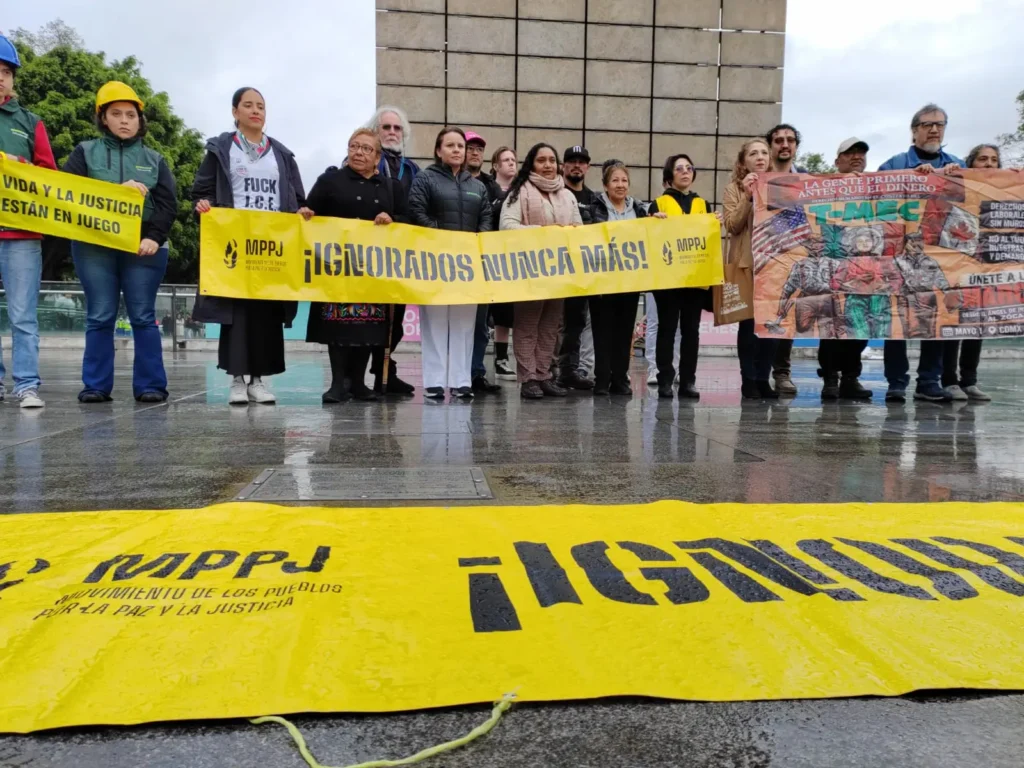
As stadiums put the finishing touches on preparations for the opening of the 2026 FIFA World Cup this Thursday, June 11, a coalition of organizations from Mexico, the United States, and Canada used the global attention surrounding the tournament to place issues they believe are absent from the official narrative at the center of the conversation: disappearances, migration, armed violence, forced displacement, the climate crisis, and labor rights.
On Tuesday morning, activists, relatives of disappeared persons, human rights defenders, and environmental organizations gathered at the Estela de Luz monument on Paseo de la Reforma, where they unfurled a large banner and presented a joint agenda addressed to the governments of the three World Cup host countries.
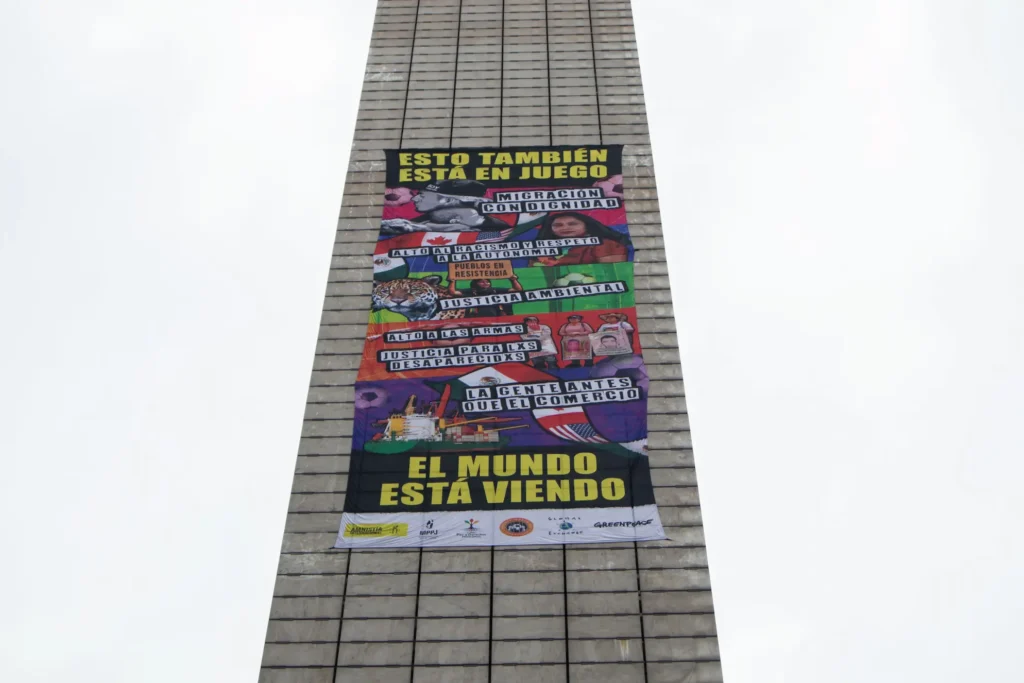
The message was clear: behind the planet’s biggest soccer celebration remain problems affecting millions of people across North America.
“At this moment, when the entire world is watching Mexico, the United States, and Canada, this is the precise time to highlight that not everything is about money, that not everything is about the large capital invested in the World Cup,” said Elena Gutiérrez, director of Global Exchange’s Mexico-U.S. program.
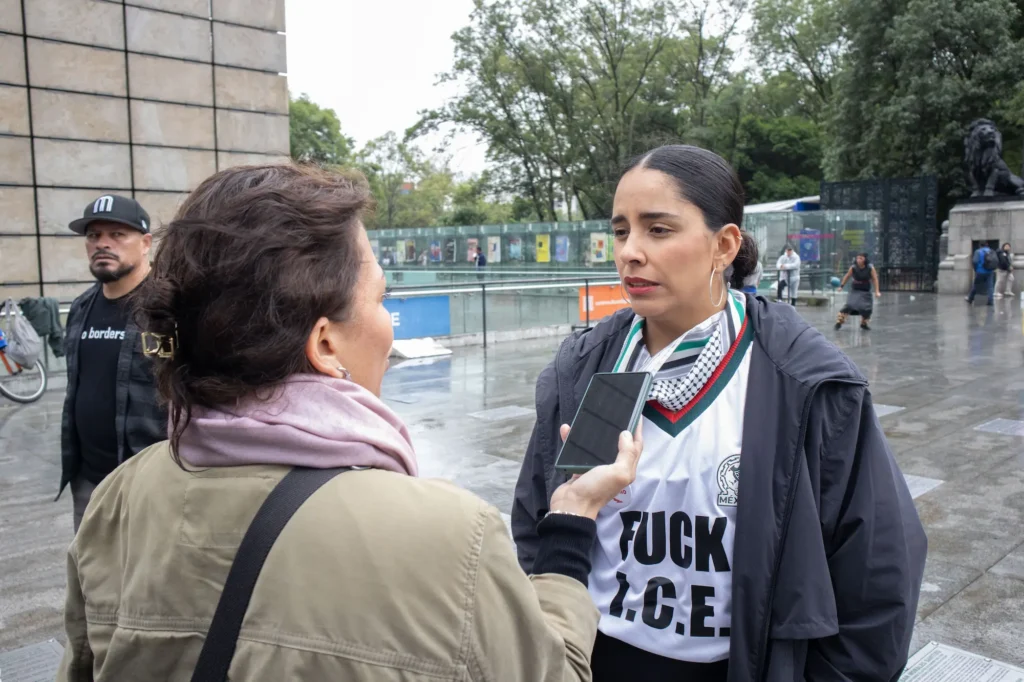
The activist explained that the organizations seek to take advantage of the tournament’s international visibility to demand concrete commitments from governments regarding human rights, environmental protection, and social justice.
“We need a response now, and urgently,” she added.
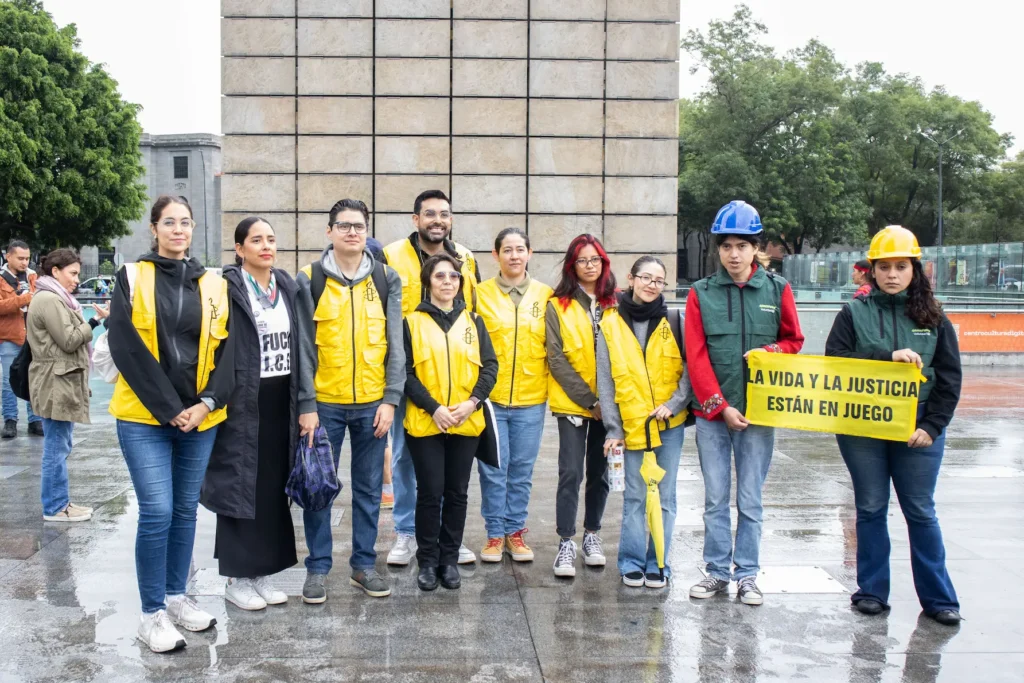
The gathering brought together representatives from Global Exchange, Casa Tochan, the National Day Laborer Organizing Network (NDLON), Disarming Fear (Desarmando el Miedo), the Movement for Our Disappeared in Mexico, the José María Morelos y Pavón Regional Human Rights Center, the Human Rights Advocacy Assembly on the USMCA, Amnesty International Mexico, and Greenpeace Mexico.
One of the issues that resonated most strongly during the conference was Mexico’s disappearance crisis.
Mina Ruiz, mother of Roberto Córdova Ruiz, who disappeared in Tamaulipas in 2010, recalled that the country now has more than 134,000 disappeared and missing persons.
“They say so casually: the ball is coming home. But what about our children? When are they coming home?” she asked.
The statement became one of the most emotional moments of the event and captured the demands of hundreds of families who continue searching for their loved ones.
Edith Olivares Ferreto, executive director of Amnesty International Mexico, said that enforced disappearances remain one of the most serious human rights crises in the country.
“In Mexico, what is at stake is access to truth, memory, justice, and reparations,” she said.
Olivares noted that thousands of mothers, wives, sisters, and daughters continue carrying out search efforts that should be the responsibility of state institutions.
The situation of migrants also occupied a central place in the agenda presented.
Gabriela Hernández, director of the Casa Tochan shelter, warned of the risk that security operations linked to international events could end up affecting vulnerable populations.
“Let soccer not be used as a pretext for repression; let soccer not be used as a pretext to launch more operations,” she said.
The activist also called for mechanisms that would allow the temporary regularization of migrants living in Mexico who may not qualify for refugee status but nevertheless face vulnerable conditions.
Representing the National Day Laborer Organizing Network, Luis Alberto Valentán shared the experiences of people who have lived in the United States for decades and now face increasingly restrictive immigration policies.
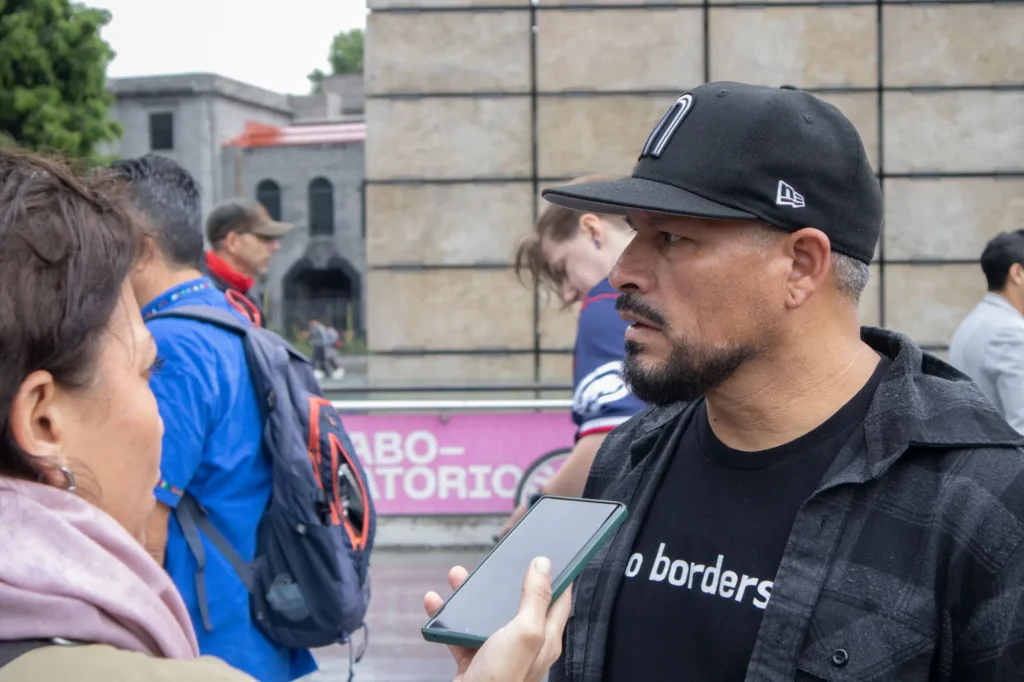
“We go to the United States and work year after year, for more than 20 or 30 years, paying taxes and trying to be good citizens. We contribute not only through our economic contributions, but also culturally and across generations,” he said.
Armed violence was another major focus of the gathering.
Alberto Solís, a member of Disarming Fear, recalled that most homicides committed in Mexico involve firearms and called on the governments of Mexico and the United States to assume shared responsibility for arms trafficking.
“Today, two days before the start of the World Cup in our region, we tell the governments of Mexico and the United States that denialism, militarization, and threats will not lead us to a solution,” he said.
On environmental issues, organizations used the event to warn about the risks faced by communities and land defenders.
Gustavo Alanis, executive director of the Mexican Center for Environmental Law (CEMDA), noted that Mexico remains one of the most dangerous countries in the world for environmental defenders.
According to data presented by the organization, 135 incidents of aggression against environmental defenders were documented in 2025, resulting in 314 specific attacks and 10 killings.
For her part, Aleira Lara, executive director of Greenpeace Mexico, argued that the climate emergency and biodiversity loss cannot be left out of the World Cup conversation.
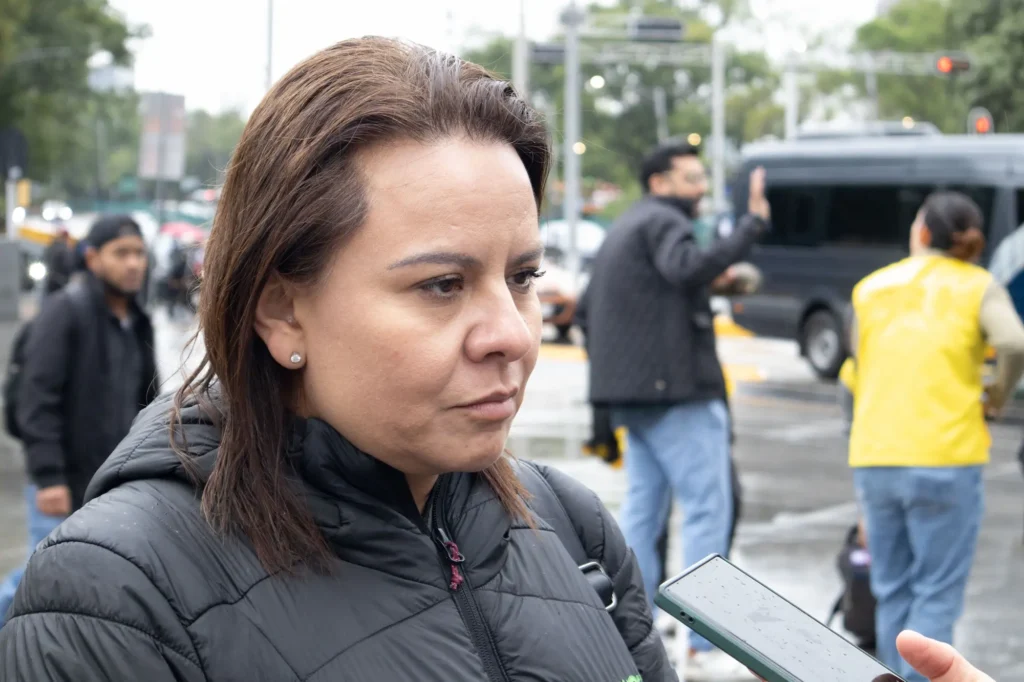
“There is no social justice without environmental justice,” she said. “We are here because we believe these demands should be as visible as the World Cup itself.”
The review of the United States-Mexico-Canada Agreement (USMCA) was also among the concerns raised during the event.
Ivette Lacabada Domínguez, spokesperson for the Human Rights Advocacy Assembly on the USMCA, argued that the upcoming review of the trade agreement must include the participation of communities affected by its impacts.
“The review of the USMCA cannot continue to be a closed dialogue among governments, economic elites, and large corporations without considering the needs and human rights of the population,” she said.
Meanwhile, Teodomira Rosales, of the José María Morelos y Pavón Regional Human Rights Center, denounced the violence faced by Indigenous and Afro-Mexican communities in Guerrero, as well as the forced displacement affecting numerous families.
“We can’t take it anymore. Stop armed violence,” she said.
The call came just two days before Mexico once again takes center stage in the global soccer spotlight. On Thursday, June 11, the Azteca Stadium—temporarily renamed Mexico City Stadium for the tournament—will host the opening match of the 2026 World Cup, making Mexico the first country to host three World Cups.
For the organizations gathered at the Estela de Luz, the magnitude of that international spotlight also represents a unique opportunity to bring visibility to issues they consider urgent.
As the world counts down the hours until the opening whistle, they are seeking to ensure that international attention does not remain focused solely on the field.
Because they insisted, beyond goals and packed stadiums, other stories also deserve to be seen.