
Serbia, Between Democracy and Distrust
Although six out of ten citizens support democracy, a similar proportion believes that it does not work in the country. Amid institutional erosion, the student movement is emerging as a possible alternative to the government of Aleksandar Vučić.
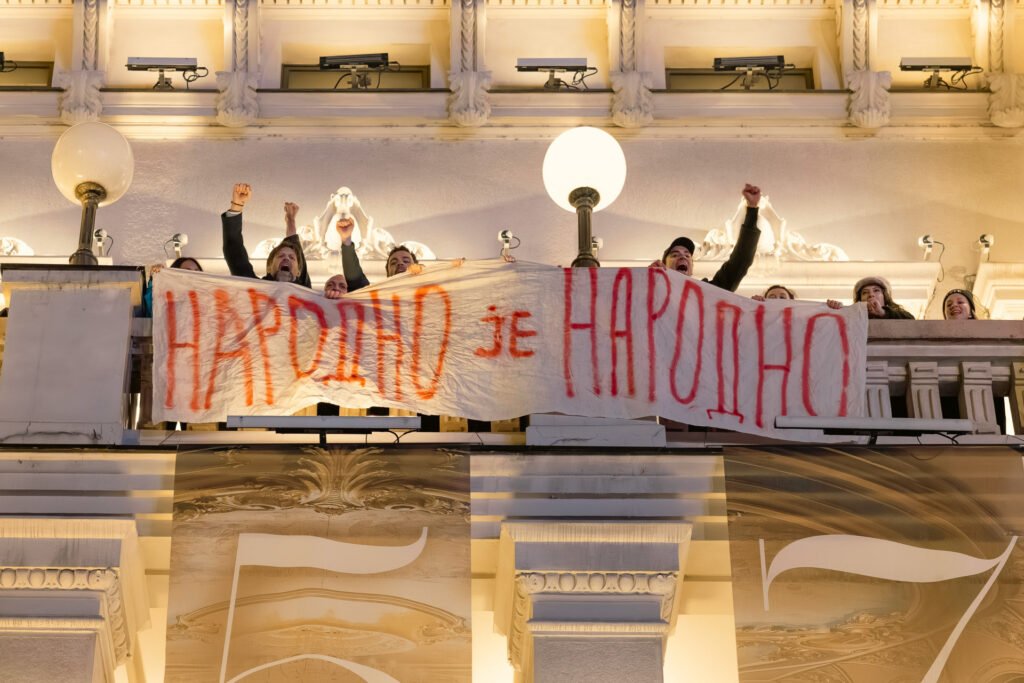
Serbia retains a citizenry largely convinced that democracy is the best political system, but deeply dissatisfied with the way it functions in the country. While trust in the presidency fell from 60 to 35 percent in just three years, the student-led protests maintain the support of six out of ten residents and are beginning to translate that support into a possible electoral alternative to the ruling Serbian Progressive Party.
This contradiction — believing in democracy while distrusting the institutions responsible for implementing it — is one of the main findings of a survey conducted in June 2026 by CRTA, PulsR and Stanford University’s Democracy Action Lab (DAL).
In an interview with Terra 360, Alberto Díaz-Cayeros, co-director of DAL, explained that the phenomenon is not limited to Serbia. In several Latin American countries, there is also a growing gap between support for democracy as a principle and the assessment of the results it delivers to the population.
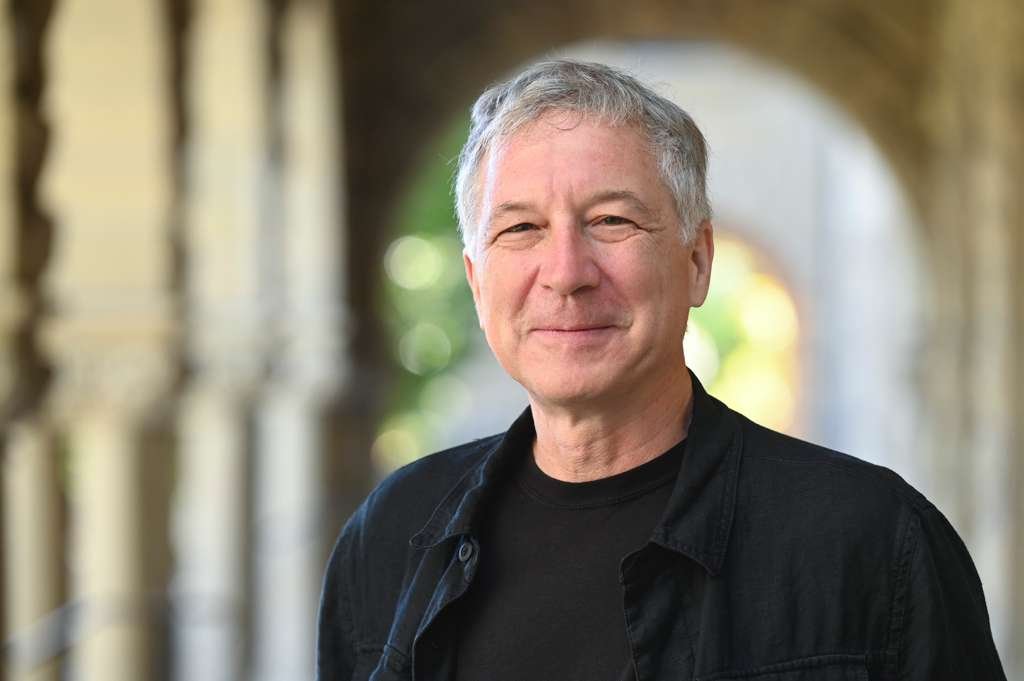
“If democracy does not give you the most basic things a citizen needs, why would I go out and defend it?” the researcher asked.
Democracy should translate into public safety, healthcare services, education, drinking water and governments capable of being held accountable, he noted. However, when citizens believe that judges are corrupt, that politicians serve special interests and that presidents offer rhetoric without results, their willingness to defend institutions declines.
“We do not have a democracy that delivers results, and I believe the same thing is happening in Serbia,” he said.
Although the Democracy Action Lab focuses much of its work on Latin America, its researchers turned their attention to Serbia because of the strength and persistence of a student movement that has placed the restoration of democracy at the center of public debate.
Díaz-Cayeros explained that pro-democracy movements are currently on the defensive. In numerous countries, civil society is fragmented, and the organizations that defended human, political and democratic rights during the 1990s and 2000s have lost vitality.
At the same time, candidates who promise to solve social problems by concentrating power and curtailing freedoms and checks and balances are becoming increasingly attractive in Latin America.
“The Bukele model is resonating very, very strongly throughout Latin America. Every country has its candidate who comes forward saying, ‘I am the new Bukele,’” he said.
Within this context, the Serbian movement drew DAL’s interest because it shares similarities with the student mobilizations that have marked the histories of Argentina, Mexico and Chile.
“In Latin America, we have more to learn from a place like Serbia, with such a complex history, with tremendous upheavals, with a historical responsibility for a genocide. In other words, it is an extremely complicated country, and that is what our countries are like,” he maintained.
Serbia also occupies a complex geopolitical position. Its government alternates between rapprochement with Russia, Ukraine, the United States and the European Union — relationships that, according to Díaz-Cayeros, must be analyzed in light of Aleksandar Vučić’s domestic political objectives.
“Deep down, it is about using all these geopolitical tools to remain in power. What Vučić does not want to do is relinquish power,” he said.
For the political scientist, Serbia exhibits several features of contemporary autocracies, which formally preserve elections, political parties and parliaments while gradually weakening the institutions tasked with limiting the government.
“Modern autocracies are not military dictatorships. It is not some guy who arrived with tanks in the streets and seized power through a military coup. Rather, they are systems in which, through political parties, elections and a process of gradually eroding all mechanisms of political checks and balances, these politicians manage to remain in power and become completely invulnerable,” he explained.
Díaz-Cayeros compared some of the mechanisms used by the Serbian Progressive Party with practices familiar in Mexico during the hegemonic era of the Institutional Revolutionary Party (PRI): clientelism, vote-buying, control of the media and, today, disinformation.
Distrust in Institutions
Only 34 percent of Serbian citizens trust the government, and 31 percent trust the National Assembly, according to the research. The sharpest deterioration can be seen in the presidency, in which trust fell from 60 percent in February 2023 to 35 percent in June 2026.
Díaz-Cayeros explained that Vučić has attempted to contain the erosion by reshuffling his cabinet and through the prime minister’s departure. Nevertheless, those options appear to have been exhausted.
“All these mechanisms, which are the typical mechanisms used to increase popularity — public spending, inaugurating public works, sacrificing one of your associates to say, ‘Look, I am cleaning things up; he was the corrupt one, not me’ — are running out. He no longer has many options,” he said.
The government also faces economic difficulties and growing pressure to call early parliamentary elections. The researcher noted that Vučić used to accept electoral contests when his own polling indicated that he could win them, but now he appears to be trying to delay them.
“He is the one trying to postpone new elections for as long as possible, but at the same time, it is becoming increasingly difficult for him to govern,” he emphasized.
A Tragedy and 18 Months of Protests
The current student movement began after the collapse of a canopy at the Novi Sad railway station, where 16 people were killed. The initial protests demanded an investigation into possible acts of corruption related to the construction project.
“Corruption kills,” Díaz-Cayeros said, referring to the tragedy that triggered the demonstrations.
The initial demands were limited and focused on establishing accountability. However, the government’s response led to an escalation of the conflict.
“What they were asking for was very limited, but the government’s own intransigence led to an escalation of the demands,” he explained.
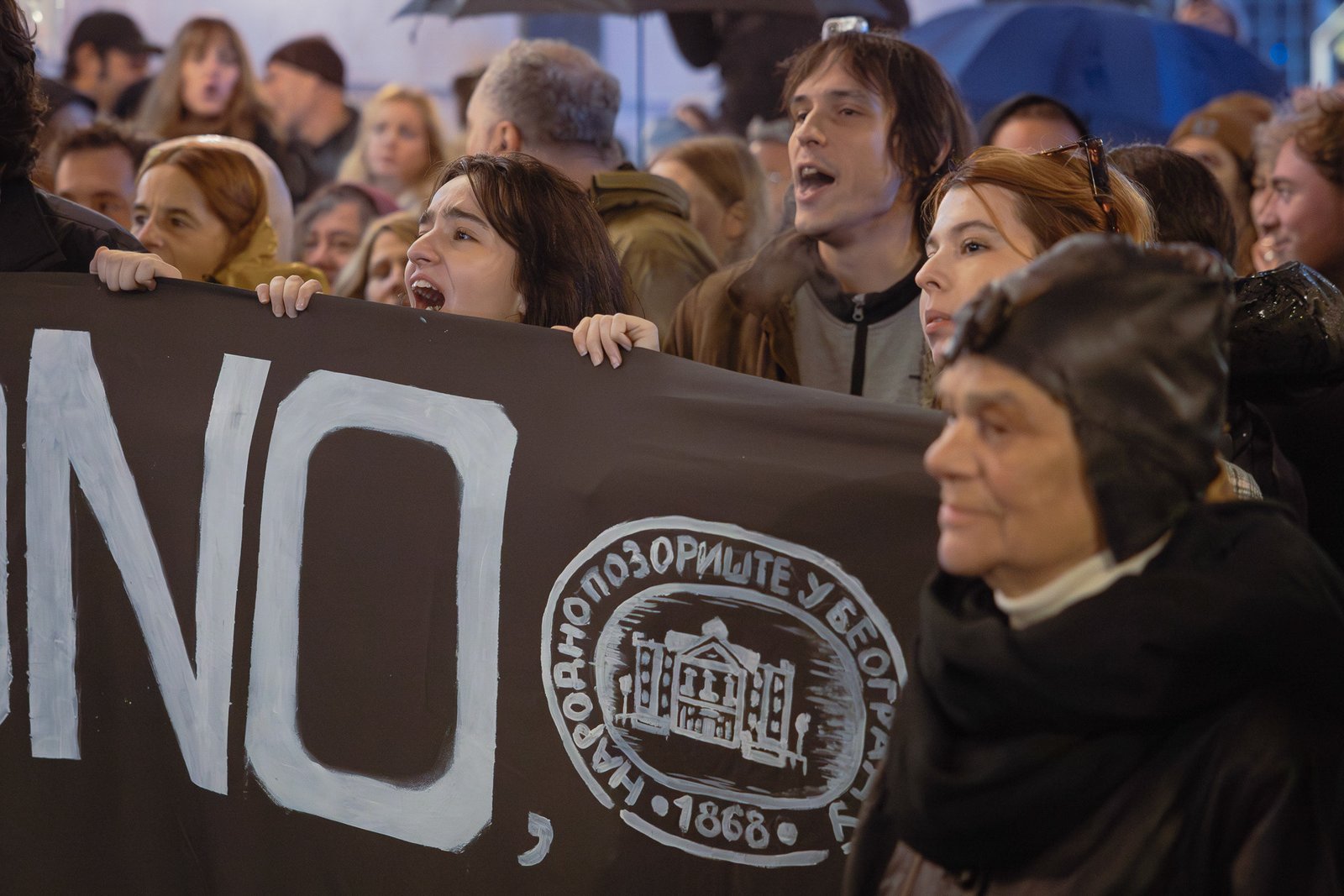
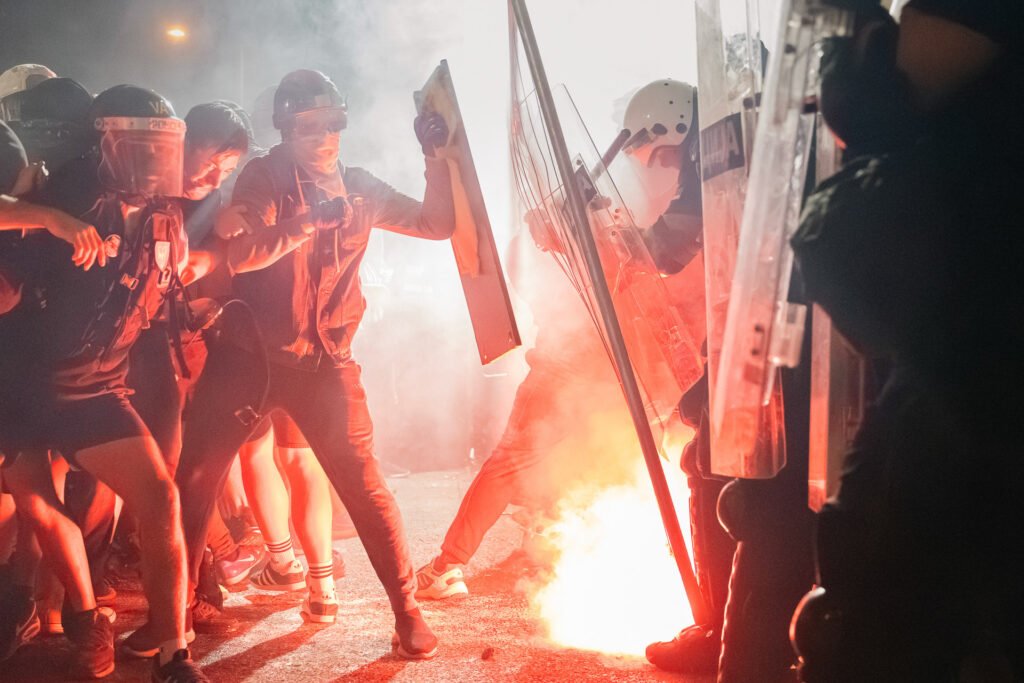
As the months passed, the movement began demanding early parliamentary elections. Despite the time that has elapsed, support for the protests has remained at 60 percent, while 62 percent of the population expresses concern about the use of police force against demonstrators.
The movement’s duration is unusual. Student protests tend to lose momentum after several months because of exams, work and other personal and professional demands.
In Serbia, students have managed to sustain the movement for 18 months through assemblies known as plenums. Decisions are discussed first within each faculty, then in broader university forums and, finally, within the national movement.
“In Serbia, the students are the ones setting the example. They are the ones saying: there is imagination, there is a different way of making decisions, there is a different way of mobilizing, even in the streets,” Díaz-Cayeros said.
The demonstrations have included silent marches, humorous signs, strategic blockades and journeys between cities and communities. They have also built ties between urban and rural sectors.
Mothers brought food to the young people during the blockades, while farmers positioned tractors at city entrances to prevent security forces from reaching the students.
“This type of urban-rural solidarity is often absent from social movements,” he emphasized.
Two Parallel Realities
The research also shows a pronounced polarization shaped by political preferences and the sources people use to obtain information.
Those who support the government rely mainly on state television and pro-government media. Supporters of the student movement are more likely to consume independent media and content shared on social media.
“Where there is striking polarization is that those who support the government watch completely different media outlets,” Díaz-Cayeros said.
Eighty-five percent of Student List supporters consider democracy the best system of government. Among voters of the Serbian Progressive Party, that figure falls to 38 percent.
The divide becomes even deeper when people are asked about limits on power. Nearly 80 percent of those who support the ruling party consider an unrestricted executive branch justifiable, compared with only 2 percent of Student List supporters.
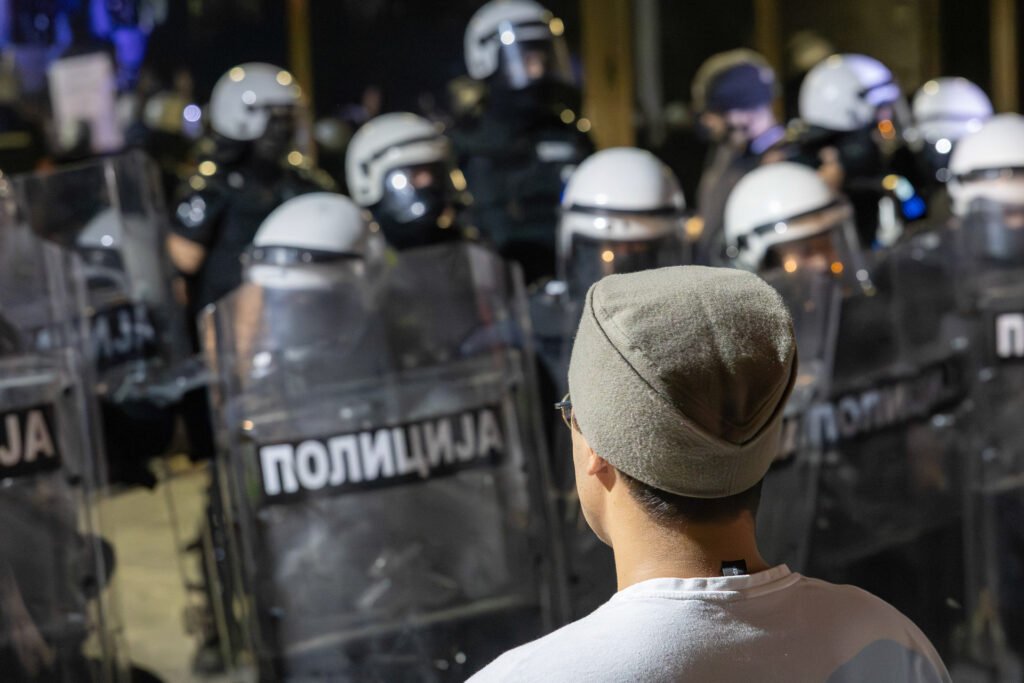
Díaz-Cayeros clarified that the results show a correlation between political preference and democratic attitudes, but do not yet make it possible to determine which one causes the other.
“It is very difficult for us as political scientists to distinguish cause from effect; the two are intertwined,” he explained.
Even so, he described the difference between the two groups as “overwhelming.” Political divisions are no longer limited to differing interpretations of the same event; they now determine which facts are accepted and which are rejected.
Serbian society thus operates within opposing information universes: while one part of the population accepts official accounts, another turns to independent media, testimony and recordings to challenge them.
From the Streets to a Possible Election
The student movement has begun translating its social support into the electoral arena. Among voters who have already made their decision, 44.9 percent would support the Student List, compared with 35.7 percent who would vote for the Serbian Progressive Party and 3.8 percent who would choose the Socialist Party of Serbia. However, 12 percent of citizens remain undecided, and 9 percent say they will not vote.
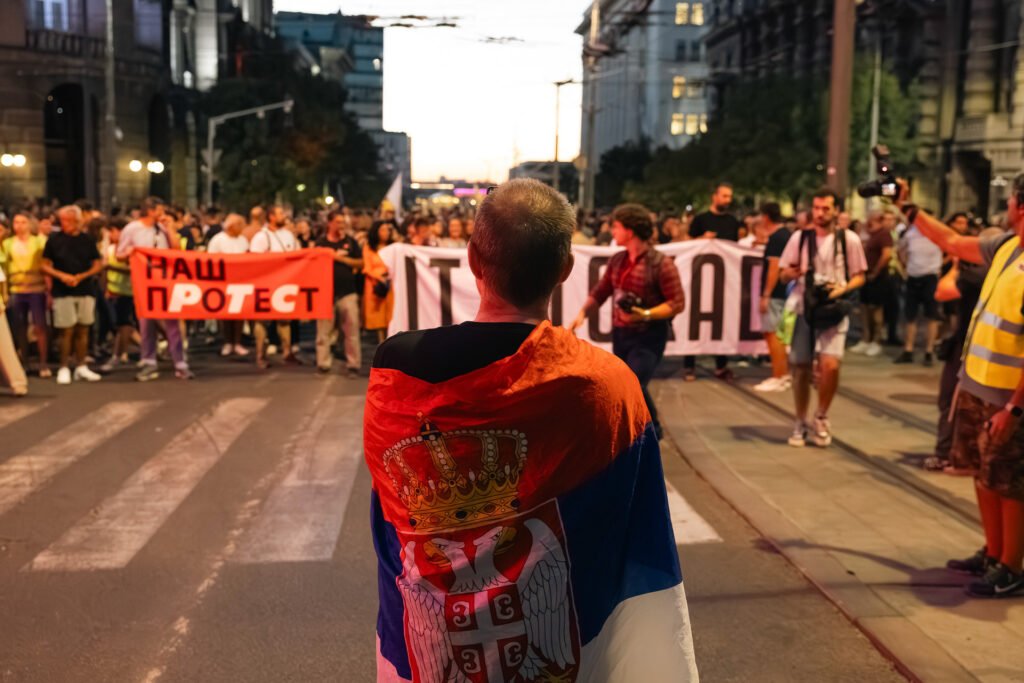
Díaz-Cayeros believes that these groups still require more in-depth analysis. Some may distrust the students’ lack of political experience, need more information or be waiting to learn the names of those who will appear on the list.
The organization has not yet revealed its candidates. The movement encompasses positions ranging from ultranationalism and religious conservatism to social democracy and anarchism.
“What they have said is: first, Vučić must be removed from power, democracy must be restored in Serbia, and then we can debate politics,” Díaz-Cayeros explained.
This diversity has brought different groups together around a common objective, but it could become a challenge once the candidates are announced. Some supporters could withdraw their backing if they encounter candidates with whom they do not identify or who have controversial backgrounds.
The 44.9 percent support also does not guarantee a parliamentary majority. The Student List may need to reach agreements with opposition parties that currently receive between 3 and 4 percent of electoral support.
The survey, therefore, also serves as a warning to the movement.
“Do not rest on your laurels,” the researcher warned. The students still face organizational challenges and may need to build coalitions in order to govern.
The shift toward electoral competition has already changed some of the movement’s dynamics. Some of its members are preparing to protect the vote, monitor polling stations and prevent irregularities, while others are working discreetly because of the risk of government infiltration.
The Promise of Effectiveness
For Díaz-Cayeros, dissatisfaction with the way democracy functions is a problem that extends beyond Serbia. In Latin America, leaders on both the left and the right have taken advantage of the lack of results to offer concentrated power in exchange for effectiveness.
“If you are willing to give me the concentration of power I need, the promise being made to the citizen is: ‘I know how to solve the problems,’” he explained.
On the right, this offer is usually expressed through hardline policies, military presence and mass incarceration. On the left, it may be presented through greater state intervention. In both cases, citizens may ultimately surrender political rights.
The researcher believes that Latin America lacks a political proposal capable of simultaneously defending human rights, institutional checks and balances, and government effectiveness.
“What we are missing is a combination that explains how my defense of checks and balances on political power is part of the way I will achieve governments that are accountable to citizens and, at the same time, more effective,” he maintained.
The region needs alternatives, he added, that explain how to provide public safety, healthcare, quality education, drinking water and social justice without resorting to the concentration of power or the weakening of freedoms.
Universities, the Main Source of Hope
One of the findings that most concerns Díaz-Cayeros is the low level of interpersonal trust in Serbia. Historical experiences and generational traumas have contributed to shaping a society in which it is difficult to trust people outside one’s immediate circles.
“A society in which there is no trust is a society in which it is very difficult to govern; it is very difficult to create the conditions for accountability and anti-corruption efforts,” he said.
By contrast, state universities are the institutions that enjoy the greatest credibility. Seventy-one percent of citizens trust them, ahead of the Serbian Orthodox Church, which is trusted by 64 percent.
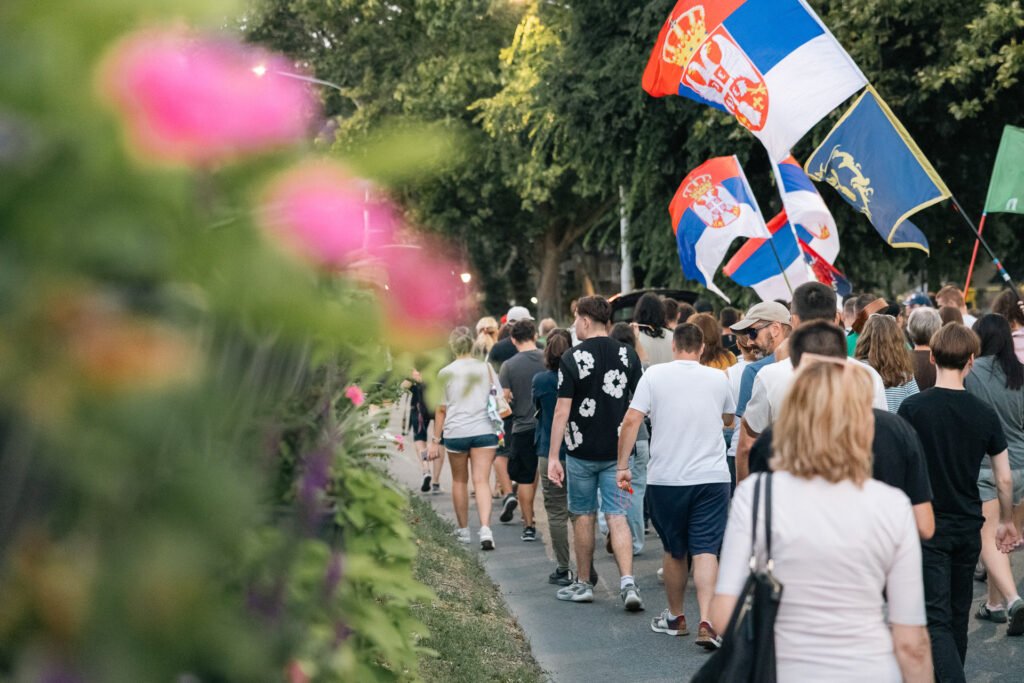
“Universities are the most trusted institution among Serbians, above the Orthodox Church. To me, that was a very encouraging finding,” he said.
According to the researcher, universities can play a central role in building citizenship, fostering critical thinking and developing new forms of participation. However, democratic innovation should not be attributed exclusively to students.
In Latin America, he noted, Indigenous peoples also develop collective decision-making mechanisms, assemblies, community work and strategies for cultural and linguistic advocacy that often go unnoticed from the perspective of major cities.
“It is not only the students; sometimes it is the unexpected groups that are innovating, that are inventing new things,” he said.
The lesson from Serbia is not to present the student movement as a definitive solution, but to observe its ability to open spaces for participation within a worn-down system and to remember that democracy does not end with the holding of elections.
“We have to improve democracy,” Díaz-Cayeros concluded. “We need to work on improving it because, if we do not, we are going to lose it — one democracy at a time, slowly, little by little, but we are going to lose it.”
The survey was conducted through in-person interviews between June 10 and 24, 2026, using a representative sample of 2,324 adult citizens of Serbia. DAL will continue analyzing its experimental components to study how much citizens would be willing to sacrifice democratically in exchange for security and how perceptions of corruption change depending on the source of information.