Renewed crisis in Bosnia and Herzegovina
Pipelines, US policy U-turns, and the Fall of Bosnia’s High Representative
Introduction
On 11 May, Christian Schmidt, the High Representative (HR) for Bosnia and Herzegovina, unexpectedly submitted his resignation. This move was reportedly the result of sudden and massive US pressure. Schmidt is now to be replaced by a new High Representative who will face the same complex political situation on the ground but with possibly much more constrained powers.
Outside of Bosnia and Herzegovina — hereafter also BiH, from the country’s official name Bosna i Hercegovina — and the narrow circle of West Balkans experts, few people know what the High Representative or his office, the OHR is, or what powers he holds. Even fewer realise that his abrupt resignation and the looming political curtailment of his powers have the potential to seriously destabilise Bosnia and Herzegovina — and perhaps even the entire Western Balkans. Such a crisis would inevitably affect Serbia and may even send shockwaves through the wider Western Balkans. This will have a negative impact on the EU agenda in the region but will suit Russian interests as a new geopolitical distraction from Ukraine. The unfolding conflict over the HR also raises broader questions about the destabilising effects of abrupt US foreign-policy turns, and about the overlap between official diplomacy and business interests close to Trump’s political and family circle in regions that usually receive little international attention.
Background: The Dayton state structure
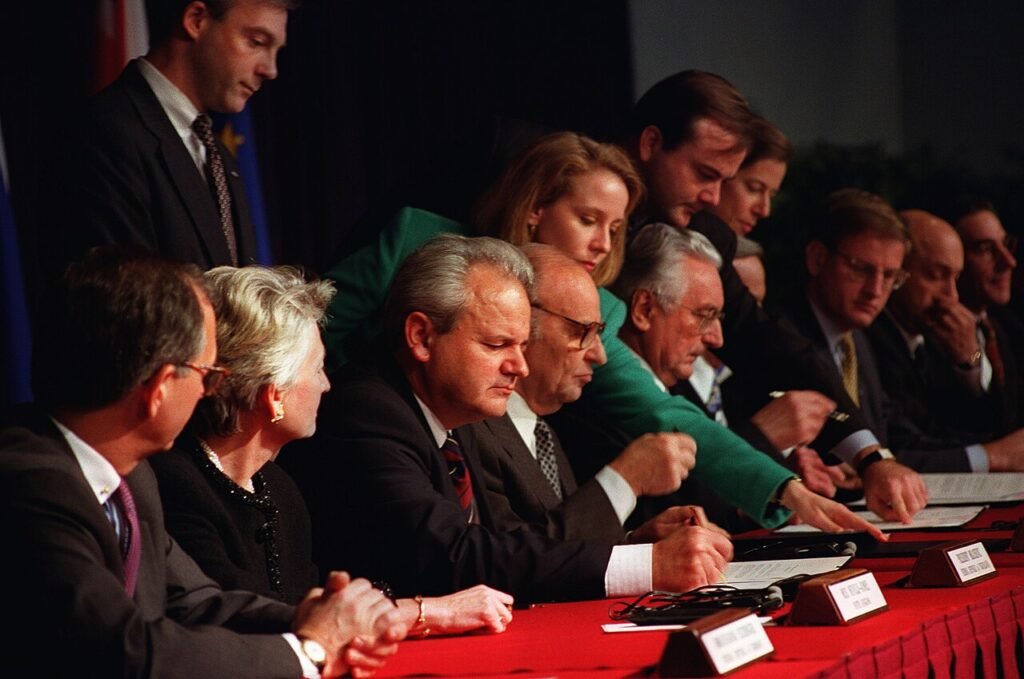
Four years of war between Bosniaks, Bosnian Serbs and Bosnian Croats, with overt and covert military interventions from Serbia and Croatia proper, claimed upwards of 100,000 lives and was marked by war crimes and ethnic cleansing. It was ended by a decisive NATO intervention in 1995 that forced the warring parties to return to the negotiating table to find a compromise. After three weeks of arduous negotiations at Wright-Patterson Air Force Base near Dayton, Ohio, under intense US pressure, the parties reached a peace settlement (Chollet 2005; Holbrooke 1998). The Dayton Peace Accords (DPA), as it became known, was formally signed in Paris in December 1995.
The Dayton Accords and the creation of a hard-to-govern Bosnia
The DPA preserved Bosnia and Herzegovina as an internationally recognised sovereign state and safeguarded its territorial integrity – the essential war aim of the Bosniak side – but at the price of far-reaching concessions to the ethnic-separatist war projects of the Bosnian Serbs and Bosnian Croats. It was specifically two types of compromises that were made to the secessionist forces. One was decentralisation; the other was extensive veto rights at different levels of government within the constitutionally reinvented Bosnian state.
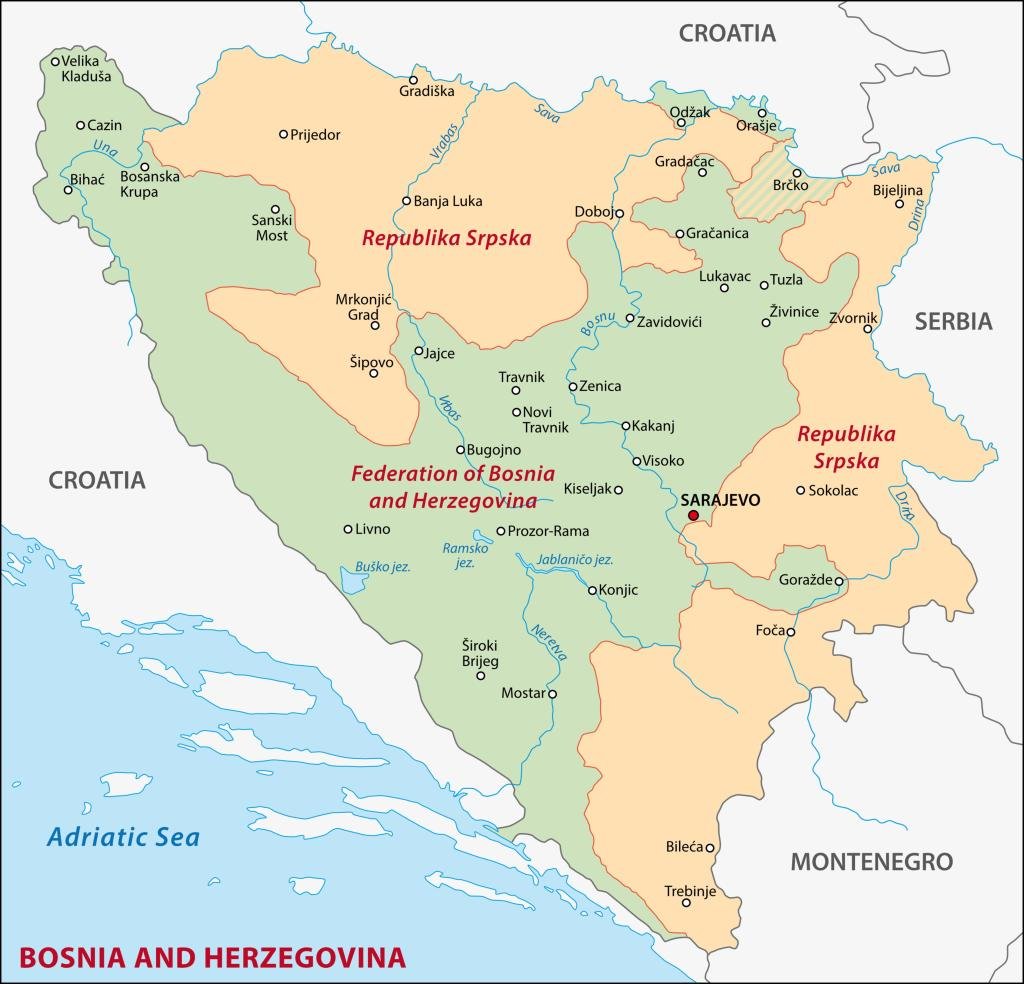
The DPA defined post-war Bosnia and Herzegovina as an extremely decentralised state with an intentionally weak state level. Under the ‘Dayton constitution’ the state level has common institutions such as the Presidency, Parliament, Council of Ministers, Central Bank and Constitutional Court, and is responsible, among other things, for foreign policy, foreign trade, monetary policy, customs. Some competences, such as defence, intelligence and indirect taxation, were transferred later from the entity level to the state level. Below the state level, Bosnia and Herzegovina consists of two entities: the Federation of Bosnia and Herzegovina, which at the end of the war was controlled mainly by Bosniak and Croat political and military structures and is subdivided into ten cantons, and Republika Srpska, which is de facto Serb-dominated (see Map 1).
Turning to veto rights, ethnic and entity-based veto mechanisms can block parliamentary majorities at different levels of the decentralised state. Unlike merely suspensive vetoes, they cannot be overcome by a second vote or a reinforced majority, but only through consent by the relevant ethnic or entity-based actors. At the state level of Bosnia and Herzegovina, there are two main veto-based blocking mechanisms:
The “ethnic” veto, or Vital National Interest mechanism on the state level, operates through the House of Peoples. This upper chamber of the Parliamentary Assembly in BiH has 15 delegates: five Bosniaks, five Croats and five Serbs. A proposal can be declared “destructive of a vital national interest” by a majority of one of these three delegate groups — in practice, three out of five delegates. In that case, the proposal requires a majority of the Bosniak, Croat and Serb delegates present and voting in the House of Peoples. In case there is no agreement on the subject among the delegates of the three peoples (ethnic groups), the case is forwarded to the Constitutional Court of BiH to establish whether the vital national interest of the ethnic group concerned is really endangered.
The entity veto, or entity voting mechanism, applies in both chambers. A parliamentary majority should, as far as possible, also include at least one-third of the votes from each entity. If this is not achieved, a mediation procedure follows. If that fails, a decision may still be adopted, unless two thirds or more of the delegates or representatives from one entity vote against it.
In addition, there is a veto mechanism in the State Presidency. A presidency member who has been outvoted can declare a decision harmful to the vital interest of “his” entity. If this is confirmed within ten days by a two-thirds majority in the relevant body — the National Assembly of the Republika Srpska, or the Bosniak or Croat delegates in the House of Peoples of the Federation — the decision does not enter into force.
This state structure makes Bosnia and Herzegovina one of the most complex — if not the most complex — small states in the world. Yet this complexity was not accidental. The peace agreement could only be reached because it combined far-reaching decentralisation with extensive protection mechanisms for the three constituent peoples — Bosniaks, Croats and Serbs. No group was to be permanently outvoted by the others. But the same mechanisms that made peace possible also made the post-war state highly vulnerable to obstruction. Indeed, this constitutional power to prevent or block centralised decision-making was likely one of the reasons why the Serb and Croat sides accepted the Dayton structure in the first place.
The High Representative (HR)
The DPA created another peculiar feature of the post-war order: the Office of the High Representative (OHR). The High Representative was tasked with overseeing the civilian implementation of the Dayton Peace Agreement — a role initially conceived as temporary. Over time, however, the OHR became a quasi-permanent part of Bosnia and Herzegovina’s post-Dayton political order. Faced with persistent obstruction of civilian implementation, in December 1997 the High Representative was endowed with extraordinary powers — the so-called Bonn Powers. These powers allowed him to impose binding decisions, including laws and amendments, to annul or suspend acts adopted by domestic authorities, and to remove elected officials, civil servants and other public officials deemed to be obstructing or endangering the implementation of the peace agreement. As the HR turned into a quasi-permanent feature of the Bosnia-Herzegovina’s post-war state architecture its role changed.
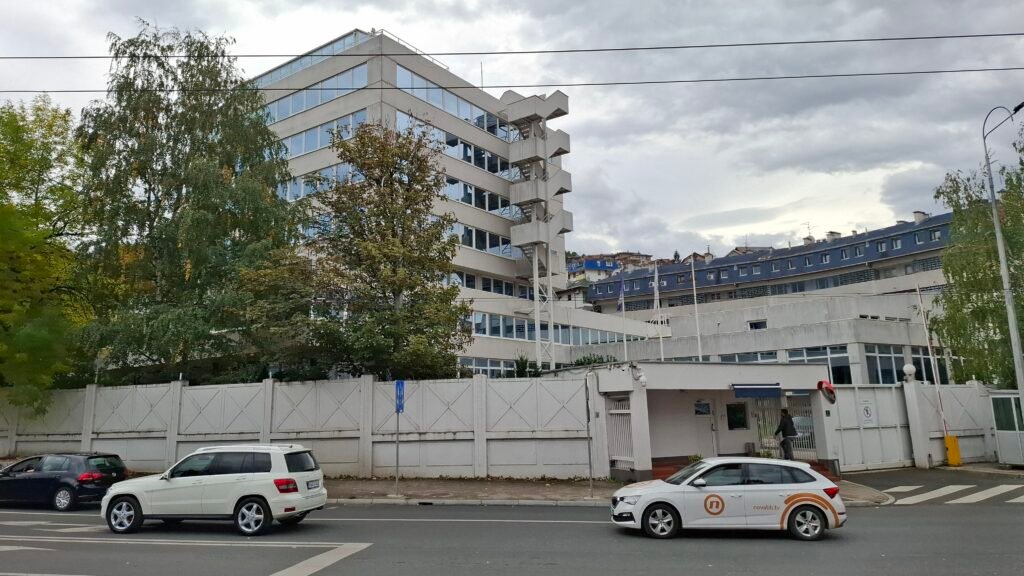
While in the initial decade of Dayton implementation the OHR functioned as a driver of reforms designed to make the Dayton state work — without, however, altering Dayton’s fundamentally flawed architecture — by imposing legislation, building institutions within the unwieldy structure and removing obstructionist officials, in subsequent years it evolved into a built-in arbiter compensating for the system’s dysfunctionality. When an ethnic blockade arose, the High Representative could first mediate and, in extreme cases, break the blockade through the Bonn Powers: by decree, by annulling laws, or by removing officials. From the mid-2000s onwards the use of the Bonn Powers to impose reforms began to drop and from 2010 onwards they were hardly ever used – until escalation in the early 2020s threatened to upend Bosnia and Herzegovina’s stability. This restraint was made possible by a still favourable geopolitical environment, in which the United States remained a reliable and assertive partner to the EU. In this context, the High Representative could still prevent systemic blockages and escalation through mediation and his mere presence, which implied the possible use of the Bonn Powers. However, the seeming calm was also made possible by the HR’s willingness to overlook even serious rule-of-law obstruction where it did not directly threaten the Dayton structure, such as the failure to form a new Federation government after the 2018 elections.
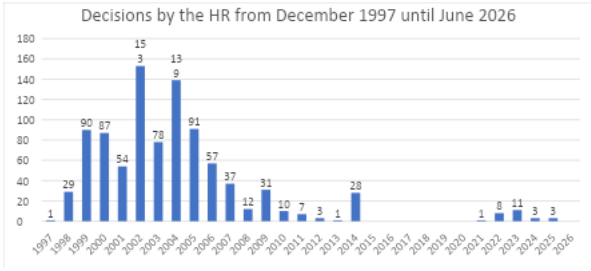
Based on the OHR website, in the roughly eight years between December 1997 when it received the Bonn Powers, and January 2006, when the last “reformist” HR, Paddy Ashdown, left office, the HR had imposed 733 decisions. In contrast, in the fifteen years from February 2006 until July 2021, HRs have only issued 176 decisions, 61 of which were “restorative” decisions lifting bans and repealing restrictions on individuals sanctioned by previous HRs.
To understand the role of the High Representative, a further peculiarity of the institution — and thus, by extension, of Bosnia and Herzegovina’s de facto institutional architecture — has to be appreciated. The HR possesses very far-reaching powers, resembling in scope — though not in legal basis — those of a civilian administrator in an occupied territory. Critics have therefore often compared the office to quasi-colonial forms of rule (Knaus and Martin 2003). Yet the OHR has no executive apparatus of its own. Its decisions have to be implemented by Bosnia and Herzegovina’s domestic institutions. For this reason, HR decisions were typically accompanied by at least implicit political, diplomatic, economic and, in the early post-war years, even military pressure. Nonetheless, over the past three decades, HR decrees decisively shaped the resolution of conflicts and blockades in Bosnia and Herzegovina.
An illustrative example is the 2022 election-financing crisis. When the Central Election Commission lacked the funds needed to organise the general elections, High Representative Christian Schmidt amended the state financing law. The decision provided the required funds and stipulated that, if the Minister of Finance refused or failed to execute the CEC’s request, the Deputy Minister had to do so instead. The media record does not clearly show whether the final administrative step was signed by the minister himself or by his deputy, now entitled to sign, but the blockade was broken immediately. The day after Schmidt’s decision, the Ministry of Finance and Treasury opened the special-purpose programme for the 2022 general elections and made the required funds available to the Central Election Commission. The episode illustrates the peculiar way in which the High Representative’s power works: the HR does not implement decisions through an executive apparatus of his own, but changes the legal and political framework in a way that forces domestic institutions to act.
Eva Quistorp, a founding member of the German Greens and former Member of the European Parliament, who participated together with the author in the 10th History Fest in Sarajevo, compared the position of the High Representative to the rights reserved to the three Western powers over the Federal Republic of Germany under the 1949 Occupation Statute. The analogy goes even further: in both cases, an initial period of active, hands-on shaping of the new political order gave way to a more reserved posture, in which the outside power held back unless invoked — in the German case, mainly to guard against any resurgence of antidemocratic or neo-Nazi politics. In Bosnia and Herzegovina, the OHR, headed by the High Representative, has served as a last-resort political safeguard against radical ethnonationalists pushing secessionist policies too far.
Fast Forward to the Present
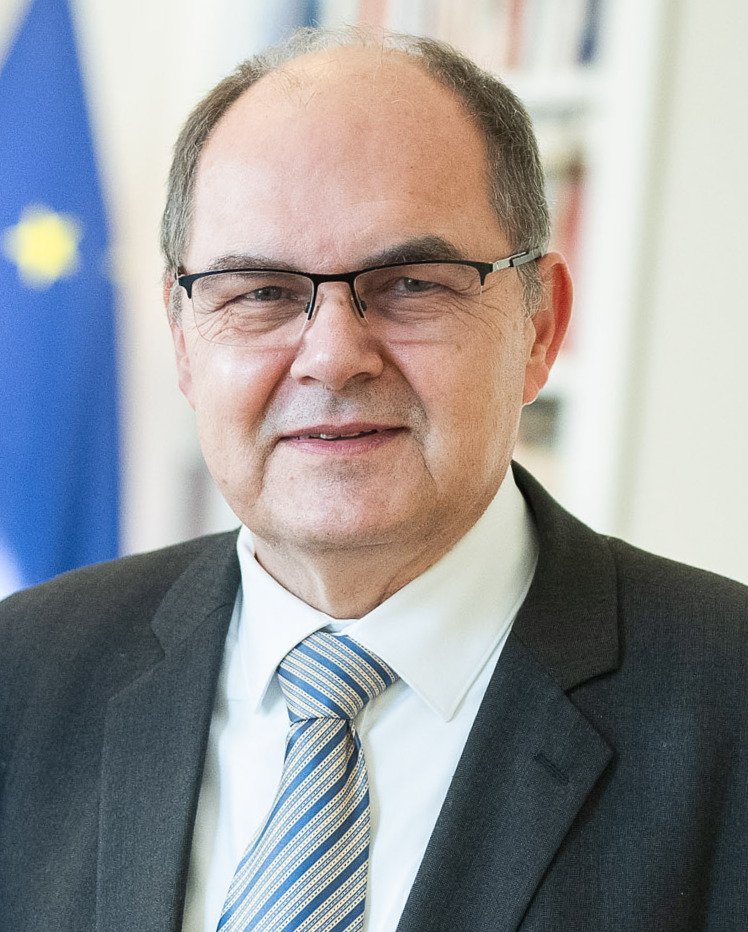
Christian Schmidt, the still acting HR, whose resignation under US pressure triggered the current crisis, is a member of the Bavarian Christian Socialist Union (CSU) and former German Federal Minister of Agriculture (2014-2018). He entered office as High Representative in July 2021. He originally likely envisaged his mandate as resembling that of his predecessors – an international official ensuring from the background that the Dayton framework and thus peace in Bosnia and Herzegovina was not threatened. Things, however, soon changed.
Dodik Challenges Bosnia-Herzegovina’s Dayton Settlement
The issue at stake was the conduct of Milorad Dodik, the former president of the Bosnian Serb entity, Republika Srpska, whose actions in recent years undermined the stability of the country and triggered the biggest political-security crisis of the last 25 years. Dodik first came to prominence in Bosnia and Herzegovina’s post-war politics in the late 1990s, when he was regarded by many international actors as a young moderate capable of sidelining the wartime Bosnian Serb nationalist hardliners. However, as he consolidated power in the second half of the 2000s in the Republika Srpska, Dodik increasingly became associated with large-scale corruption allegations and moved steadily towards an ardent nationalist and secessionist agenda. Since the mid-2010s, he has been widely considered a radical and obstructionist Bosnian Serb politician.
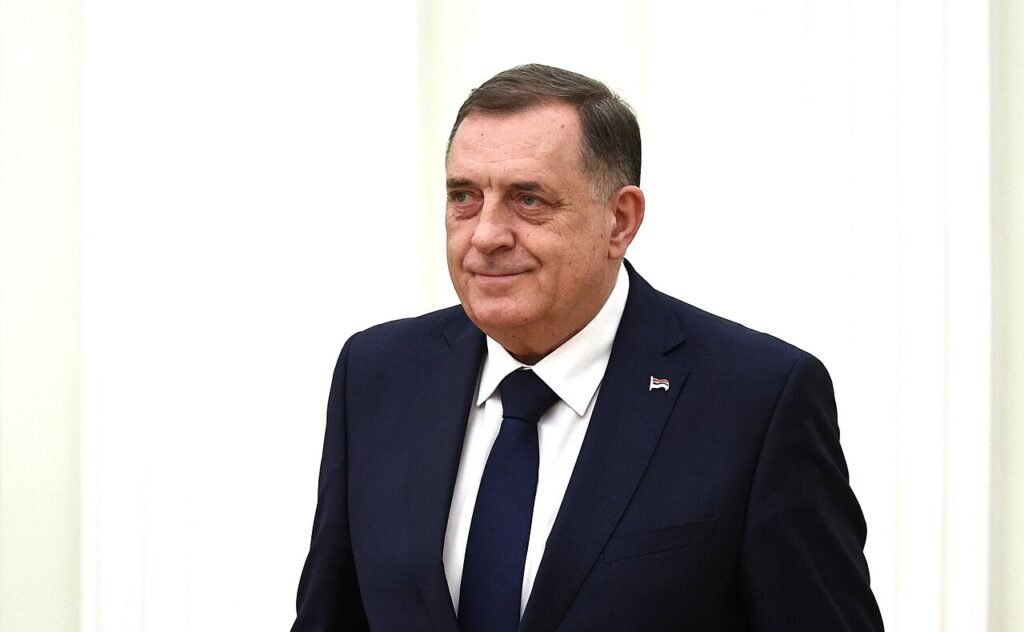
However, around 2021/22, Dodik moved from being a difficult and obstructionist Bosnian Serb hardliner, to openly challenging the authority of Bosnia and Herzegovina’s state-level institutions and of the High Representative – and thus the Dayton settlement itself. The escalation unfolded after Valentin Inzko, in his last decision as an HR, criminalised the glorification of war criminals and genocide denial in July 2021, just after the 26th anniversary of the tragic genocide in Srebrenica. In response, Dodik and the Republika Srpska leadership announced plans to withdraw from key institutions created or strengthened by HR-decisions after Dayton, including the joint armed forces, the state-level judiciary and the indirect taxation system. This would not have amounted to a formal declaration of independence, but it would have dismantled core elements of Bosnia and Herzegovina’s post-war statehood.
Containment
This first rebellion by Dodik fizzled out as by spring/summer 2022, RS representatives gradually returned to state-level work. There were likely several reasons for his erstwhile withdrawal. We would just like to name two. The blockade threatened to stop salary payments to state employees, including thousands from Republika Srpska. This created strong pressure to return at least for temporary-financing decisions. Second, in January 2022 the Biden administration expanded US sanctions against Dodik and designated Alternativna Televizija, an entity under his control, in response to his corrupt activities and “continued threats to the stability and territorial integrity of BiH” (U.S. Department of the Treasury 2026). These sanctions blocked US-linked property and prohibited transactions by US persons with the designated individual and entity, adding significant personal and financial pressure.
Nonetheless, after a short pause, Dodik went back on the political offensive in 2023. First, he decided to unilaterally regulate the issue of immovable state property: his governing coalition adopted a law in the RS National Assembly which was in collision with earlier decisions of the Bosnian Constitutional Court and the OHR. He openly and repeatedly threatened with an act of secession in case the High Representative interferes in the property issue, which became politicized to the extremes just to blur underlying vested interests such as the control of state-owned real estate or the management of lucrative logging business in the RS forests. In addition to the privatisation of state-owned companies, the RS government was also suspected of using publicly owned land as collateral for taking loans, while the control of logging delivered significant informal revenues to the RS elite.
Second, he decided to boycott the Constitutional Court by not signing the nomination of the RS judges to this state institution, established by the ‘Dayton constitution’. Third, the Republika Srpska National Assembly adopted legislation declaring decisions of the Constitutional Court and of the High Representative non-applicable on the territory of Republika Srpska. All these steps directly challenged the Dayton order.
Christian Schmidt responded by using the Bonn Powers to annul these laws and to amend the Criminal Code of Bosnia and Herzegovina, making non-compliance with decisions of the High Representative and the Constitutional Court a criminal offence. Dodik nevertheless signed decrees promulgating the challenged RS legislation, thereby directly defying the High Representative’s authority.
This culminated in a legal-political crisis of 2025. Dodik’s refusal to comply with the High Representative’s decisions triggered criminal charges and a court trial against him, ultimately leading to his conviction. In February 2025, the Court of Bosnia and Herzegovina sentenced him to one year in prison and banned him from holding political office for six years. Rather than accepting the ruling, Dodik and the RS authorities again raised the stakes, and forced through legislation that rejected the authority of state-level judicial and law-enforcement institutions on RS territory.
In spring 2025, an attempt by State Investigation and Protection Agency (SIPA) officers to arrest Dodik in Eastern Sarajevo brought the prospect of a violent confrontation between Bosnia and Herzegovina’s security forces and the Republika Srpska police dangerously close to reality (EWB 2025). EUFOR peacekeepers had to return to the streets of Banja Luka and, as witnessed by one of the authors, conduct highly visible patrols to ensure the population that they can maintain peace and security. In these days both authors noted visible fear among the various constitutive nations of Bosnia and Herzegovina: there was a sense that the situation could get fully out of control at any time. Serbs appeared to drift, fearing an escalation but unable to stop their political leadership. Among Bosniaks, despite the fear, there was, a strong sense that they would not let the RS secede, while at least among some Herzegovinian Croats, those adjacent to Croatia proper, one could note a mildly hopeful expectation that a collapse of the country would finally allow them to join Croatia.
In the end, however, Dodik’s attempt to openly defy the Dayton order failed. Over the summer and autumn of 2025, the court decisions against him were upheld and gradually implemented. After the appeal procedure confirmed the verdict, Bosnia and Herzegovina’s Central Election Commission revoked his mandate as president of Republika Srpska and called early elections. Dodik initially refused to accept the decision and continued to act as if he remained president. Yet this position became legally difficult to sustain and continued defiance risked legal chaos and deepening Republika Srpska’s institutional and financial isolation.
By October 2025, the Republika Srpska leadership retreated from the most confrontational parts of its position. Dodik’s political advisor was appointed for interim president, most of the separatist laws were repealed, and preparations for new elections went ahead. This did not eliminate Dodik: his party remained in power and his network continued to dominate Republika Srpska politics. But the dangerous challenge to the Dayton order was pushed back, and the attempt to render the Bosnian state ungovernable was contained.
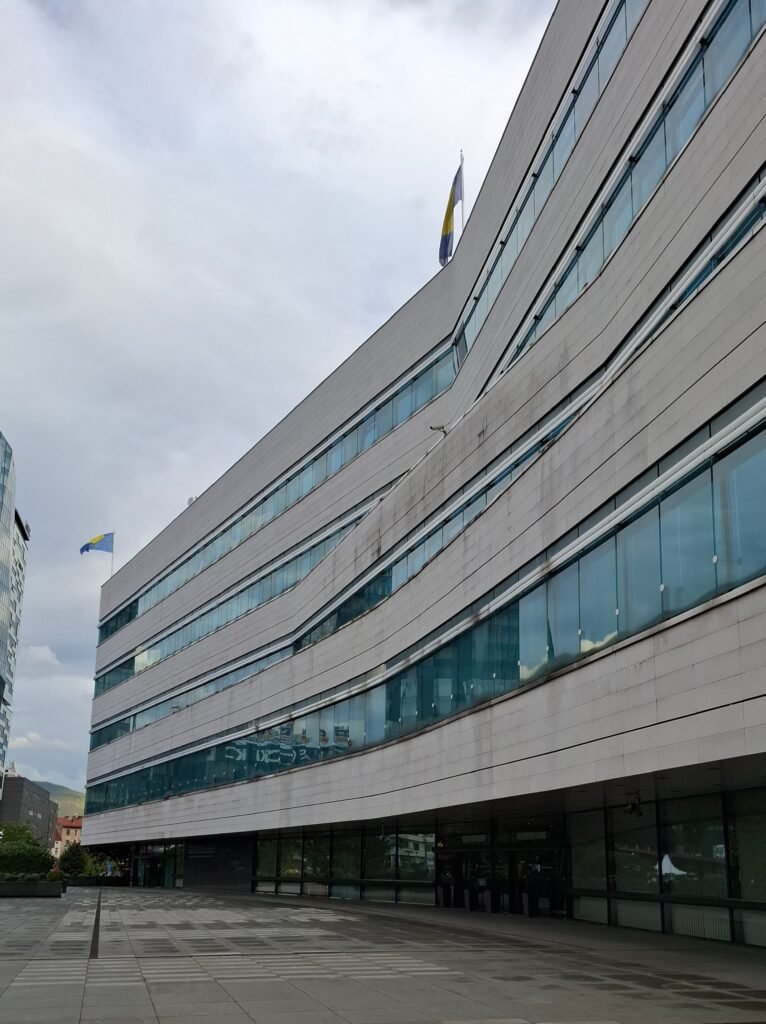
Recounting Dodik’s challenge to the Dayton settlement and its containment by late 2025 serves not only as a prelude to the current crisis triggered by US diplomatic intervention. It also demonstrates both the fragility of Bosnia and Herzegovina’s post-war order and the central role the High Representative plays in making the Dayton system function. The OHR is an in-built arbiter compensating for the dysfunctionalities of the Dayton state structure; and second, it is also the central institution coordinating the response of domestic and international actors to constitutional crises. (The Steering Board of the Peace Implementation Council still meets fortnightly at the OHR building in Sarajevo, under the chairmanship of the High Representative.) Dodik was not defeated by the HR alone. The Court of Bosnia and Herzegovina, the Constitutional Court, the Central Election Commission, law-enforcement agencies and other Bosnian-Herzegovinian institutions that did not fracture along ethnic/entity lines, and, crucially, behind-the-scenes diplomatic pressure all played important roles. But the HR provided what might be called focal-point authority: drawing on Schelling’s idea of focal points (Schelling 1981), around which this response could cohere: he defined the legal red line, created the framework for enforcement, and gave domestic and international actors a basis for coordinated action. Without such a focal point, it is far from clear that Bosnia and Herzegovina’s fragmented institutions would have been able to contain the challenge in time.
Sudden US move
After Dodik had been politically weakened by November 2025, hope for some calm returned to the long-suffering citizens of Bosnia and Herzegovina. People could breathe a little more easily and believe again in law and order. They may have even thought that with Dodik’s departure, BiH could get a second chance to open accession talks with the European Union. Events, however, took a different turn.
The first warning sign was when the Trump administration lifted, earlier than expected, the harsh and painful financial sanctions against Dodik and his followers in late October 2025 (Kurtic 2025). It was also worrying when the interim presidential elections in the RS were full of irregularities in November 2025, even to the point that they had to be partially repeated in February 2026. It was even more troubling that the victory of Dodik’s faithful political follower, Sinisa Karan, passed without any remarkable comment from the US and the EU, although the problems with election integrity had been widely discussed by internationals in the previous three years.
The greatest shock came, however, when, under massive and unexpectedly sudden US pressure, Christian Schmidt submitted his resignation on 11 May, while he was in New York to appear before the UN Security Council. Schmidt had planned to leave at the end of the year, after the general elections due in October 2026, and this schedule would have given the international community plenty of time to agree on a suitable successor. The forced early resignation in May, combined with the US demand to sharply curtail the powers of the next High Representative and install a successor aligned with Washington, now introduces new uncertainties in Bosnia and Herzegovina.
Background: Business interests and opaque lobbying
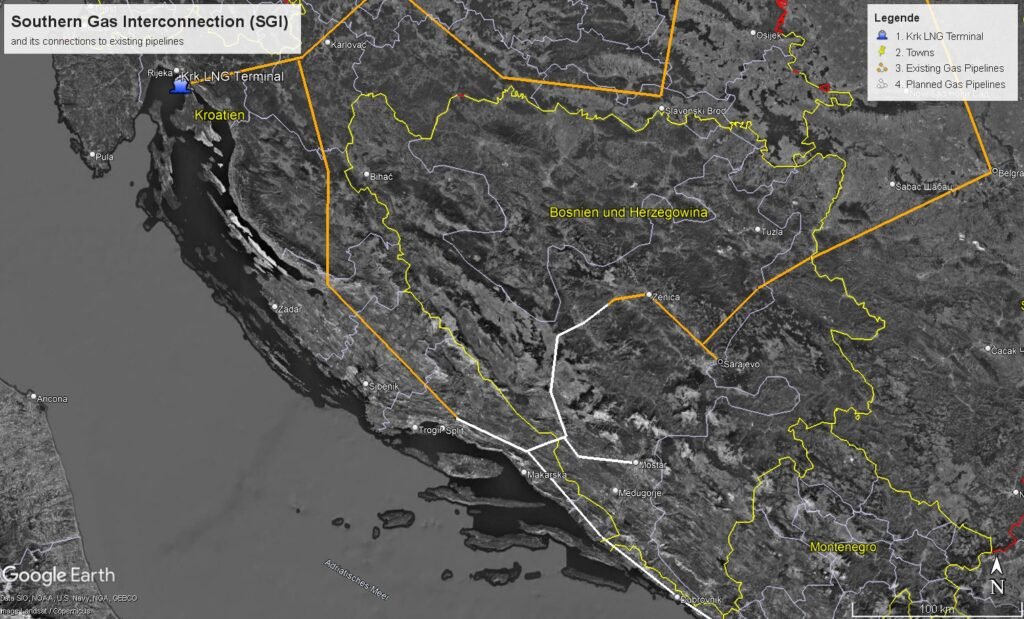
In mid-April 2026, the Federation of Bosnia and Herzegovina amended the law on the Southern Gas Interconnection (SGI) pipeline (Sito-sucic 2026) in a way that designated the US company AAFS Infrastructure and Energy as the project’s investor/developer and opened the way for a direct agreement with the Federation government, rather than selecting a company or a consortium in a competitive tender (Kolundzija 2026). The AAFS is represented by figures very close to Trump’s inner circle (Burgis 2026):
- Jesse Binnall is the director/legal representative of AAFS Infrastructure and Energy. He is a Washington lawyer who has defended the Trump family in political cases and was involved, among others, in efforts to challenge the 2020 election results.
- Joseph/Joe Flynn serves as Vice President of AAFS Infrastructure and Energy. He is the brother of Trump’s former adviser Michael Flynn, and was also involved in the America Project tied to 2020 election-denial efforts.
The background to the pipeline deal is the overlapping EU and US objective of reducing the region’s dependence on Russian gas by opening access to alternative supply routes, importantly also to LNG via Croatia’s Krk terminal (see Map 2). Yet the way this strategy was enacted in the case of the Southern Gas Interconnection raises serious questions about the overlap between US government policy and private business interests linked to Trump’s political circle.
Rather than supporting the previously prepared EU/WBIF/EBRD-backed public infrastructure model, centred on BH-Gas and competitive procurement, Washington appears to have exerted strong diplomatic pressure on the Federation of Bosnia and Herzegovina (FBiH; see Map 1) to adopt an amended law that directly designated AAFS as investor. The precise financing, ownership, concession and operating arrangements remain unclear in the public record. Such an investor- as opposed to a European-financed public procurement model made the previous arrangement effectively unworkable.
This is especially problematic because the project is EU-backed and is supposed to follow EU-transparency and procurement standards. Not surprisingly, the sudden amendment to the law met EU resistance. EU Ambassador Luigi Soreca warned in April 2026 that the lex specialis designating AAFS as investor and developer could jeopardise BiH’s access to the European energy market and around €1 billion in EU Growth Plan funding (Zvijerac and Tuhina 2026). The EU Delegation also stressed that energy-sector legislation had to remain consistent with BiH’s EU accession obligations. HR Schmidt is also said to have had concerns about this arrangement, among other reasons, because it lacked a proper tendering procedure and conflicted with EU-oriented regulatory expectations. He opposed, or at least refused to clear, the legal and political obstacles around the SGI deal.
In parallel, and likely not clearly linked to the conflict over the SGI award, one could note intense political lobbying by Dodik. In April Donald Trump Jr. visited Banja Luka (EWB 2026c), on the invitation of Milorad Dodik’s son, a business tycoon in Bosnia and a leading official of his father’s political party, the Alliance of Independent Social Democrats (SNSD). The trip gave the Dodik family fresh political legitimacy, though the precise purpose remains unclear. The visit appears to have formed part of the broader lobbying and diplomatic offensive that the SNSD leadership had been conducting for months. Bosnian Serb member of the BiH Presidency, Zeljka Cvijanovic, a longtime loyal political ally of Milorad Dodik, travelled to the US still in February (EWB 2026b), in March and again in May 2026 and met several Republican politicians.
Why the pressure on Schmidt?
Still, the sudden US ire against Schmidt is puzzling. Several reasons might explain it, however. First, through his powers — and especially through questions of state property, legislation and Dayton competences — the High Representative can influence or complicate economic projects such as the SGI. Reuters has explicitly reported that the new US policy line places greater emphasis on commercially driven partnerships rather than classical nation-building (Reuters 2026). If Washington now indeed places greater emphasis on commercially driven partnerships and energy projects, a strong High Representative who insists on the rule of law and Dayton-compliant procedures may appear as an obstacle.
It is also plausible that Dodik’s efforts to promote his narrative about political realities in BiH yielded results, and this, combined with displeasure over obstacles to the AAFS SGI deal, may have weakened the image of the OHR in Washington. What is clear, however, is that in mid-May, the US administration unexpectedly pressured Schmidt to resign and pushed for his replacement by someone with a more limited mandate: the new High Representative would be appointed by the Peace Implementation Council (PIC) only for two years and be expected not to use the Bonn Powers (Sito-Sucic 2026).
A broader contextual factor might also play a role: the increasingly strained transatlantic relationship. The Iran crisis had once again exposed clear tensions between Washington and European governments. There is no evidence that Bosnia and Herzegovina was deliberately used to punish the EU or sow discord. But the episode fits a broader pattern in which Europeans are increasingly confronted with faits accomplis and left to manage the negative consequences of unilateral American decisions. Bosnia and Herzegovina is one recent example of this wider problem.
Risks associated with the US move
Taken together, these developments point to a short-term and commercially driven US policy shift formulated with limited attention to Bosnia and Herzegovina’s highly complex and volatile local context. These US policy moves carry significant risks for Bosnia and Herzegovina. Given Bosnia’s centrifugal Serb and Croat nationalist tendencies and the constitutional vulnerability built into the Dayton state structure, weakening the High Representative could seriously threaten Bosnia’s fragile stability. The question is whether it is the right time to reshape the international architecture that has stabilized Bosnia’s post-war order for 30 years.
If the US position prevails, Bosnia and Herzegovina will likely face another crisis soon — and possibly a grave destabilisation of the state. Any secessionist attempt will likely lead to renewed violence in the country. The Bosnian population does not appear to want renewed violence, but an open attack on the country’s territorial integrity could trigger serious and unpredictable escalation. A de facto secession of Republika Srpska would certainly call the existing post-Dayton status quo into question and thereby destabilise the entire Western Balkans.
It would almost certainly draw Serbia into the crisis, with possible knock-on effects extending to Kosovo. An attempted secession by Republika Srpska would likely lead to similar demands among Bosnian Croats, especially in areas adjacent to Croatia. Even a pragmatic government in Croatia, now an EU member state, might find it difficult to contain nationalist hardliners who would seek to further challenge Bosnia and Herzegovina’s territorial integrity. Ultimately, the EU would have to bear the brunt of negative consequences.
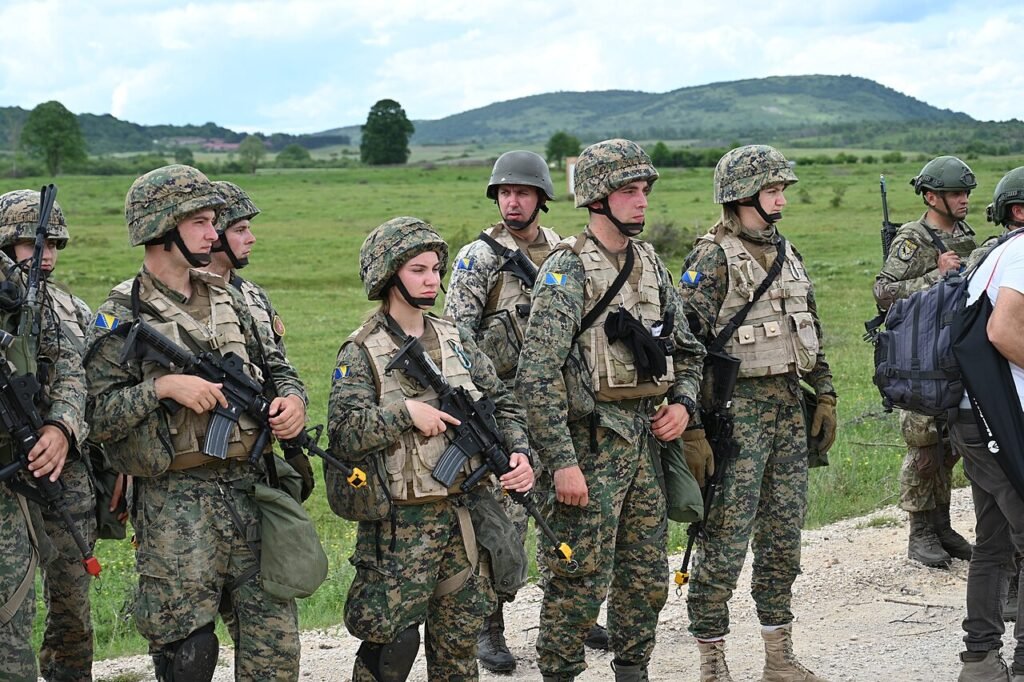
The risk of violent escalation following a possible RS challenge to Bosnia and Herzegovina’s territorial integrity needs to be qualified. Bosnia and Herzegovina is strongly demilitarised. Its unified, multi-national Armed Forces are small, with an official structure of around 10,000 professional soldiers and 5,000 reservists (GlobalMilitary.net n.d.). The key question in a crisis would therefore be whether the army would remain united or fragment along national and entity lines. Apart from the Armed Force of Bosnia and Herzegovina and the State Border Service, the entity and cantonal police — with an estimated number of 10,000 (Federation) and 5.500 (RS) personnel respectively constitute a considerable force. In a hypothetical state-fracture scenario, they could function as paramilitary formations without heavy military-grade weapons.
EUFOR, an EU peacekeeping force of roughly 1,500 soldiers, is also present in the country (EUFOR Althea 2026), but at its current strength would likely be unable to contain the situation if violence spread. Any RS secession attempt would also face the strategic problem that Republika Srpska’s eastern and western parts are separated by the neutral Brčko District. For these reasons, the most likely scenario would not be a rapid return to the full-scale war of the 1990s, but low- to medium-level violence amid state fragmentation, likely amplified by Russian attempts to escalate the crisis. Even such a scenario would be devastating for Bosnia and Herzegovina, destabilising for the region, and deeply distracting for the EU.
In search of a solution
While in the past few years, the EU bureaucracy showed an ambivalent attitude towards the OHR – notwithstanding that some member countries strongly supported the institution – at present, the EU seems to coalesce in its opposition to the recent US moves.
On 3–4 June 2026, the Steering Board of the Peace Implementation Council, or PIC, met in Sarajevo, with the hinted American intention to appoint a successor to Schmidt as High Representative. Reuters reported that the United States supported the Italian diplomat Antonio Zanardi Landi, while, according to unconfirmed reports, many Europeans preferred the French diplomat René Troccaz. The United States apparently wanted a new
Representative with a significantly reduced mandate. European actors, by contrast, appeared more inclined to preserve a robust OHR. According to European Western Balkans, the British Embassy explicitly emphasised its support for a High Representative with full executive powers (EWB 2026a).
The American intentions met stiff European resistance, and the PIC meeting produced no consensus. The diplomatic wrestling continued after the meeting and Americans eventually may accept the necessity to preserve Bonn Powers for the future. In the upcoming days or weeks, the PIC Steering Board members are expected to reach an agreement on who the new High Representative will be. The question is to what extent the new High Representative will be prepared professionally for this highly complicated job and what political and logistical support he will receive from the EU and the USA. OHR budget has been slowly but steadily declining, and without a strong organization behind it, no politician or diplomat can work effectively. An even more urgent concern is whether the new candidate will be confirmed in the UN Security Council. Without at least tacit approval from China and Russia, the new High Representative may find himself in the focus of the same political attacks questioning his legitimacy as Schmidt did five years ago.
An Alternative Proposal
On 27 May, the former High Representatives Carl Bildt (1996-97) and Wolfgang Petritsch (1999-2002) published a guest essay in the Frankfurter Allgemeine Zeitung (Bildt and Petritsch 2026). Instead of the immediate abolition of the OHR, they argue for an orderly transition strategy. The role of the High Representative should gradually be transferred into the EU accession process. Any reduction of the High Representative’s role should be tied to concrete reforms and functioning state mechanisms. Central unresolved issues — such as state property, veto mechanisms, competences, and more functional decision-making structures — should be built into the EU accession process. In this way, the EU would not abruptly replace the OHR but would gradually transfer oversight into a clear European reform and accession logic.
Is there a way out?
As we have seen, BiH is at a crossroads. The post-Dayton status quo — with an international official functioning as the final arbiter of a formally sovereign European state — is increasingly untenable. It has been criticised for being undemocratic and stifling the emergence of domestic political initiatives. It is also losing international legitimacy due to the discontinued support for it in the UN Security Council.
Given Bosnia and Herzegovina’s vulnerability to political deadlock and secessionist challenges, abolishing the OHR or even merely weakening the HR’s powers risks inviting precisely such challenges. As we have argued, the HR plays a decisive role in containing challenges to the DPA and to state integrity.
Allowing secession will certainly upset the hard-won stability of the entire Western Balkans, with fallout that would be difficult to contain.
Amending the Dayton Constitution to create a more functional state, less prone to nationalist challenges, seems a sensible and essential solution to Bosnia and Herzegovina’s ills and would allow for an OHR withdrawal. Yet under current political conditions, this remains an unworkable illusion. Even smaller reforms will be difficult to achieve.
EU accession, as proposed by former HRs Bildt and Petritsch, might offer a way out. Moreover, there is a precedent for a strong external European incentive leading to the only wave of reforms that was not initiated and decreed by the HR: the visa liberalisation process of the late 2000s (ESI 2010). In exchange for far-reaching reforms in areas such as policing, border management, document security and rule of law, citizens of Bosnia and Herzegovina — as well as those of other Western Balkan countries — received visa-free access to the Schengen area. Public pressure mobilised by the external incentive of visa liberalisation helped force through far-reaching reforms that would otherwise have been impossible to achieve.
However, certain parts of Bosnia and Herzegovina’s political elite, particularly in the RS, do not support EU membership. Milorad Dodik, who does not conceal his Russian political ties, has openly spoken against it. Dodik and the SNSD, his party, have effectively blocked progress on EU talks for over two years by insisting on nominating the chief negotiator from their own political camp and refusing a workable amendment to the law on courts, a precondition for opening accession talks. Moreover, after more than 20 years of delays, the EU accession promise lacks credibility. Even now, when some EU countries, notably Germany, appear to be changing their stance on EU enlargement for geopolitical reasons, others remain sceptical and might still block progress.
Thus, for the time being, maintaining the OHR with its current mandate appears to be, at least as a temporary measure, the safest option from the perspective of maintaining stability. However, even if the OHR’s mandate remains uncurbed, enforcing stabilising solutions along the path marked by the HR requires clear support at least from the members of PIC Steering Board. With US policy becoming increasingly unpredictable and shaped by short-term priorities, the EU would need to increase its policy coherence and assertiveness to make the OHR work, when and for what it is really needed: to contain secession and defuse crises.
There is one potential game changer: the possible EU accession of Montenegro and maybe even of Albania, already projected by some for 2028. It would give credibility to the now-stalled EU accession process. It could also fundamentally change regional dynamics, forcing the countries left outside the Union — Bosnia and Herzegovina, Serbia, Kosovo and North Macedonia — to eliminate political obstacles preventing progress towards EU-accession or risk being left far behind.
Once the EU opens accession talks with BiH, the transition and phasing out of the OHR can return to the agenda. Some issues could then be incorporated into the accession talks, while others may have to be abandoned entirely. Sometimes there is simply no point in risking new political tensions for finding ideal administrative solutions. Insisting on transferring even more competences from the entities to the state level will almost certainly create such tensions. Therefore, battles must be chosen carefully. Nonetheless, negotiating in the context of completed Montenegrin and Albanian accession would fundamentally change the dynamics.
Once a credible EU accession process goes ahead, the Bonn Powers can be phased out — but only in if the risk of secession is significantly diminished.
About the authors
Kristóf Gosztonyi, PhD, is a postdoctoral researcher at Humboldt University Berlin. Between 1996 and 2002, he worked for international organisations in Bosnia and Herzegovina, including the OHR.
László Márkusz, PhD, is a research fellow at the John Lukacs Institute, Ludovika University of Public Service, Budapest. He served as Deputy High Representative in Banja Luka between 2022 and 2025.
Bibliography
Bildt, Carl, and Wolfgang Petritsch. 2026. ‘Europa braucht einen Neustart in Bosnien-Hercegovina’. FAZ.NET. https://www.faz.net/aktuell/politik/ausland/europa-braucht-einen-neustart-in-bosnien-hercegovina-accg-200858237.html (June 22, 2026).
Burgis, Tom. 2026. ‘Trump-Linked Figures Lead Talks on $200m European Pipeline Contract’. The Guardian. https://www.theguardian.com/us-news/2026/jan/16/rump-linked-figures-talks-european-pipeline-contract (June 26, 2026).
Chollet, Derek. 2005. ‘The Road to the Dayton Accords: A Study of American Statecraft’. In New York: Palgrave Macmillan.
ESI. 2010. ‘Visa-Free Travel and Asylum’. ESI – Europäische Stabilitäts-Initiative e.V. https://www.esiweb.org/visa-free-travel-and-asylum (June 26, 2026).
‘EUFOR Althea’. 2026. Model Diplomat. https://modeldiplomat.com/learn/glossary/eufor-althea (June 26, 2026).
EWB. 2025. ‘State-Level Security Agency (SIPA) Fails to Arrest Dodik as RS Police Block Operation’. European Western Balkans. http://europeanwesternbalkans.com/2025/04/24/state-level-security-agency-sipa-fails-to-arrest-dodik-as-rs-police-block-operation/ (June 22, 2026).
EWB. 2026a. ‘Consultations with the US on the next High Representative Continue’. European Western Balkans. https://europeanwesternbalkans.com/2026/06/05/consultations-with-the-us-on-the-next-high-representative-continue/ (June 26, 2026).
EWB. 2026b. ‘Dodik and Cvijanović Meet with Trump Administration Members in Washington’. European Western Balkans. https://europeanwesternbalkans.com/2026/02/06/dodik-and-cvijanovic-meet-with-trump-administration-members-in-washington/ (June 26, 2026).
EWB. 2026c. ‘Donald Trump Jr. Arrives in Banja Luka’. European Western Balkans. http://europeanwesternbalkans.com/2026/04/07/donald-trump-jr-arrives-in-banja-luka/ (June 26, 2026).
‘GlobalMilitary.Net’. GlobalMilitary.net. https://www.globalmilitary.net/countries/bih/ (June 26, 2026).
Holbrooke, Richard C. 1998. To End a War. 1. ed. New York, NY: Random House.
Knaus, Gerald, and Felix Martin. 2003. ‘Lessons from Bosnia and Herzegovina: Travails of the European Raj’. Journal of democracy 14(3): 60–74.
Kolundzija, Danijela. 2026. ‘TI BiH Warns: Appointment of Investor through Amendments to the Southern Interconnection Law Sets a Dangerous Precedent’. Transparency International u Bosni i Hercegovini. https://ti-bih.org/ti-bih-warns-appointment-of-investor-through-amendments-to-the-southern-interconnection-law-sets-a-dangerous-precedent/?lang=en (June 23, 2026).
Kurtic, Azem. 2025. ‘US Suddenly Lifts Sanctions on Bosnian Serb Leader Dodik’. Balkan Insight. https://balkaninsight.com/2025/10/29/us-suddenly-lifts-sanctions-on-bosnian-serb-leader-dodik/bi/ (June 26, 2026).
Reuters. 2026. ‘US Questions Its Bosnia Involvement as Peace Envoy Selection Stalls’. Reuters. https://www.reuters.com/world/us-questions-its-bosnia-involvement-peace-envoy-selection-stalls-2026-06-05/ (June 25, 2026).
Schelling, Thomas C. 1981. The Strategy of Conflict: With a New Preface. Nachdr. d. Ausg. 1980. Cambridge, Mass.: Harvard Univ. Press.
Sito-sucic, Daria. 2026. ‘Bosnia Selects US Investor for Gas Link with Croatia to Cut Reliance on Russia’. Reuters. https://www.reuters.com/business/energy/bosnia-selects-us-investor-gas-link-with-croatia-cut-reliance-russia-2026-04-15/ (June 23, 2026).
U.S. Department of the Treasury. 2026. ‘Treasury Sanctions Milorad Dodik and Associated Media Platform for Destabilizing and Corrupt Activity’. U.S. Department of the Treasury. https://home.treasury.gov/news/press-releases/jy0549 (June 26, 2026).
Zvijerac, Predrag, and Gjeraqina Tuhina. 2026. ‘EU Warns Bosnia US Gas Project Could Threaten 1 Billion Euros In Aid’. Radio Free Europe/Radio Liberty. https://www.rferl.org/a/eu-bosnia-gas-pipeline-us-investor-aid/33741747.html (June 26, 2026).