Palm Oil, Peace, and the Struggle for Land
Photos Manuel Ortiz Escámez
In the Black territories of Colombia’s Caribbean region, democracy is not lived — it is pursued. It appears distant, fragile, at times like a rumor drifting in from the large cities, especially when its possibility is crossed by access — historically denied and contested — to land. Here, democracy is not measured only in elections, but in the concrete possibility of planting, remaining, and sustaining life.
The town of María La Baja lies just over an hour from Cartagena de Indias, about sixty kilometers to the south, following the road that crosses Turbaco and Arjona. From the city that never sleeps — a colonial port, tourist destination, and frequent host of major international conferences — the landscape slowly shifts: concrete yields to brush, traffic to dust, the sea to the freshwater bodies that nourish the Montes de María.
Cartagena, which during the colonial period was one of the principal slave ports in the Americas, remains today a global node. María La Baja, by contrast, carries the historical consequences of that connection.
There, where territory is not merely physical space but memory, livelihood, and family life, the promises of the 2016 Peace Accords and of the democratic State itself collide with everyday practices of exclusion, dispossession, and silencing. The distance between promise and lived reality is not abstract: it has a date, a place, and specific bodies.
A group made up of members of Stanford University’s Democracy in Action Lab (researchers Beatriz Magaloni, Alberto Díaz, and documentary journalist and photographer Manuel Ortiz), along with attorney Dayana Mosquera of the international human rights organization Global Exchange, left Cartagena at 4:30 in the morning. At that hour the city barely yawns, as overnight buses return and the first cargo trucks take to the road.
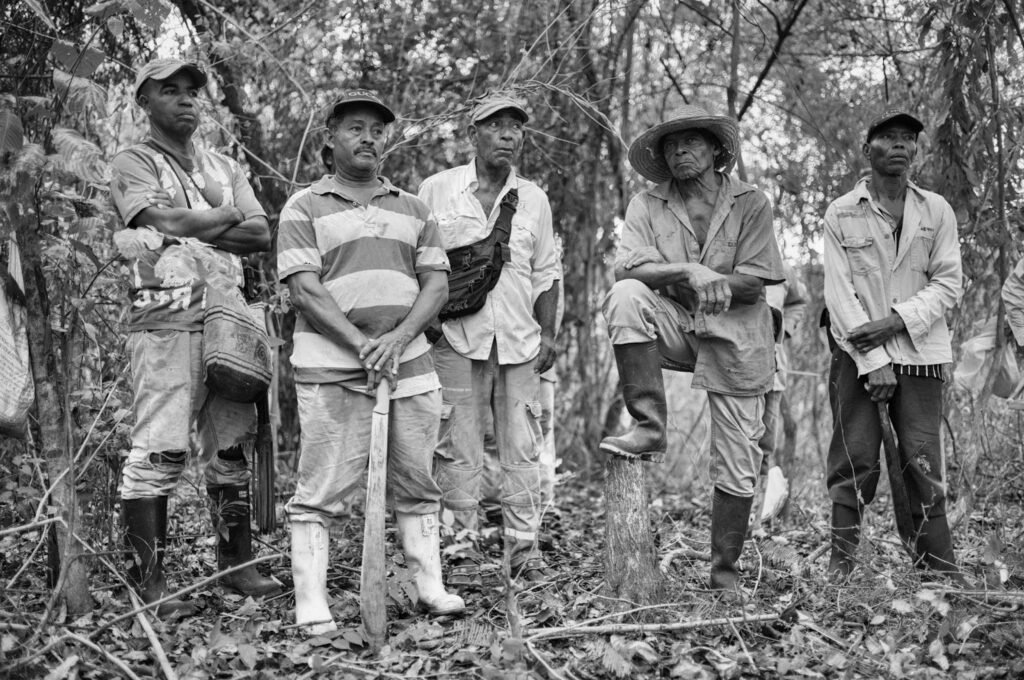
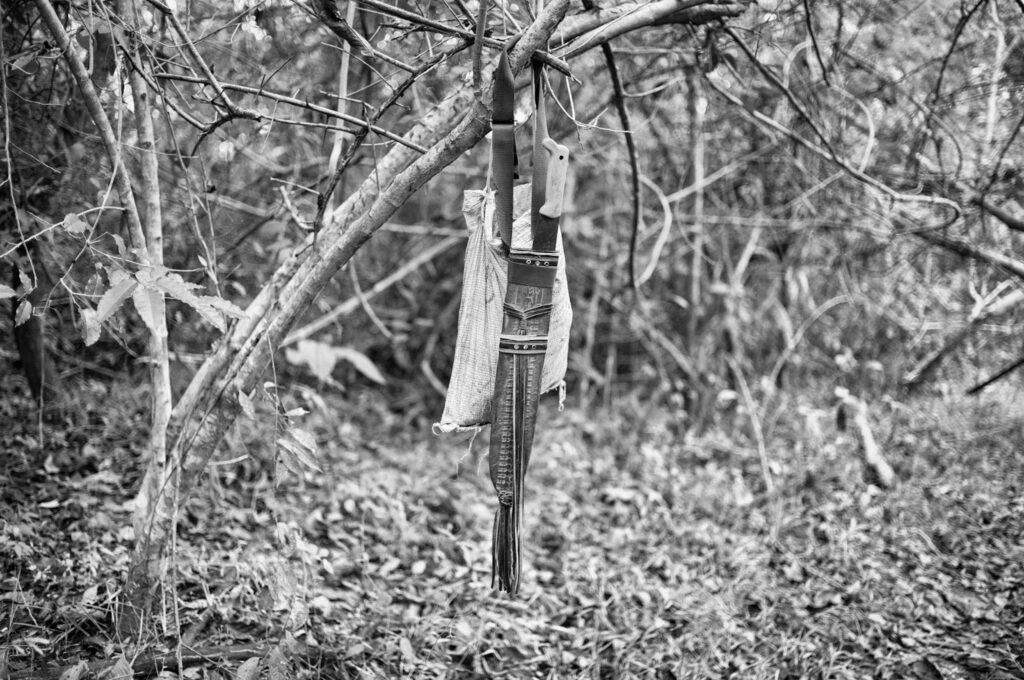
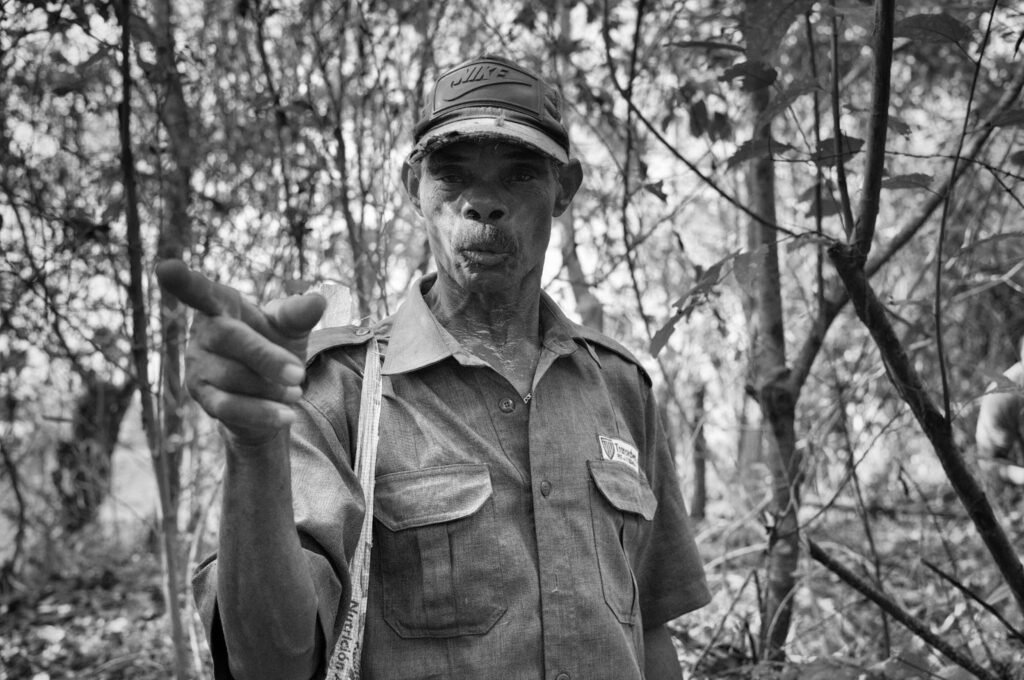
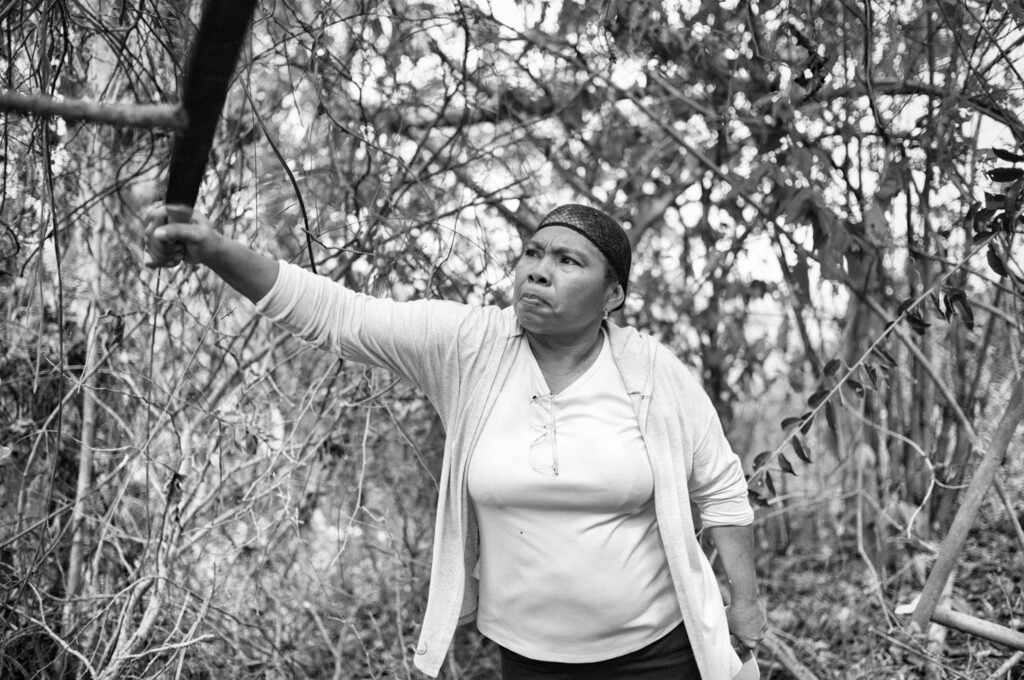
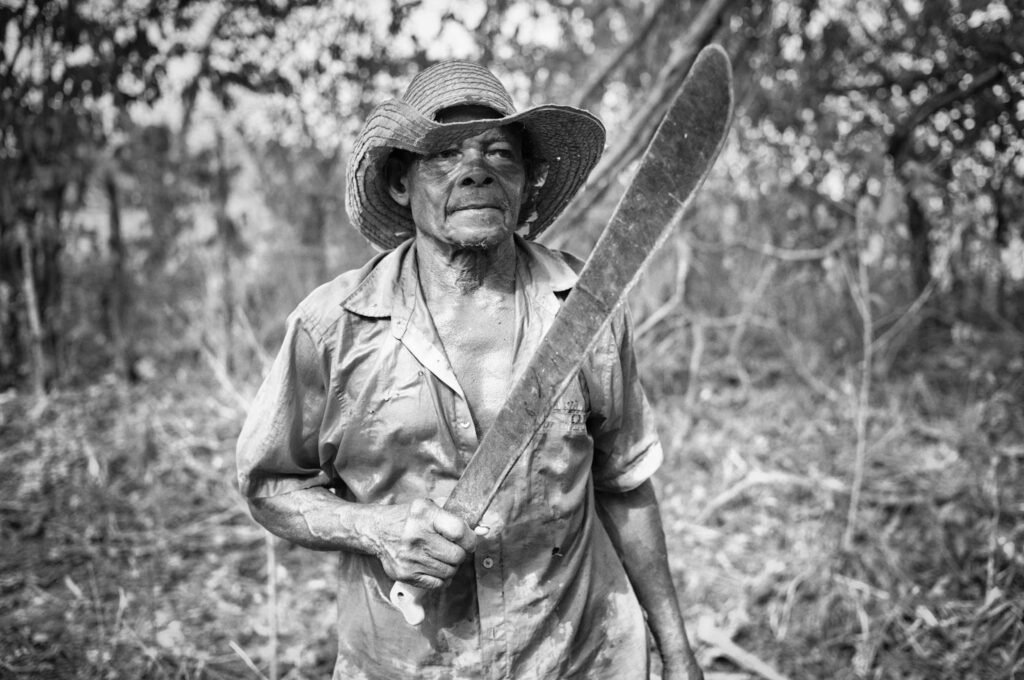
The route crosses Turbaco and Arjona and, little by little, the asphalt narrows. At precisely six we arrived at a place known as La Curva, a strategic point connecting Cartagena to the Black foothills of the Montes de María. The air smelled of damp earth. Waiting for us was Fulgencio Batista, a human rights defender, holding a rula — a long agricultural blade — in one hand, his son seated on a motorcycle beside him. While gripping the tool in his right hand, he pointed the way with his left. Nothing more needed to be said.
That Monday, January 26, forty-two Afro-descendant peasant families from María La Baja decided, for the second time, to enter a parcel of land they consider theirs, after waiting eleven years for state institutions to address their claim to public land belonging to the nation.
In Colombia, baldíos are public lands intended for poor farmers, Indigenous families, Afro-descendant communities, and victims of the armed conflict. Agrarian law prohibits their accumulation and regulates their sale to prevent them from ending up in the hands of large landowners.
The action was neither impulsive nor clandestine: it was the result of years of paperwork, broken promises, and archived case files. In the absence of answers, the families returned to inhabit the place that law and history had indicated as theirs, turning the recovery of land into a concrete act of territorial democracy, at a time when democracy is often reduced to the gesture of placing a ballot in a box.
That gesture — returning to the land — did not occur in a vacuum. In María La Baja, organizing has consequences. Fulgencio Batista speaks with the calm of someone who has learned to measure his words in a territory where speaking carries risks.
As he explains how pamphlets circulate and threats become part of the everyday landscape, his voice does not rise: he describes. He recounts that those who organize, who insist on associating and discussing the political direction of the country, are labeled military targets. He does not say it as a warning, but as a fact that affects collective life, political participation, and the spirit of those who do not always possess the same courage to resist fear. Even so, he insists on the importance of protecting the electoral process, of continuing to bet on ideas that — in his experience — have opened some possibility of justice for the peasantry.
The families of the Association of Afro-descendant Farmers of María La Baja (ASOCAAFRO) articulate in various ways the climate of threat surrounding organization, political participation, and especially the claim to public lands in the region; men and women anchor that fear in a longer history of interrupted returns, raised weapons, and a State that, even when it recognizes rights, does not always guarantee access to land.
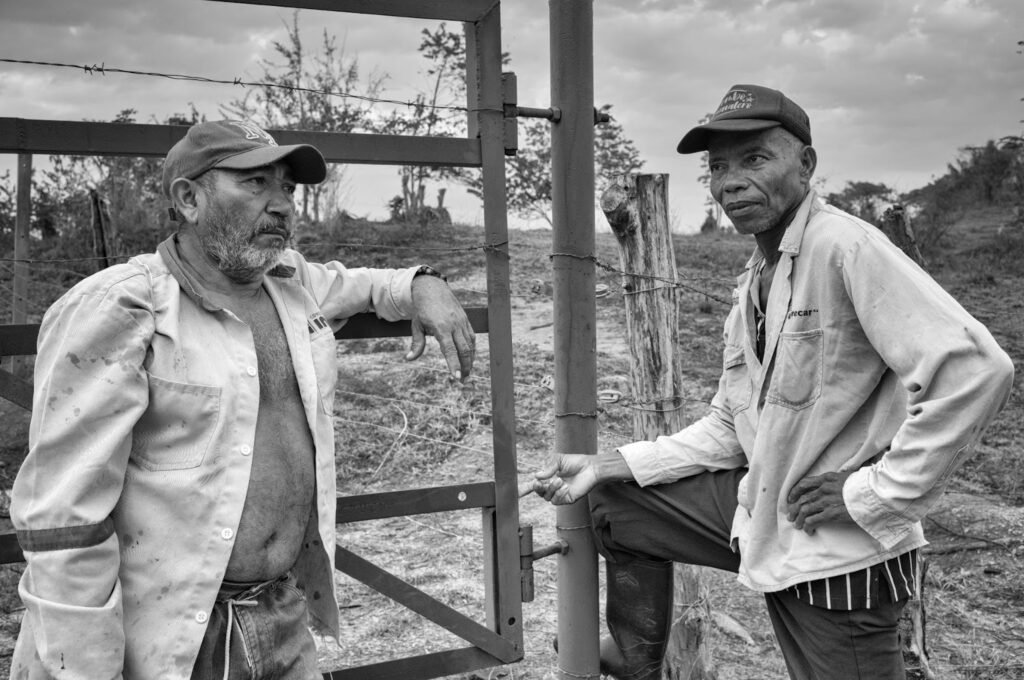
Manuel Ayala, an active member of the organization, speaks from the accumulated memory of cultivation on these lands. He recalls that this is not the first attempt to return: they have been displaced three times, held at gunpoint, and labeled invaders by employees of the agribusiness group Oleoflores S.A.S. On one of those occasions, he says, even officials from the Ombudsman’s Office, the Inspector General’s Office, and the Colombian Institute for Rural Development (INCODER), now the National Land Agency (ANT), were threatened with weapons. He still remembers the moment when a state director corrected the accusation aloud: they were not invaders, but occupants of public property belonging to the State — a State which, in Manuel’s words, belongs to the peasant who works it. Since then, access to La Franja — as they call the parcel — has been chaotic, a succession of prohibitions, surveillance, and frustrated returns. Even now, after their recent return, two individuals were sent to observe what was being done inside the property.
Manuel does not speak of confrontation. He insists on dialogue, on guarantees, on the need for institutions to “have a heart” and to see farmers for what they are: those who sustain the food supply of cities, of the country, and beyond its borders. His account seeks not epic heroism but legitimacy. They are not running, he says, to be beaten or photographed; they want to do things properly, without violence, sheltered by a law that, for the first time in a long while, they feel protects them. He refers to Law 160 of 1994, through which the Colombian State established that public lands must be primarily allocated to ethnic, peasant, and rural communities lacking land or possessing insufficient land.
To reach La Franja, one must choose between two roads, and neither is neutral. One is an unpaved road built by the Colombian Institute for Agrarian Reform (INCORA) in the early 1970s, when the State constructed the Arroyo Matuya reservoir and reorganized the territory under the promise of irrigation and agricultural development. The other is older, the old royal road once used by the inhabitants of the now-vanished town of Nomembrone, today submerged beneath the reservoir’s waters. That same path, opened by footsteps, animals, and memory, is the one Afro-descendant farming families walk once again today. Before entering it, another mark of power appears: Hacienda La Candelaria, now covered in African palm, an obligatory landmark to locate the entrance to these disputed lands. Here, geography is not landscape; it is layered history. And palm, more than a crop, is the visible trace of an economy that arrived to stay.
But La Franja and other areas of María La Baja are coveted by another logic. Since 1998, palm monoculture has advanced hand in hand with control of water. The oil produced here ends up in global supply chains serving brands such as Unilever, Nestlé, and McDonald’s. A local land dispute thus connects to markets that rarely look back at their origin.
African palm is not planted here by chance. From its fruit comes a versatile and inexpensive oil that permeates global daily life: it is found in margarines, cookies, chocolates, cereals, soaps, cosmetics, detergents, candles, industrial lubricants, and biofuels. It is a key input for the contemporary food and chemical industries, valued for its stability, its high yield per hectare, and its adaptability to large-scale production chains. But for that efficiency to function, palm requires very specific conditions: vast continuous tracts of land, permanent access to water, and control over territory.
In María La Baja, the irrigation district, the Arroyo Matuya reservoir, and the flat, fertile lands turned this peasant and Afro-descendant landscape into an ideal enclave for monoculture. Thus, what for families is territory, memory, and agricultural future becomes, for the global oil market, productive infrastructure: a hydric platform from which factories, brands, and consumers are supplied — consumers who rarely know where the oil they use every day comes from.
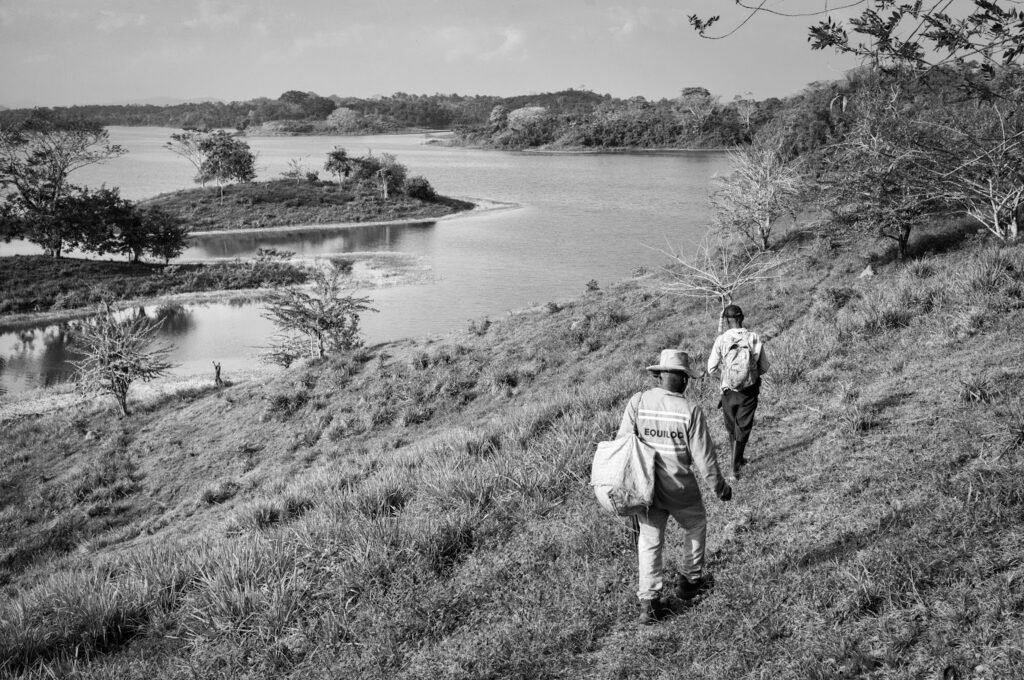
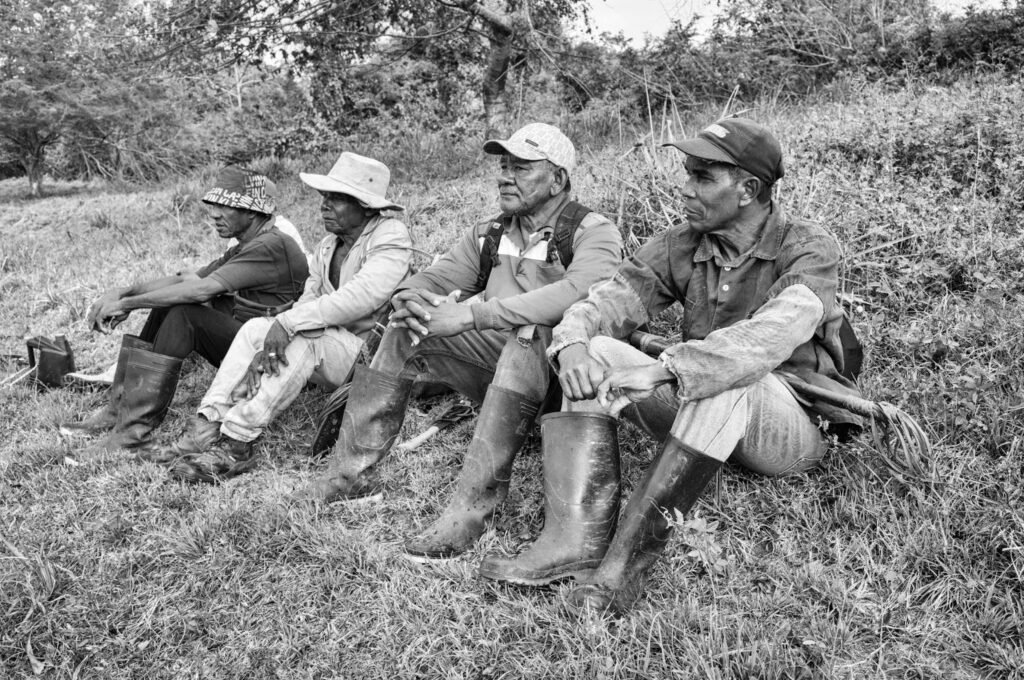
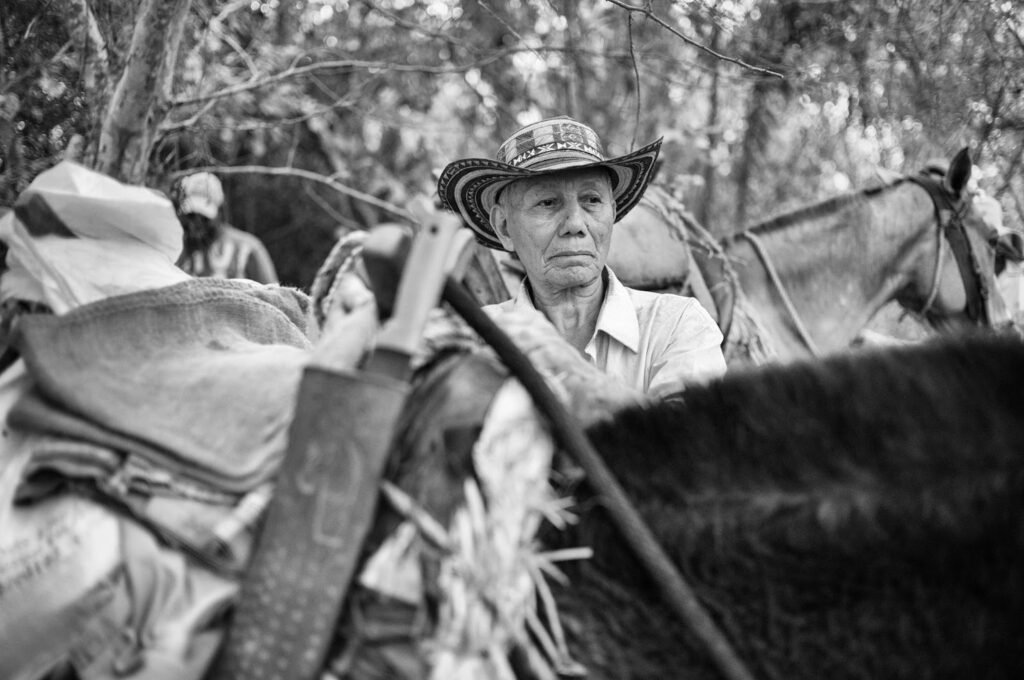
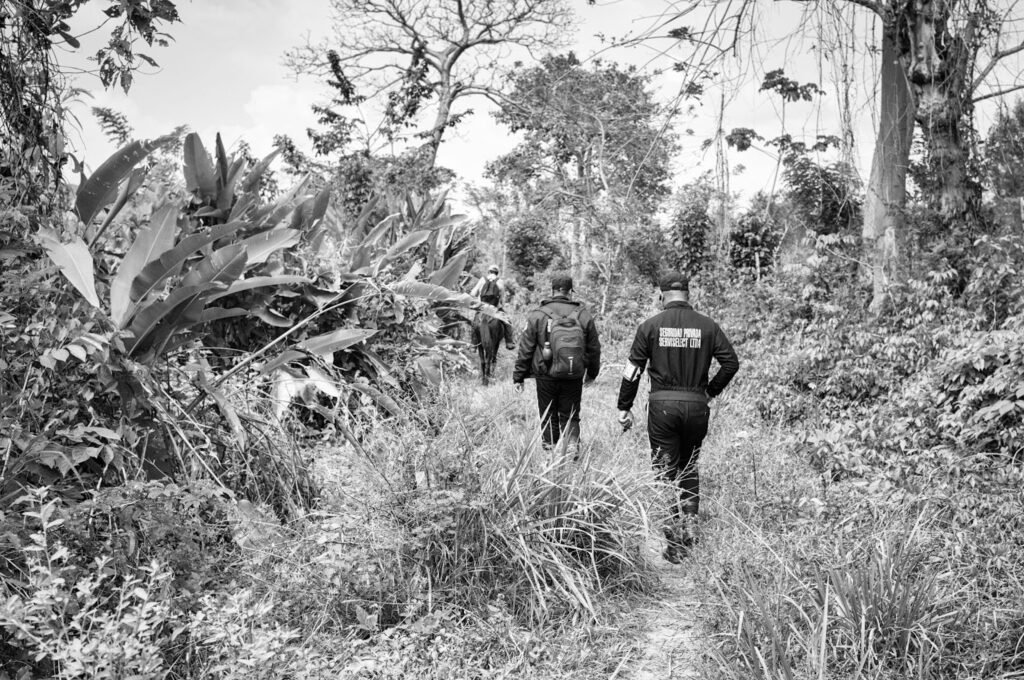
That day, before the sun had fully risen, the path filled once more with bodies. Men and women advanced with machetes slung over their shoulders, reused plastic bottles carrying water, and a few mules helping transport the essentials. There was no haste, but neither was there doubt. Rising early was not merely a practical strategy to avoid the heat; it was a peasant ethic, a learned way of working the land while the day is still cool and the brush yields more easily. Upon arrival, the work began: clearing brush, cleaning, marking the first agricultural plots. No one delivered speeches. The gesture was clear and repeated, as if the body remembered exactly what needed to be done. Recovering the land began by touching it again.
Since the 1970s, these lands have been occupied by entrepreneurs and, since 2004, have remained under the control of palm businessman Carlos Murgas. La Franja is surrounded by the waters of the irrigation district — acquired by INCORA in 1971 — and has become the stage of a prolonged dispute between institutional promise, reactivated after the Peace Accords, and collective action as a way of exercising a democracy that, in these territories, still depends on real access to land.
That promise has a name and a date: the Final Agreement for the Termination of the Conflict and the Construction of a Stable and Lasting Peace, signed on November 24, 2016, between the Colombian government and the now-dissolved FARC-EP after four years of negotiations in Havana, Cuba. The pact seeks to close more than five decades of internal war and is organized around six major pillars, including Comprehensive Rural Reform, political participation, disarmament, and transitional justice for victims of the conflict.
One of the most relevant pillars for Afro-descendant and rural communities such as those of María La Baja is the Comprehensive Rural Reform (CRR), conceived in the first point of the 2016 Peace Agreement and designed to structurally transform rural conditions and address the root causes of violence in Colombia. This reform is not merely an ideal: it proposes concrete actions to democratize access to land through the creation of a Land Fund intended to provide free land to landless peasants or those with insufficient holdings; it promotes subsidies and credit, formalization of rural property, deconcentration of land tenure, infrastructure development, technical assistance, and productive programs with a territorial focus. The CRR also includes social development and food security policies aimed at reducing rural poverty and closing the gap between countryside and city.
In theory, the CRR does not aspire merely to distribute land but to guarantee its productive and sustainable use, reducing rural poverty and promoting equality of rights for peasants, ethnic communities, and historically excluded populations. Yet despite formal advances in implementation — with millions of hectares adjudicated and titling processes underway — real access to land in María La Baja remains unequal and slow in regions affected by armed conflict. Between the technical language of peace and the concrete life of the countryside, a gap opened that is measured not in reports but in years.
For more than a decade, the families of Asocaafro turned waiting into routine. They rented land to cultivate, moved from place to place, sustained their households without a plot of their own on which to grow food. Waiting was not passivity, but a prolonged form of everyday resistance.
Meanwhile, the institutional path advanced unevenly: filed letters, meetings recorded in minutes, promises assigned dates that were never fulfilled. In the name of Comprehensive Rural Reform, the families repeatedly heard announcements about land access that failed to materialize. As case files stagnated, the company Oleoflores — a Colombian agribusiness group founded by the Murgas family, dedicated to the cultivation, processing, and commercialization of palm oil and linked for decades to national political and economic power — began labeling them invaders and initiating legal proceedings for alleged environmental crimes. Years later those cases were archived for lack of evidence, but the effect had already been achieved: judicialization functioned as a mechanism of attrition and criminalization.
The dispute has not been merely local or legal: Black and peasant communities of Montes de María filed a formal complaint before the Roundtable on Sustainable Palm Oil (RSPO) against Oleoflores for alleged human rights violations and environmental damage linked to its operations in the region. The complaint — supported by organizations such as Forest Peoples Programme — accuses the conglomerate of territorial dispossession, land expropriation, deforestation, illegal privatization of communal resources and roads, as well as stigmatization, criminalization, and intimidation of human rights defenders. Communities argue that despite the company’s public commitments to sustainability standards, these abuses have persisted, linking palm expansion to denial of water access and traditional land use for Afro-descendant and peasant populations, while generating enormous revenues for the company and deepening processes of exclusion and social tension in a region marked by centuries of inequality and conflict.
Thus life for the families of Asocaafro continued to depend on a territory encircled by palm and by fear. To that material geography was added another, more diffuse yet equally determining: the uncertainty brought by state officials, where responses shifted and solutions were postponed.
Yet the waiting was not sterile. In 2022, the Land Restitution Unit (URT) recognized that La Franja is public land of the nation over which the community has exercised customary use. That Preliminary Study opened the door to administrative recovery of the property and made this institution the first at the state level to officially indicate its legal nature, alongside other evidence pointing in the same direction.
The response, however, never arrived.
With that recognition in hand and institutional silence as backdrop, at the start of a year marked by elections, polarization, and discourses questioning agrarian jurisprudence, the families decided to return. Above all, they were driven by the urgency to plant in order to sustain life. What they hope to plant is nothing new: cassava, heirloom rice, yam, corn, watermelon — foods that have sustained Afro-descendant life for generations and that now circulate as part of a food diaspora, even as local cultivation has been marginalized. Planting them again is reactivating memory.
La Franja is not isolated. Its crops feed peripheral neighborhoods of Cartagena through informal circuits. Recovering the land is also a struggle over who feeds the city.
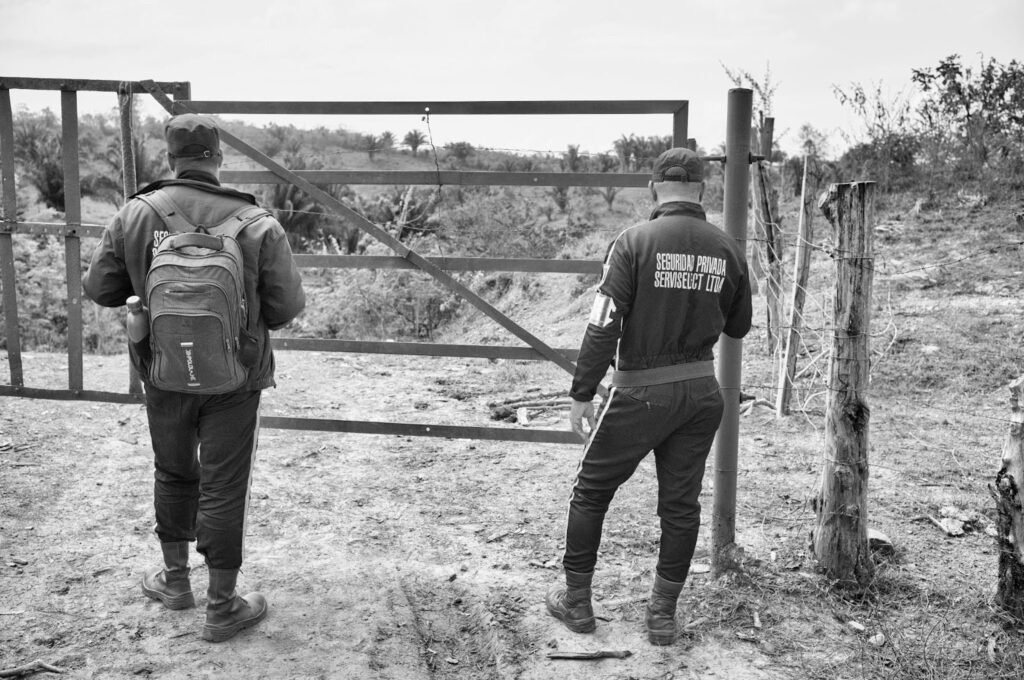
As the farmers advanced, one of the guards received an order over the radio: “Don’t forget — I want videos and photos of everyone.”
All this unfolds as Cartagena prepares to host the Second International Conference on Agrarian Reform and Rural Development (ICARRD+20), to be held from February 24 to 28, 2026, bringing together more than 1,500 delegates from one hundred countries to discuss fair land redistribution, gender justice, environmental sustainability, and food sovereignty.
A few kilometers away, in La Franja in María La Baja, democracy and land redistribution are practiced differently: with bodies walking at dawn, machetes opening brush, and families planting future. Here, voting or sustaining long conferences is not enough. Democracy is also cultivated. And in that everyday gesture, agrarian reform ceases to be a distant narrative: land descends from paper into hands and becomes shared life. It is not myth or slogan, but the soil that sustains entire peoples and families.