Trump’s threats and the unraveling of America
Trump’s threats and the unraveling of America
On April 7, 2026, the President of the United States wrote these words on social media: “A whole civilization will die tonight, never to be brought back again.”
Let those words land. Not as political noise. Not as bluster. As what they are: a threat to commit genocide, uttered in broad daylight by the man who holds the highest office on earth.
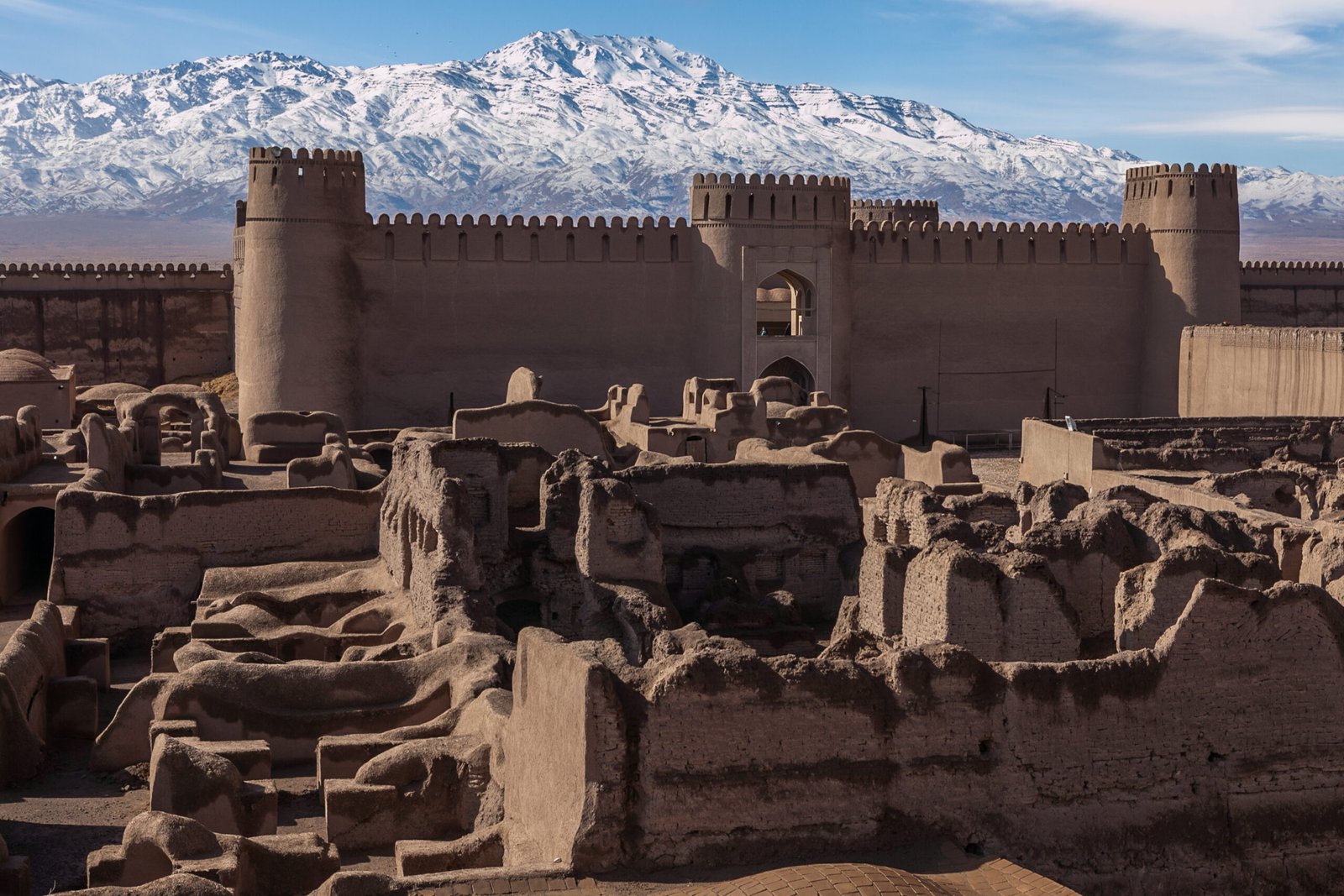
Iran is not a rogue abstraction. It is the heir to one of the most ancient and luminous civilizations in human history — the civilization of Cyrus, of Hafez, of Rumi, of the first human rights charter ever written. It is a nation of over 90 million people, most of them young, many of them yearning for a different future. To threaten the annihilation of their civilization is not a strength. It is savagery dressed in the language of ultimatum.
Amnesty International has already said plainly what lawyers and human rights experts are saying in chorus: Trump’s threats “may constitute a threat to commit genocide.” Kenneth Roth, the former executive director of Human Rights Watch, put it with cold precision: “Attacking civilians is a war crime. So is making threats with the aim of terrorizing the civilian population.” The United Nations High Commissioner for Human Rights has deplored the rhetoric. Even a Republican senator — Ron Johnson of Wisconsin — broke from his party to say: “I do not want to see us start blowing up civilian infrastructure.”
And yet here we are.
The president has threatened to destroy every bridge, every power plant, every desalination facility — the infrastructure upon which 90 million human lives depend for water, for heat, for light, for hospitals. He has said, with characteristic contempt for law and history, that he is “not at all” concerned about committing war crimes. Not at all.
We have been down this road before, though never with such naked, gloating abandon. The fingerprints on this catastrophe belong not only to Trump. They belong to Benjamin Netanyahu, whose government has prosecuted a war of staggering brutality across the region and who has drawn the United States deeper and deeper into an entanglement that serves Israeli strategic ambitions far more than American ones. The U.S. and Israel launched this war together on February 28. They are bombing Iranian universities, bridges, petrochemical plants, and steel factories together. And now, with over 3,400 people killed across the region — more than 1,600 of them civilians — the bill is being paid in Iranian blood while Netanyahu’s government cheers from the sidelines.
This is the company America now keeps.
But Iran is not the only country being slowly destroyed by deliberate American policy. Ninety miles from Florida, the island of Cuba — home to nearly ten million people — is being strangled in plain sight. In January 2026, Trump signed an executive order imposing tariffs on any nation that supplies oil to Cuba. The result has been the most effective blockade of the island since the Cuban Missile Crisis. No fuel means no electricity. No electricity means food rots, hospitals go dark, water pumps fail, and children go to school without breakfast. Researchers estimate that at least 40 percent of Cuba’s population is now living in extreme poverty, with widespread malnutrition among the elderly and children. Food is rotting in the fields because there is no diesel to bring in the harvest. One U.S. Congresswoman acknowledged, without apparent shame, that the suffering of mothers and children is “a price worth paying” for regime change. A 1960 State Department memorandum set out the explicit goal of U.S. Cuba policy as producing “hunger, desperation, and overthrow of government.” Six decades later, the strategy is unchanged — only now it is turbo-charged.
The United Nations Human Rights Office has called this oil blockade a “serious violation of international law” and “an extreme form of unilateral economic coercion.” What it is, in plain language, is a siege. And sieges that deliberately starve civilian populations have a name under international law: they are war crimes.
So we have this: in the Middle East, threats of civilizational destruction from 30,000 feet. In the Caribbean, a slow suffocation by economic strangulation. Two peoples. Two methods. One doctrine — collective punishment of civilians in pursuit of regime change.
And what of the Vice President of the United States? While Trump issues his apocalyptic ultimatums, JD Vance is in Budapest — not to shore up historic alliances, not to rally democracies, but to stand on a stage at a campaign rally for Viktor Orbán, the autocrat who has declared the European Union a greater threat to Hungary than Vladimir Putin’s Russia. Orbán, who has maintained warm ties to the Kremlin while Ukraine bleeds. Orbán is the inspiration and lodestar of every authoritarian populist from Warsaw to Buenos Aires. Vance called him “one of the only true statesmen in Europe.” He told the crowd: “The president loves you, and so do I.”
Let the picture form in its full, grotesque clarity: the President threatens civilizational annihilation in the Middle East; his administration starves Cuba into submission in the Caribbean; and the Vice President campaigns for a Putin-aligned autocrat in Central Europe. This is the foreign policy of the United States of America in April 2026.
Think of what America has surrendered. Not just its credibility — though that is gone, shredded on the altar of impulsive cruelty. Not just its alliances, though Great Britain has already refused to allow U.S. forces to use its bases for strikes on Iranian civilian infrastructure. What has been surrendered is something harder to rebuild: the moral authority that once allowed Americans to look themselves in the mirror and believe, however imperfectly, that their country stood for something beyond raw power.
The United States once led the prosecution of war criminals at Nuremberg. It helped write the Geneva Conventions. It accused Russia of war crimes for bombing Ukraine’s power plants and civilian infrastructure. It now threatens to do the same — and worse — to Iran. It blockades Cuba with a ferocity designed to produce, in the words of its own historical policy documents, “hunger and desperation.”
History will not forget this. History will not forgive it.
The Iranian people are forming human chains around their power plants as you read this. They are not shields for a regime they may despise. They are mothers and students and doctors and poets, standing in front of the machinery of modern life and saying: do not do this. We exist. We are a civilization too.
In Cuba, a diabetic grandmother waits for power to return so she can refrigerate her medicine. A child leaves for school without breakfast. A farmer watches his harvest rot in a field he cannot reach.
We should bear witness to all of them. And we should ask ourselves, with urgency and without comfort, what kind of country we have become — and what kind we still have the courage to be.