
The endless journey to Mariona
Photographs by Manuel Ortíz Escamez
From the street, a fare collector calls out in a near-song: “San Salvador, San Salvador!”
That cry is the signal Yanira needs. There is no time to think. She boards on instinct, because that is what she has learned: if they say San Salvador, that is the bus she must take. She cannot read, so she does not look for numbers or signs. From there she will continue on to “Mariona”—La Esperanza Prison—to deliver the food package to her son, Saúl Blanco, former beach soccer national team player who, in 2008 in Marseille during the Beach Soccer World Cup, scored a historic goal. Today he is incarcerated in El Salvador. Carolina and Matilde climb aboard with her; the three move forward together through the pushing crowd and the rumble of engines.
To be there, the journey began much earlier. Yanira rose at three in the morning, as she does each time she travels to San Salvador. The first thing she did was bend her knees and pray to her God. Then she bathed, dressed, and prepared food for her husband, who lives with diabetes.
Minutes before five, Matilde calls from outside, from the dusty street: —Yanira! Yanira!
—What is it? she answers. It is still dark. Yanira switches on the light and lets her in. Three minutes later Carolina arrives, the one who lives farthest away.
This time the trip falls on a weekday. Just as the clock strikes five in the morning, the alarm sounds at the El Jobal Agricultural Production Cooperative, the island’s main source of work, where Saúl Blanco also worked as a cattle rancher. At that hour, still in darkness, the three women take a mototaxi to a small improvised dock. From there they board a boat to leave Espíritu Santo Island.
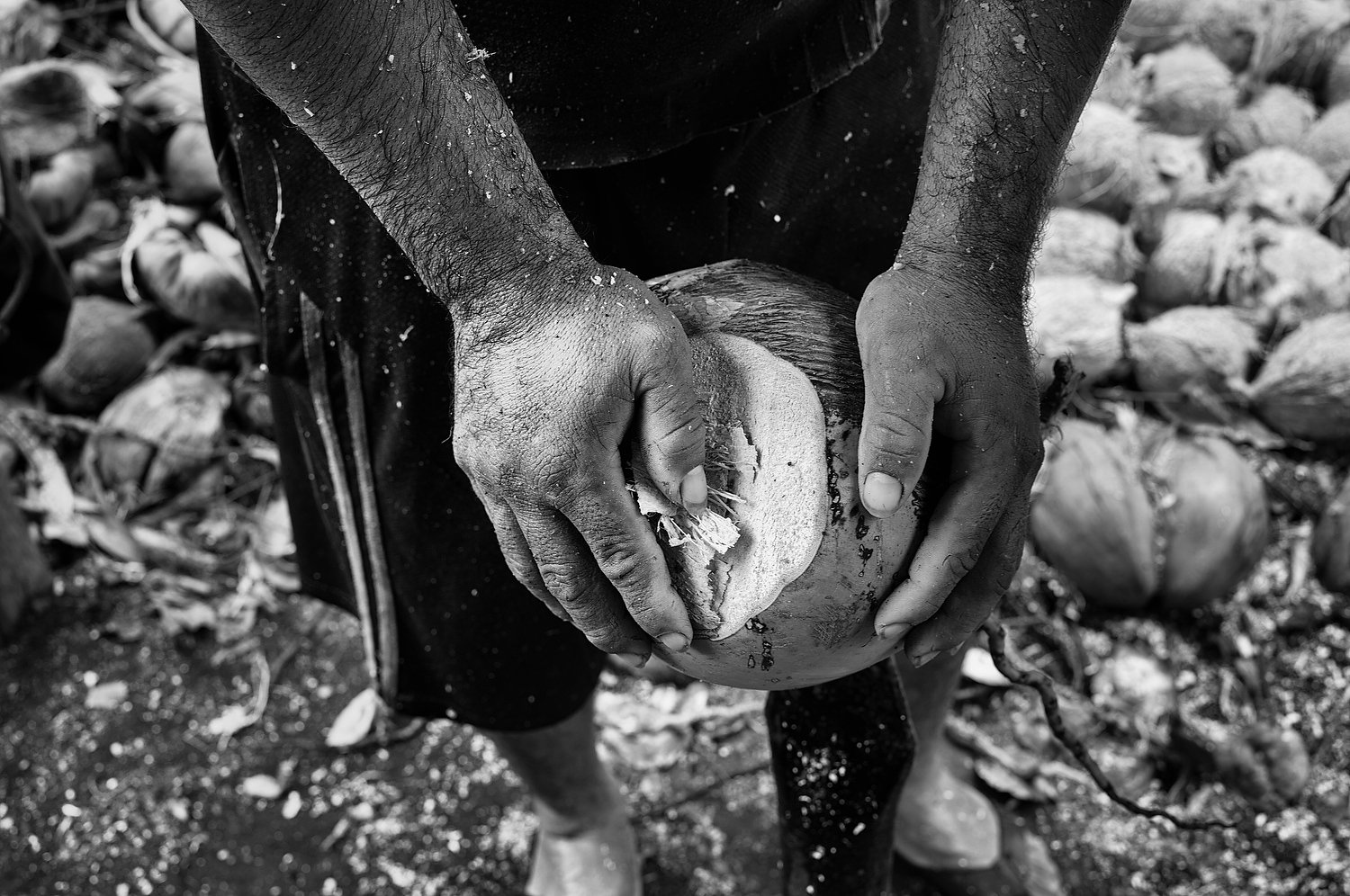
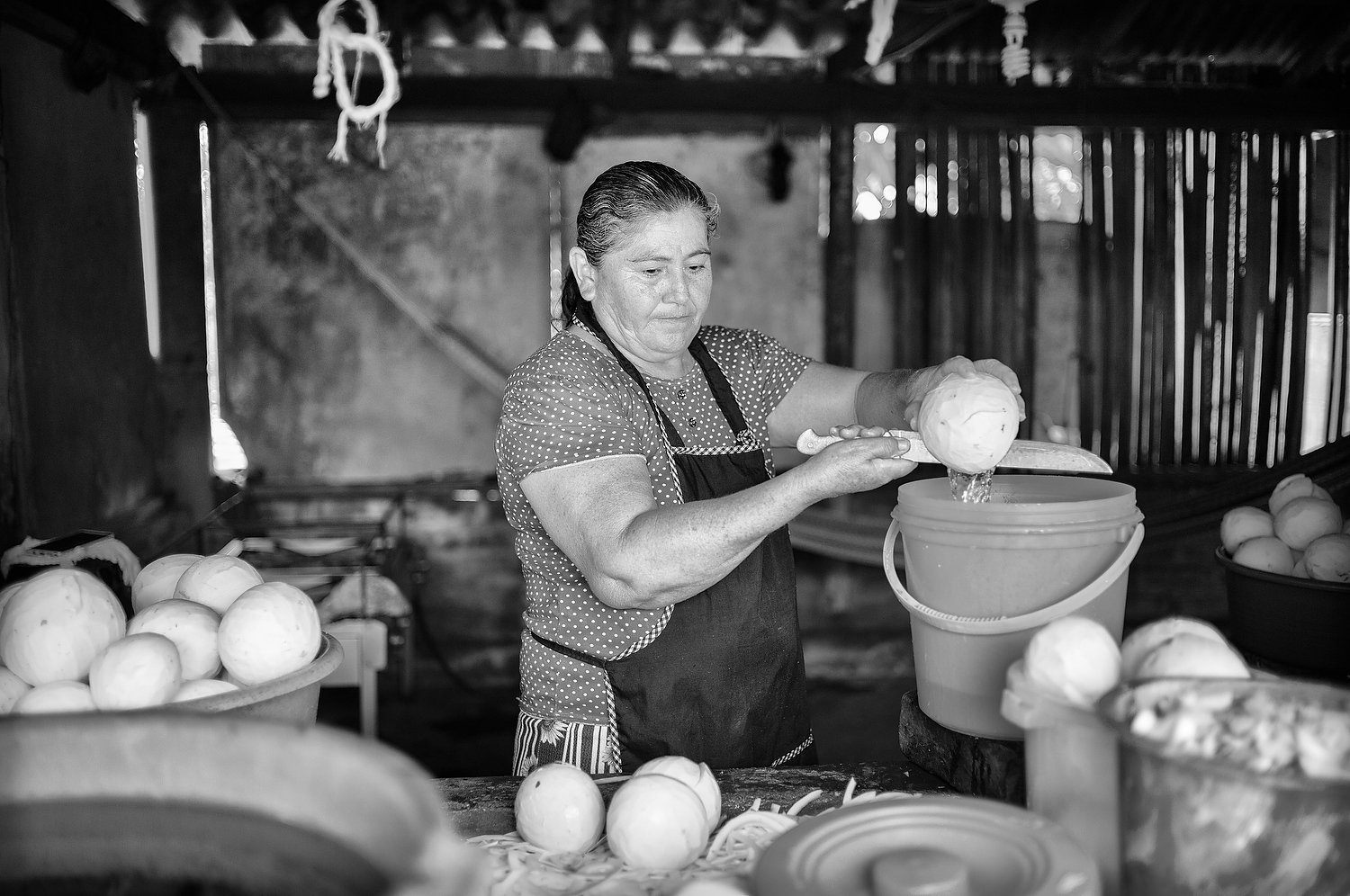
Most of the island’s more than one thousand inhabitants survive by working for the cooperative. Located within the cluster of islands in Jiquilisco Bay, in the municipality of Puerto El Triunfo, Usulután, Espíritu Santo is known as the island of coconuts—its principal product. Those who do not work for El Jobal sustain small businesses. Yanira, for example, buys coconuts from the cooperative to make sweets—an occupation she learned in a training course years ago—and she also buys milk to make and sell cheese.
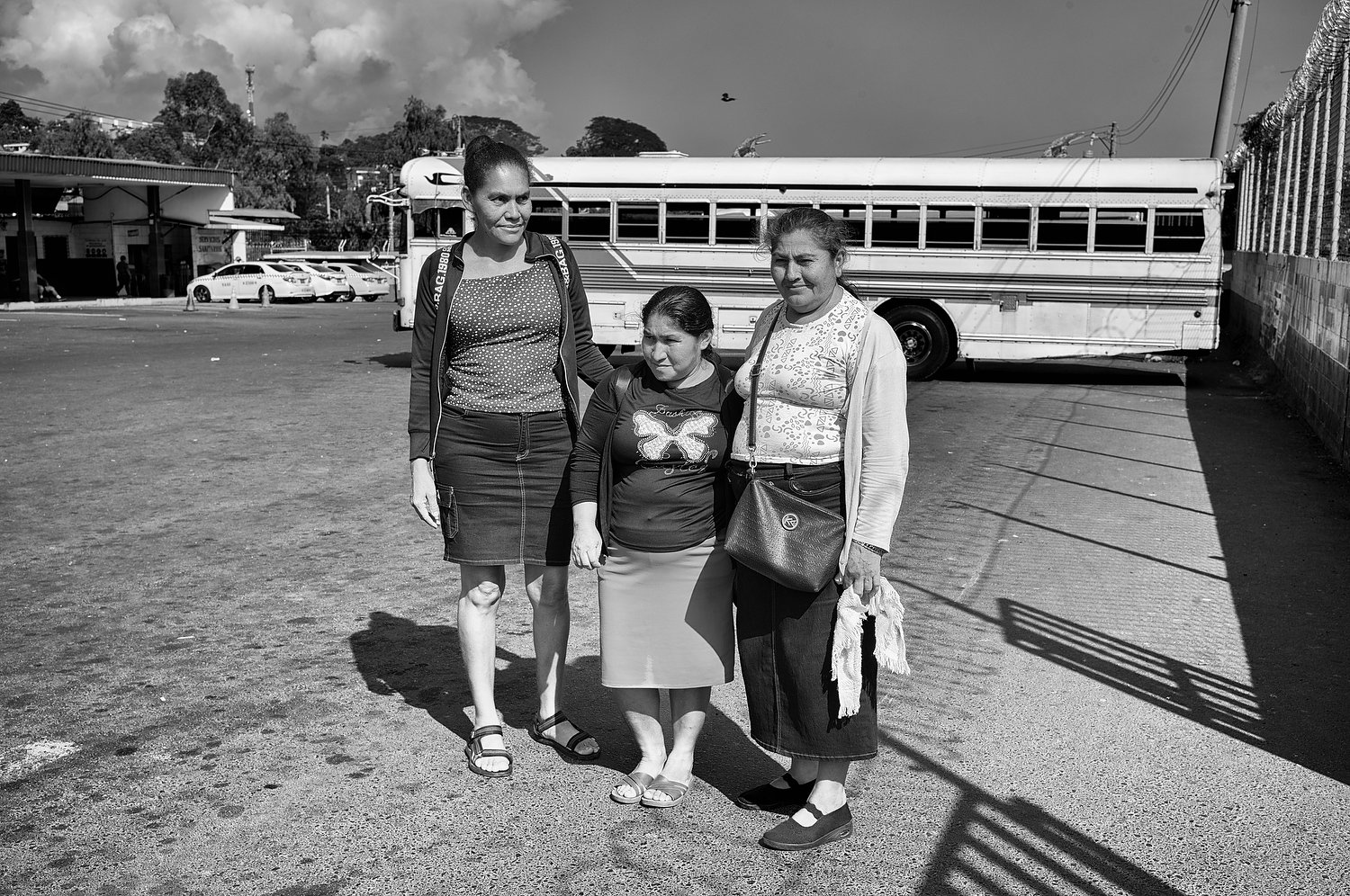
The three women work however they can, with whatever is available, to gather the money needed for their relatives’ food and hygiene packages. Carolina makes sweets for another island resident and, in the afternoons, prepares snacks at her mother’s house, where she has lived since her husband, Cristian Pineda, was detained on July 3, 2022. Matilde cares for an elderly person and saves to purchase the package for her son, Cristian, who was detained during the state of exception.
The state of exception was approved in El Salvador in March 2022 as an executive measure to confront gangs, following a surge in homicides. Since then, through 47 consecutive extensions, constitutional guarantees such as the right to immediate legal defense, the inviolability of telecommunications, and limits on administrative detention have been suspended. The measure has led to thousands of extrajudicial arrests, many based solely on suspicion or on the appearance of belonging to a criminal structure.
These actions have also been documented by scholars Beatriz Magaloni and Alberto Díaz-Cayeros, both professors at Stanford University and affiliated with the Center on Democracy, Development, and the Rule of Law. Their works, “Extinguished Democracy and Imprisoned Youth under Bukele” and “Does the Bukele Model Have a Future?”, bear witness to the complexities and paradoxes unfolding in El Salvador today.
Human rights organizations have documented mass arrests, arbitrary detentions, rights violations, torture, and obstacles preventing families from obtaining information about their incarcerated relatives. In its most recent report, Socorro Jurídico Humanitario documented the deaths of 470 people in state custody during the state of exception; according to the organization, 94% had no gang ties.
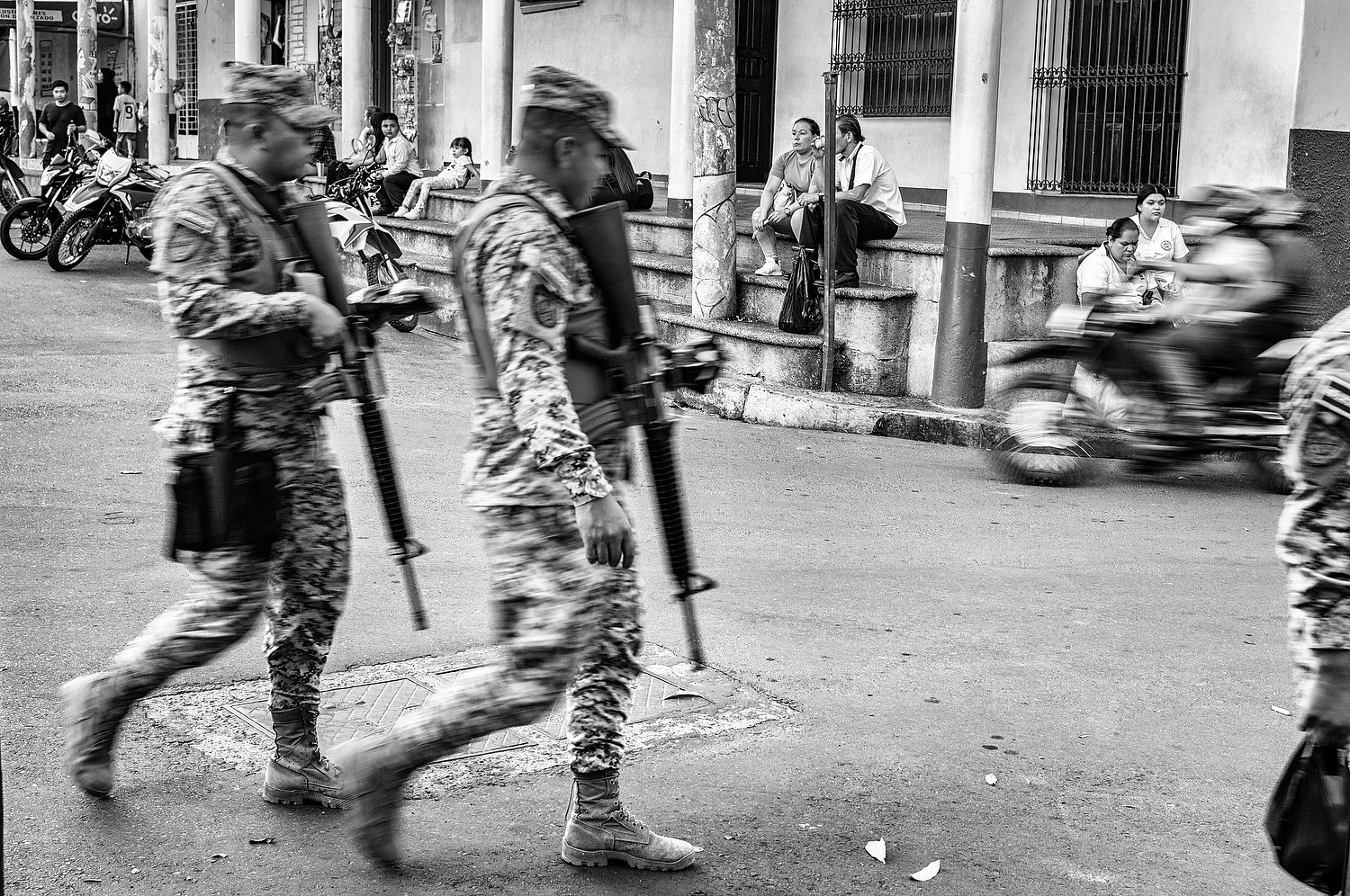
Human rights organizations have documented mass arrests, arbitrary detentions, rights violations, torture, and obstacles preventing families from obtaining information about their incarcerated relatives.
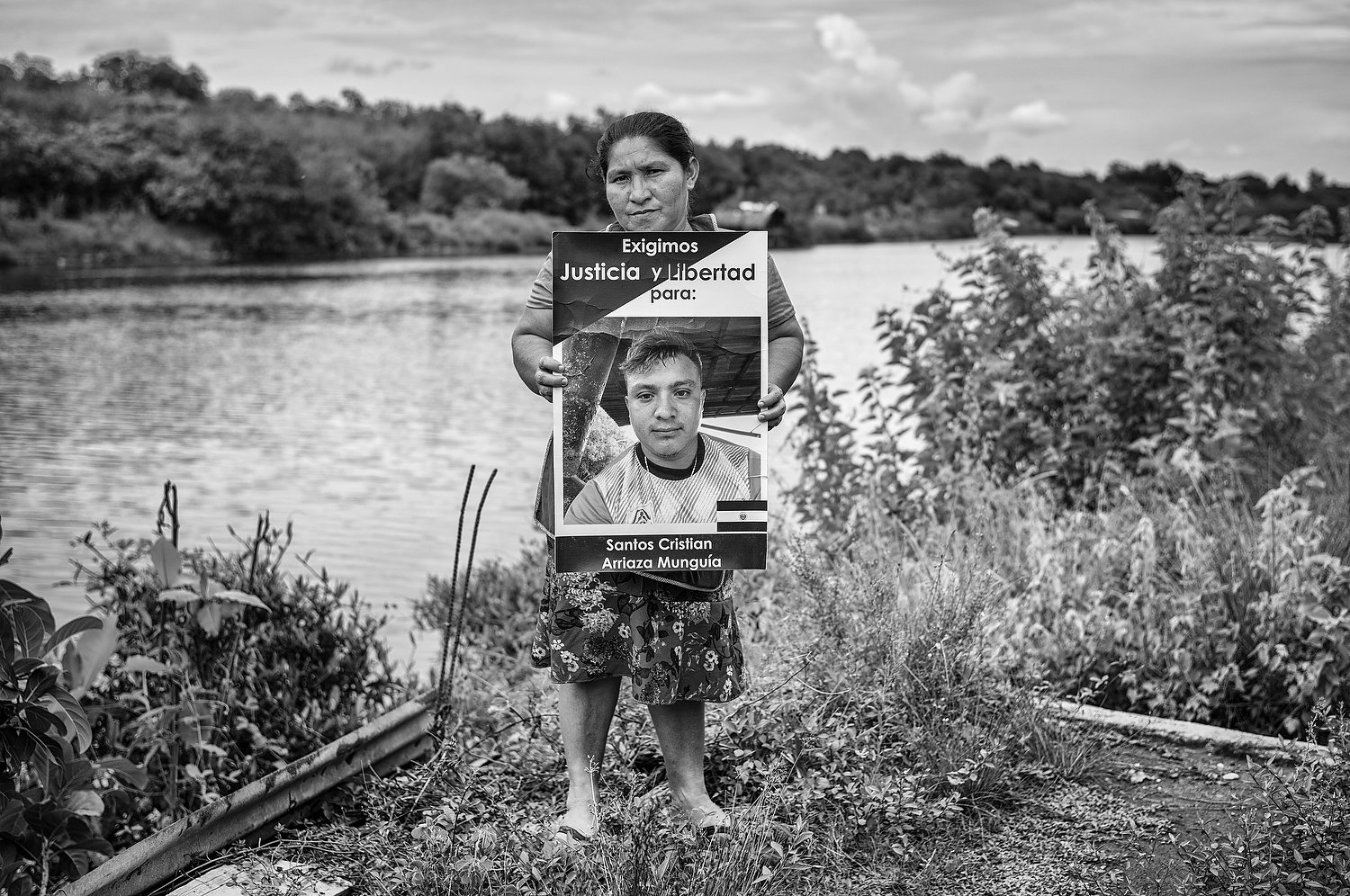
Espíritu Santo Island has not recorded the presence of gangs, according to investigations, authorities, and residents themselves. Despite this, at least 24 people have been arrested since the approval of the state of exception, accused of belonging to criminal structures. Of those, 17 remain in prison and 7 have been released. Among those still detained is Saúl Blanco, former beach soccer national team player who, in 2008, was part of the team that brought El Salvador to a World Cup and scored a historic goal. He was arrested on May 31, 2022, and is currently held at La Esperanza Prison, known as Mariona. His detention is considered unjust by relatives and neighbors. To date, the State has not presented public evidence demonstrating his membership in a gang or criminal organization.