
Photographing Faith: M’Kumba and the Visual Awakening of Gui Christ
By Pamela Cruz / Terra 360

Portrait of Inagê Kaluanã, a practitioner of Candomblé, representing the arrival of the Orixá Exu on the beach at Salvador, where one of the main ports of disembarkation for enslaved Africans in the Americas was located. Along with the thousands of Yoruba people brought by force, Exu, lord of communication and messenger between the material world (Aiyê) and the spiritual world (Òrun), also crossed the Atlantic. His presence sustained the link with the sacred and offered comfort in the face of the violence of captivity. 
On an altar dedicated to the Orixá Exu, his representation preserves ancestral forms still present in regions of southern Nigeria, Benin, and Togo, where he appears with animal horns and an erect phallus—symbols of fertility and vital energy. With the arrival of the first Christian missionaries in the 15th century, these images were reinterpreted from a European and religious perspective that associated Exu with the biblical figure of Satan. This error persisted for centuries, and until 2010, online translation platforms continued to translate “Exu” as ‘Satan’ in several languages. It was only thanks to the international movement “Exu is not Satan” that this association began to be corrected in digital environments. 
Portrait of Candomblé practitioner Nicolas Mozart depicting a mythological tale about Ogun, the Yoruba deity of technology and work. In this narrative, as the bravest warrior of his people, Ogun devotes himself entirely to his conquests, to the point of not hesitating to bathe in his own blood to achieve his goals—a metaphor for sacrifice, persistence, and collective dedication. Although interpreted by the colonial gaze as a primitive or destructive force, in the Yoruba tradition he is revered as one of the great heroes of civilization: the creator of ancestral technologies and knowledge, who forged tools and enabled the advancement of the material world through the mastery of fire and metal. 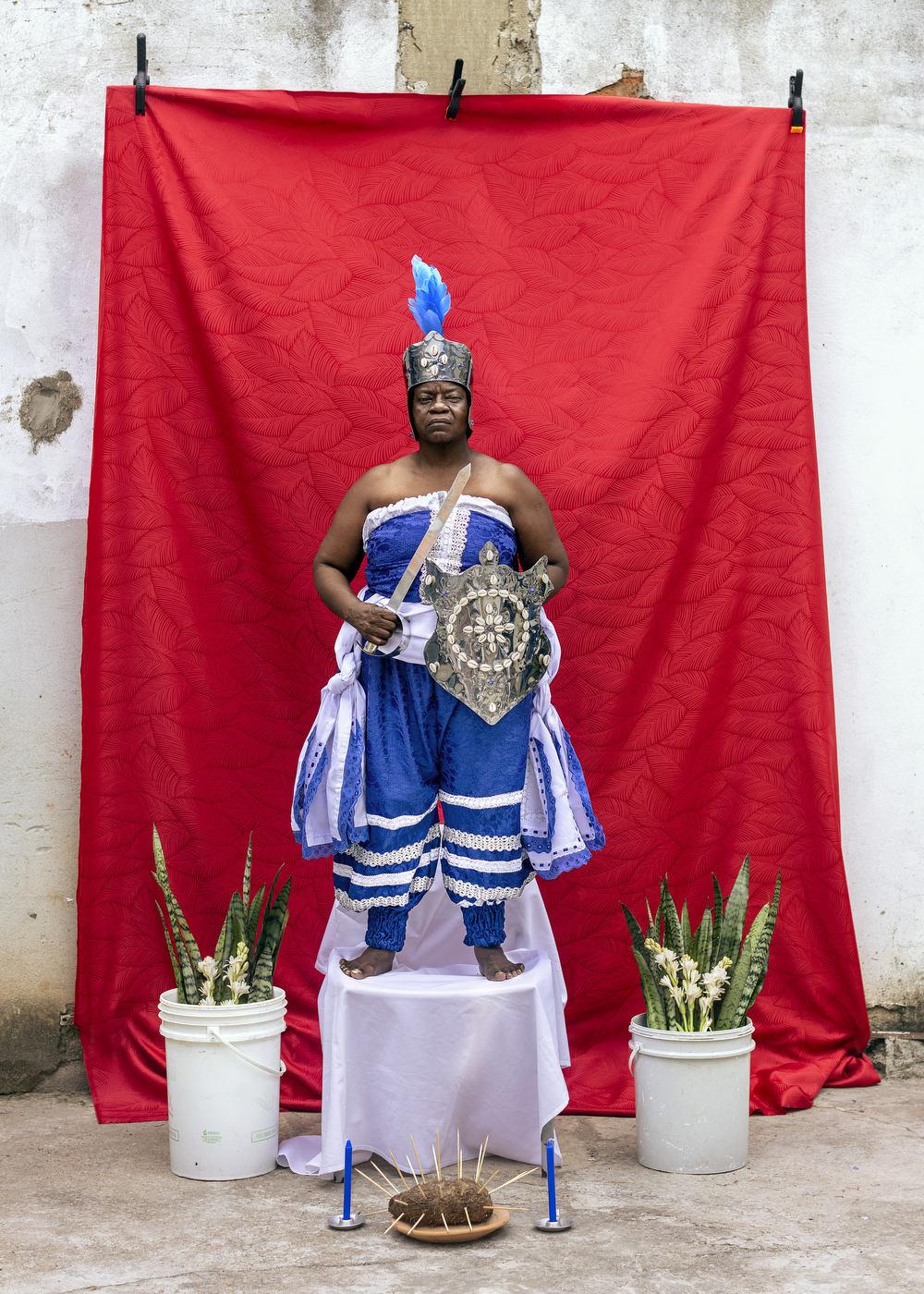
Portrait of Afro-Brazilian priestess Elizabeth Aparecida representing Ogun in the backyard of her temple. After centuries of prohibition, the Morals Police was created in 1942 to monitor Afro-Brazilian temples. Due to structural racism, many practitioners were unable to regularize their spaces and faced arrests and closures. In the face of persecution, backyards became spaces of resistance: places where rituals were performed in secret, ensuring the continuity of religious practices and the cohesion of Afro-Brazilian communities. 
Portrait of Afro-Brazilian priests José Elías and Rosa Nagro in São Paulo, embodying the guardian spirits of crossroads—entities that protect sacred spaces and the spiritual life of those who practice Afro-Brazilian religions. Although they play a fundamental role as guides and defenders, these spirits have historically been represented by intolerant groups in a derogatory manner as demonic figures due to their worldly and bohemian behavior. This prejudice fuels religious persecution and makes these entities some of the most attacked within the Afro-Brazilian spiritual universe. 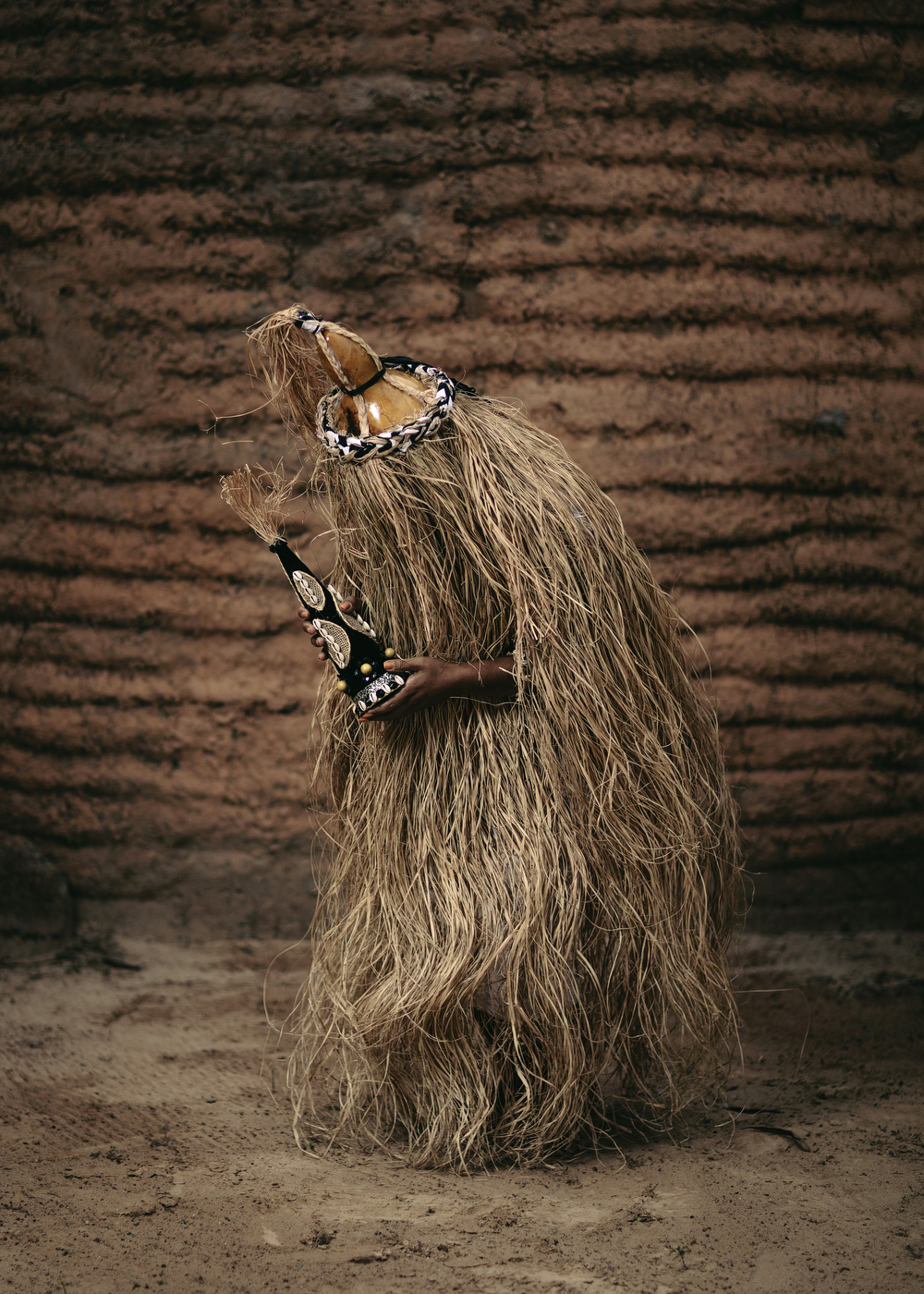
Portrait of a representation of Obaluaê in a Candomblé temple in Campo Limpo Paulista, one of the most misunderstood Orixás by those who do not practice Afro-Brazilian religions. A Yoruba deity associated with both healing and disease, Obaluaê is often depicted with his body covered in straw, hiding the scars of smallpox. This image has led some intolerant groups, out of ignorance and prejudice, to mistakenly link him with the disease, even going so far as to forbid the pronunciation of his name. However, his true role is that of a powerful healer, capable of providing physical and spiritual relief. For this reason, Obaluaê continues to be deeply revered by Afro-Brazilian communities, who recognize in him the power to transform pain into care. 
Portrait of Diana Kelly performing an Afro-Brazilian ritual in which popcorn is used as a remedy. In Yoruba mythology, this food is linked to Obaluaê, the Orixá of diseases. According to sacred narrative, after his smallpox sores healed, they turned into popcorn, symbolizing his power to absorb ailments. For centuries, traditional Afro-Brazilian medicine was the main access to health care for enslaved people and their descendants, although these practices were criminalized until the early 20th century. 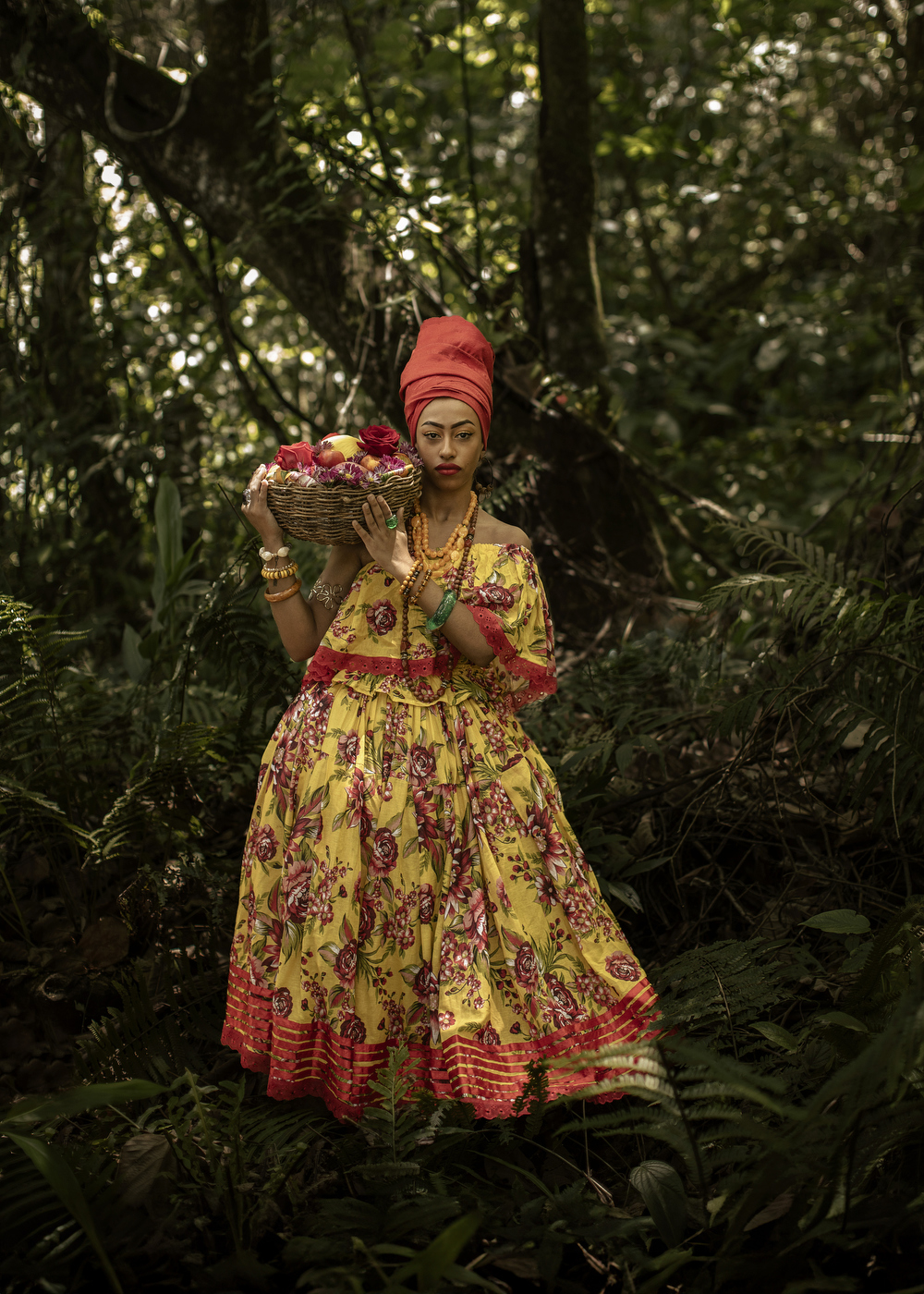
Portrait of Natasha Solojovas in the forest, carrying fruit in preparation for an Afro-Brazilian ritual. In Afro-Brazilian mythology, forests are sacred spaces inhabited by multiple deities who reside in enchanted trees, rivers, and stones. For centuries, these environments served as refuges for Afro-Brazilian elders and spiritual leaders, allowing them to perform rituals in secret and safe from social persecution. Today, however, many public parks display signs expressly prohibiting Afro-Brazilian rituals, while other religious practices enjoy free access, highlighting persistent inequalities and the ongoing struggle against religious discrimination. 
Portrait of Dandara Vitória and Erica Firmino embodying the deities of water, Oshun, and wind, Oyá. According to Yoruba mythology, Oshun is also the goddess of love, capable of captivating anyone, even someone of the same gender. Unlike many religions, Afro-Brazilian mythology celebrates the plurality of genders, bodies, ages, and origins. This inclusive vision often provokes attacks from intolerant groups, who misinterpret these deities as symbols of sin or lust. However, within Afro-Brazilian communities, they remain emblems of strength, freedom, and welcome. 
Portrait of João Silva performing a ritual known as Ebó, in which the entire Afro-religious community gathers to prepare sacred foods, offered collectively while singing in the Yoruba language: “I offer you food for your life, so that Iku (death) may stay away.” This ritual cannot be performed alone: it requires many hands so that the axé—the vital energy that moves the universe according to Afro-Brazilian cosmologies—can circulate among everyone, strengthening spiritual and social bonds. In Brazil, where 59 young black people are killed every day by urban violence and racism, rituals like this seek to protect lives and confront, from a sacred perspective, the consequences of structural racism. 
Portrait of Valdemir Alves, an Afro-Brazilian priest responsible for playing the drums during rituals in his community. The image highlights the importance of this sacred instrument, capable of invoking the deities that inhabit the spiritual realm. Despite their profound religious significance, drums of African origin were banned in Brazil until the 1940s. For this reason, many ceremonies were held in remote, wooded areas, where the sound could not be heard by the authorities, but could reach the Orixás and the deified ancestors, thus preserving the connection between the material and spiritual worlds. 
Portrait of Flavio Junior, a practitioner of Candomblé in São Paulo, wearing the traditional clothing used during the initiation process in Afro-Brazilian religions. These garments, which symbolize African ancestry and spiritual purity, must be worn for three months by neophytes, even in everyday life. In the case of children, this can lead to bullying, as many classmates do not understand the sacred value of these rituals. As a result, some end up facing isolation and, in certain cases, drop out of school due to the pressure and discrimination they suffer in the school environment. 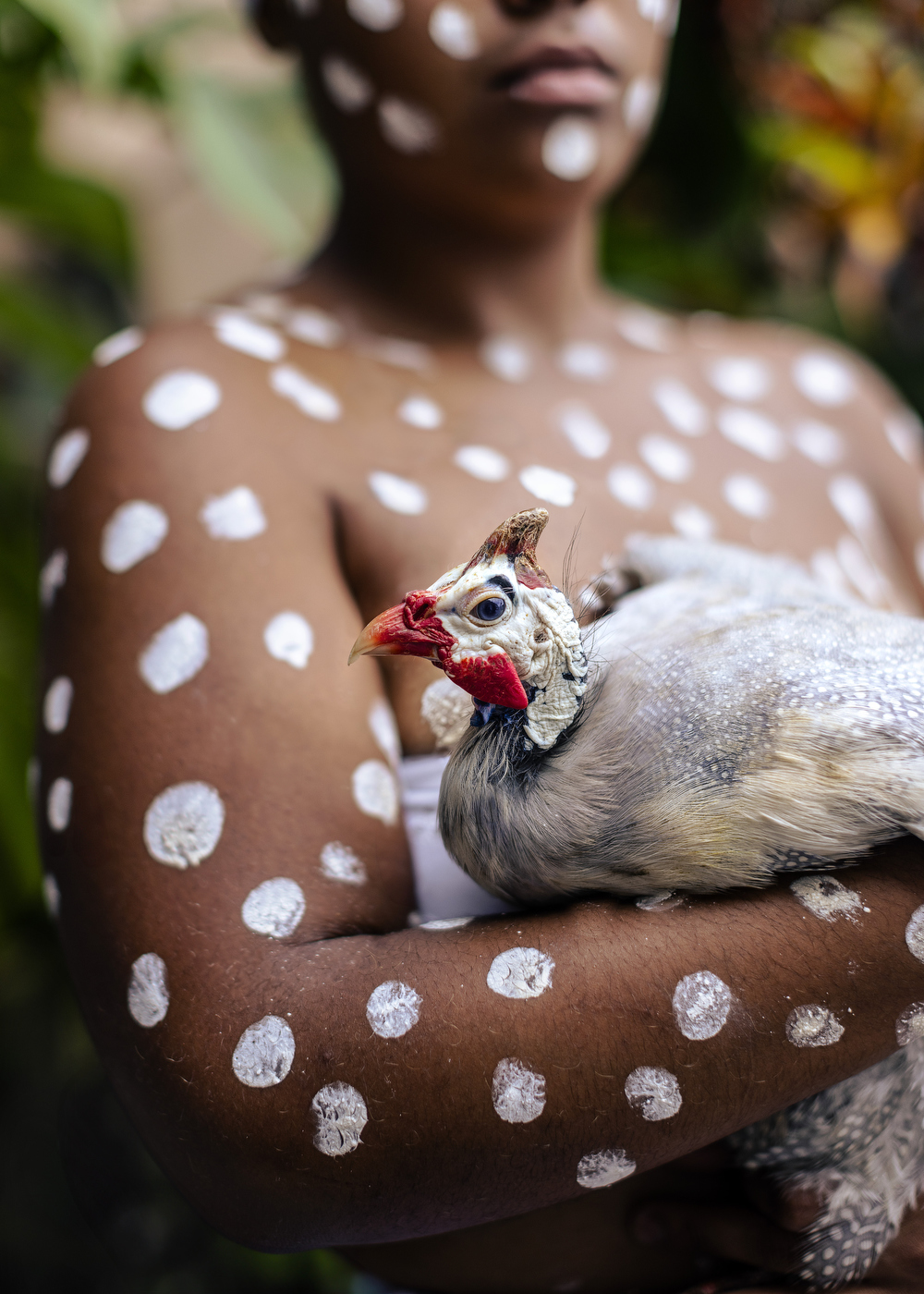
Portrait of an Afro-Brazilian nun in São Paulo during a ritual known as Efun, in which white dots are drawn on the body as a form of protection against death — a deeply symbolic gesture in a country where dozens of black people are murdered every day. According to Yoruba mythology, death, known as Iku, fears the guinea fowl. For this reason, in some Afro-Brazilian religions, it is traditional to paint initiates with patterns that mimic the plumage of this bird, invoking its power to ensure a long, healthy, and protected life. 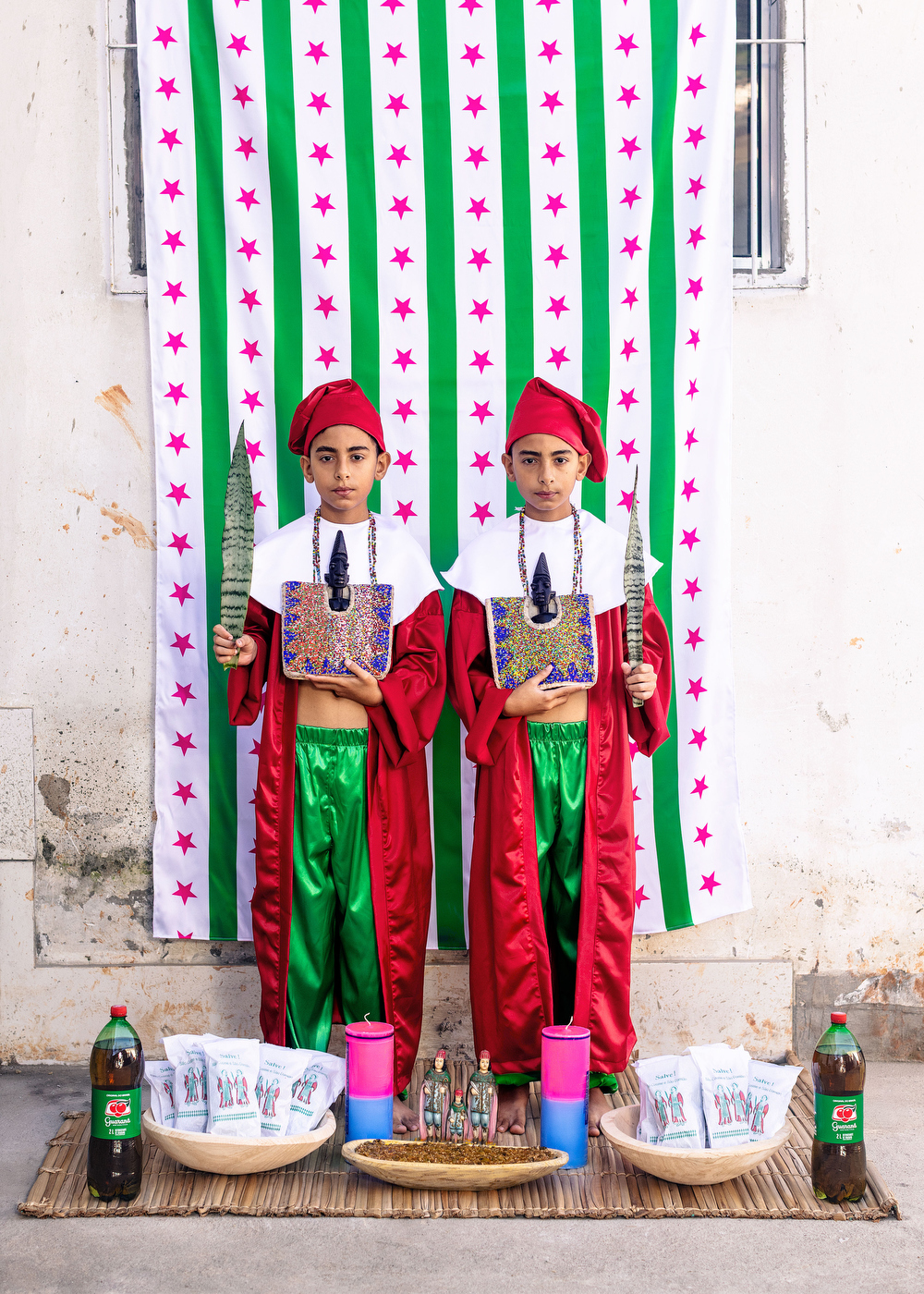
Portraits of brothers Ryan and Christian in an Umbanda temple located in Embu das Artes, representing Saints Cosmas and Damian. As Christian saints with a strong connection to childhood, they were syncretized in Brazil with the Ibejís—Yoruba twin deities associated with childhood and joy. For centuries, this devotion has been expressed in the tradition of distributing small bags of Afro-Brazilian sweets to children. However, in recent years, criminal groups influenced by intolerant religious discourse have banned this practice. In many Afro-Brazilian communities, where this celebration was a moment of collective joy for children in the periphery, insecurity persists today, revealing how religious racism also manages to silence the sweetest gestures of tradition. 
In São Paulo, portrait of Candomblé priest Danilo Fernandes holding two African cowrie shells as if they were binoculars—instruments capable of seeing through time and space. Divination with shells, practiced in many Afro-Brazilian religious traditions, is based on a sophisticated symbolic and mathematical system. Each configuration corresponds to mythological narratives that guide spiritual decisions and also underpin aspects of traditional Afro-Brazilian medicine. Despite its cultural and intellectual depth, this oracle has long been dismissed as superstition, reflecting the scientific racism that historically devalued African spiritual knowledge and practices. 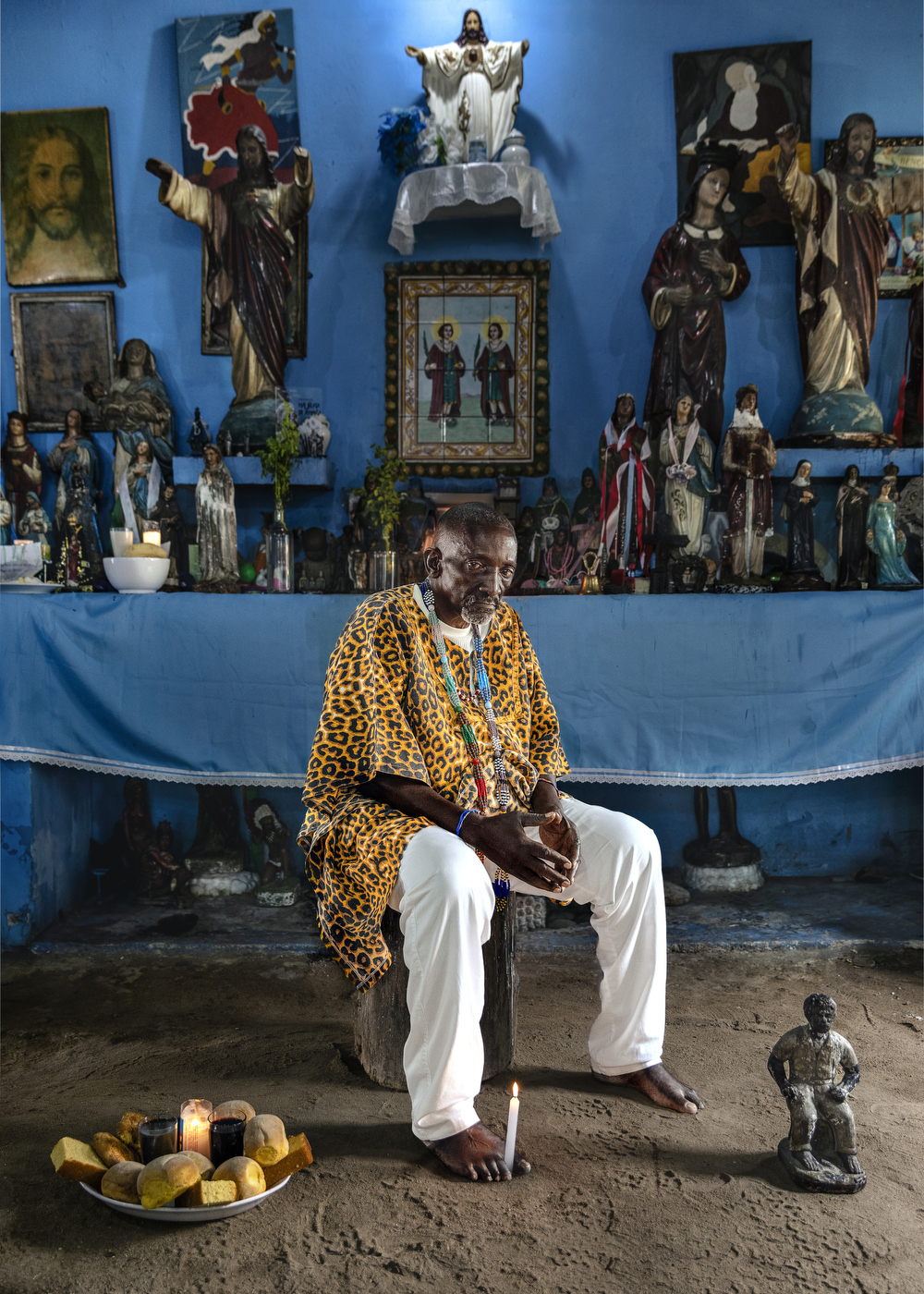
Portrait of Umbanda priest Pai Bijuca in his temple in Piabetá, next to the statue of his ancestor, Grandfather Leandro. For centuries, due to the criminalization of Afro-Brazilian religions, many communities were forced to hide images of their deities and ancestral guides. To avoid persecution, it became common to place Catholic saints in the most visible parts of the altar—where they could be seen by the authorities—while statues of enslaved spirits, indigenous guides, and Afro-Brazilian deities were placed lower down or hidden. This strategy allowed the temples to survive, preserving their faith through silence and resistance. 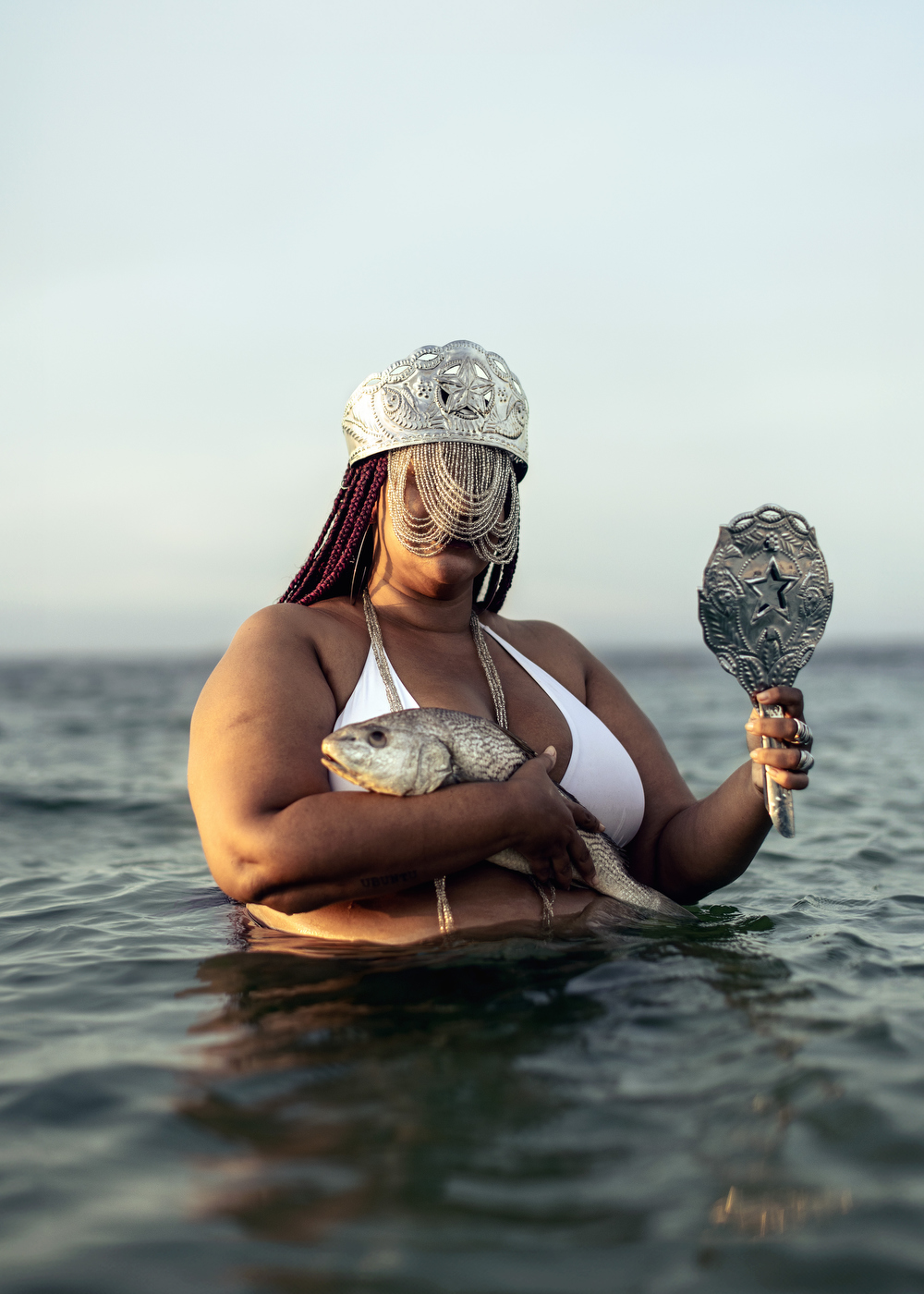
Portrait of Samara Azevedo in the waters of the sea of Salvador, representing Yemanjá, the Yoruba deity of the seas. Considered the most popular Orixá in Brazil, her image has been transformed over time as a result of racism. While in Africa she is depicted as a black woman, corpulent and with generous breasts, breastfeeding fish as if they were her children, in Brazil her figure was whitened and stylized, turning her into a thin woman with European features, similar to a fairy. Faced with this distortion, new generations of practitioners of Afro-Brazilian religions are working to recover the ancestral image of Yemanjá and confront the prejudices that still weigh on her. 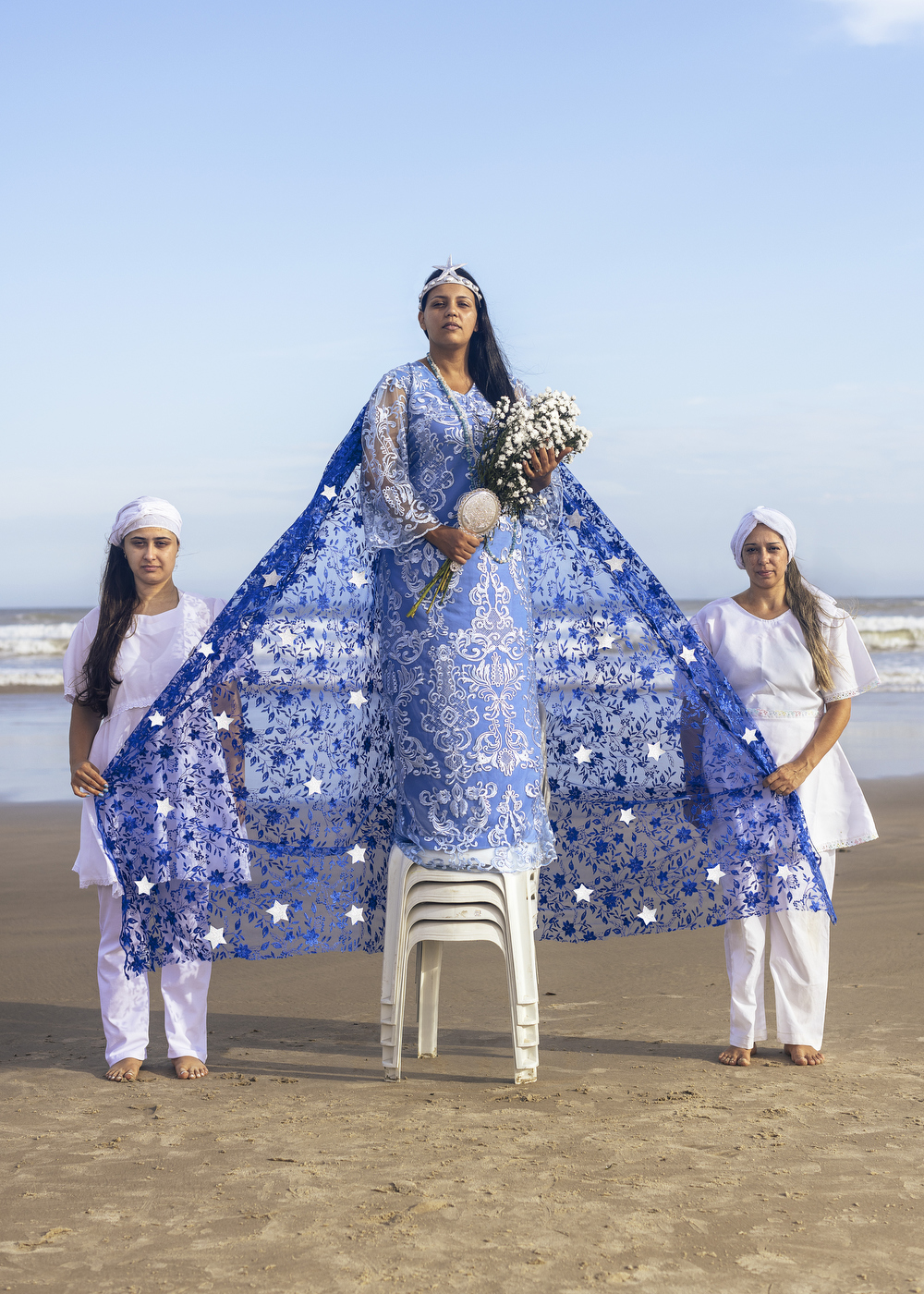
Portrait of Umbanda practitioners during the Yemanjá festival in Mongaguá. This celebration takes place on different dates throughout Brazil due to the syncretism between this deity of African origin and Christian festivities. In some tourist areas, it was traditionally held on December 31, profoundly influencing New Year’s rituals and transforming the date into one of the country’s biggest cultural events. Over time, however, the celebration was co-opted by commercial interests, and its African roots were systematically erased due to religious racism. As a result, many Afro-Brazilian practitioners were forced to change the date of their rituals, as their presence came to be considered an obstacle to tourism. 
Portrait of Bruno Ronald, practitioner of Afro-Brazilian religion during a mental health care ritual. In Yoruba mythology, fish (Ejá) are considered children of Yemanjá, the deity of the sea, who creates human heads and grants balance and mental clarity. Faced with structural racism, Afro-Brazilian communities face profound challenges in the area of mental health, and rituals such as this one become essential in offering support, strength, and care for the Orí—the head, understood as the axis that connects the soul to the spiritual world and as the source of each person’s emotional and psychological balance. 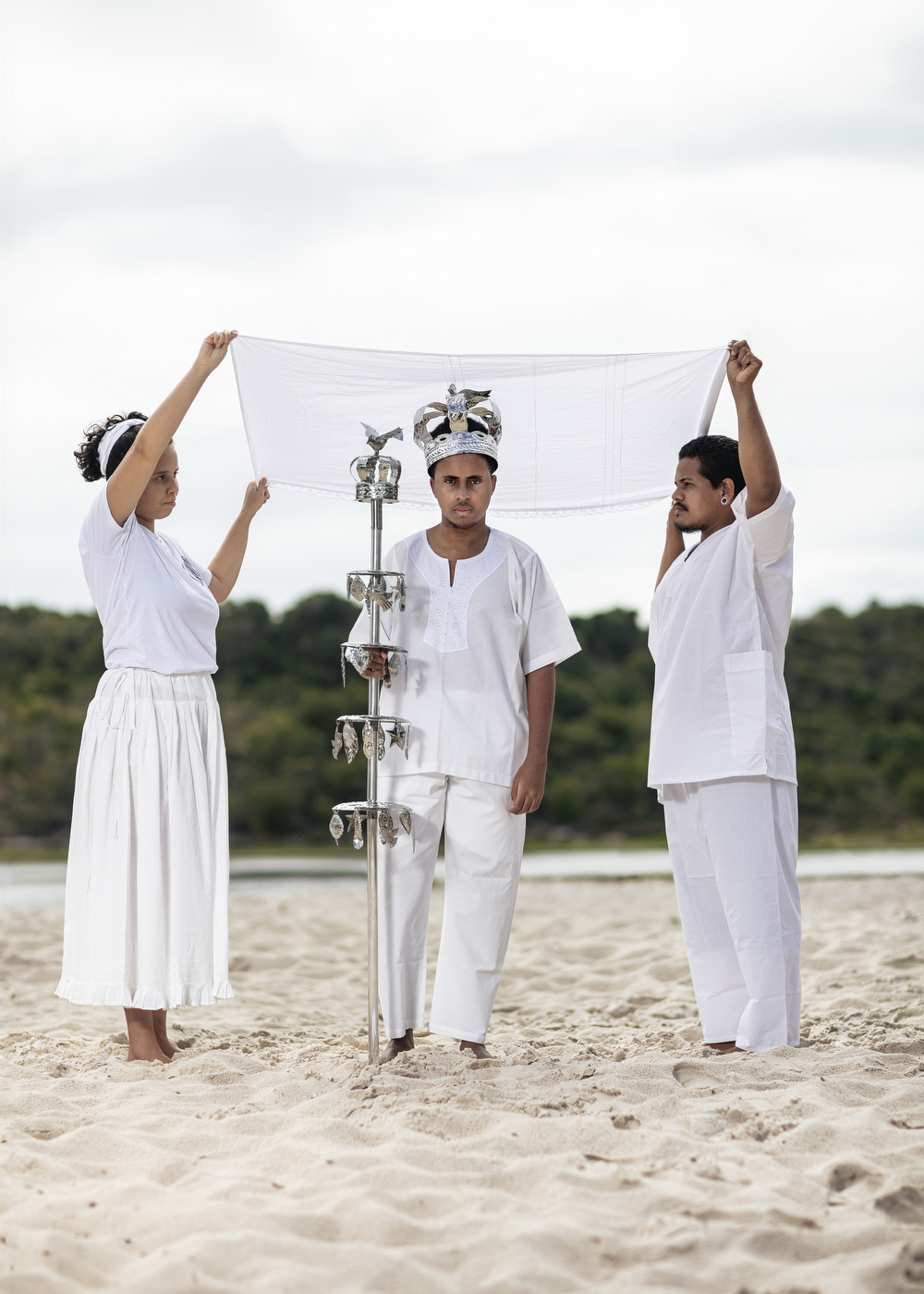
Portrait of Candomblé practitioners in Abaeté Dunes Park, a site that has been sacred for centuries to Afro-Brazilian religions, where many of their mythologies originated, especially those related to Oshala—the oldest Yoruba deity and creator of humanity. Despite its profound cultural and spiritual importance, intolerant local politicians have proposed changing the park’s name to “Monte Santo” and allocating parts of the territory to Christian churches, thus restricting access by Afro-religious communities and preventing them from performing their rituals and paying homage to the Orixás.
In Brazil, the word macumba is often used as an insult. It has been twisted into a term of derision, a way to point at, mock, or condemn what one does not understand. Faced with that distortion, photographer Gui Christ chose to reclaim it and turn it into an affirmation. M’Kumba is not a reportage on Afro-Brazilian religions. It is a declaration of belonging.
His relationship with these traditions began in the early 2000s, when he was studying photography in Rio de Janeiro. Born into a white family, he grew up hearing dark stories about Afro-Brazilian worship, even though his great-grandmother had been a priestess—forced to close her temple. Family memory carried the weight of fear and prejudice. “I grew up hearing very bad things about these religions,” he recalls.
One day, while photographing on the street, a priest of Umbanda invited him into his temple. He hesitated. “I told him I couldn’t go in because I was afraid.” He went in anyway. That night he dreamed of orishas and ancestors he had never studied. A week later, he returned. That visit did not simply change his perception. It redirected his life.
“I don’t know whether I became a photographer, or became macumba through photography,” he says. Both happened at once.
For years he worked as a documentary and commercial photographer, even collaborating with National Geographic. In 2018, already a practitioner of Umbanda and initiated in Candomblé, he began to experience religious racism firsthand. Dressed in white, wearing his ritual beads, a car attempted to run him down in front of a church. On its windshield was a sticker: Only Jesus saves. He understood then that what he was living was not an isolated incident, but part of a historical structure of intolerance.
He later received a grant from the National Geographic Society to document prejudice against Afro-Brazilian religions. For a year he photographed violence: temples destroyed by Christian narco-militias, priests who lost custody of their children, spiritual leaders forced to break their own altars. “I felt terrible,” he confesses. “I was very fulfilled as a journalist, but as a religious person I did not feel well.”
The turning point came during a ritual. In trance, an ancestor asked him about his work. “Why don’t you stop taking pictures like a journalist? Start taking pictures like a macumba. Make photographs for your brothers and sisters, not for the Americans.”
That sentence shifted the axis of the project.
Gui stepped away from the canon of photojournalism and began creating images from within the living mythology of his community. He worked with internal codes: beads, colors, gestures, dances, bodies in trance, sea and drum.
In Brazil, he explains, there exist “corporeal and musical grammars” that are not written down but practiced and embodied. M’Kumba is a collective construction. Each community contributes its mythology. Each image is created with those who inhabit it.
The project does not romanticize pain, but neither does it confine itself to denunciation. It is an act of affirmation. “My work is about life. It is about strength,” he says.
In one of his most emblematic photographs, he portrays an Afro-Brazilian woman standing in the sea, holding a fish—an incarnation of Yemanjá. In Brazil, under racist influence, this divinity is often depicted as a slender white woman. In Africa she is Black, expansive, powerful. The woman in his image recognized herself in that power for the first time. “I never imagined so many people would see me as a very beautiful and strong woman,” she told him.
That was when he understood the reach of the project. It was not only about international denunciation. It was about restoring visual dignity.
Gui insists on a conceptual precision: Afro-Brazilian religions are not syncretic by definition. During slavery, they were forced to cloak themselves in Catholic imagery in order to survive. But they possess their own divinities, their own cosmologies. To reduce them to syncretism is to perpetuate a colonial reading.
Brazil has 500 years of history. Three hundred of them were years of slavery.
“We have been a country with slaves longer than without them,” he reminds us. Racism is not an episode. It is structure. And religious intolerance today is also a political tool used by extremist groups who manipulate faith as an instrument of control and expansion.
Yet M’Kumba is not a chronicle of victimhood. It is an affirmation of existence.
After seven years—seven, a sacred number in his tradition—the project approaches its closing with the publication of a photobook. But his research continues. He is now pursuing a master’s degree to study how Afro-diasporic culture dialogues with the history of Brazilian photography. His next project turns toward the drum.
For Gui, the drum—Ngoma—is not an instrument. It is a divinity. It is the father who sanctifies bodies by setting them in motion. From Uruguayan candombe to Caribbean salsa to Brazilian samba, the drum has shaped Latin America.
“The drum is the father of all Latin America,” he says.
If in Rafael Vilela photography became a mirror to confront white ignorance, in Gui Christ it is a tool to restore ancestral memory from within. He does not speak as an observer. He speaks as a practitioner. He does not document someone else’s culture, but his own faith.
“I understand myself as a communicator,” he says. Not as a religious leader, but as a bridge. His camera does not seek to explain the sacred. It amplifies a historical voice that has resisted for five centuries.
In a continent marked by colonial inheritances, M’Kumba does not ask for tolerance. It demands recognition—and it does so from the drum.