Forest Ruins: The Guarani Who Survive Beneath São Paulo
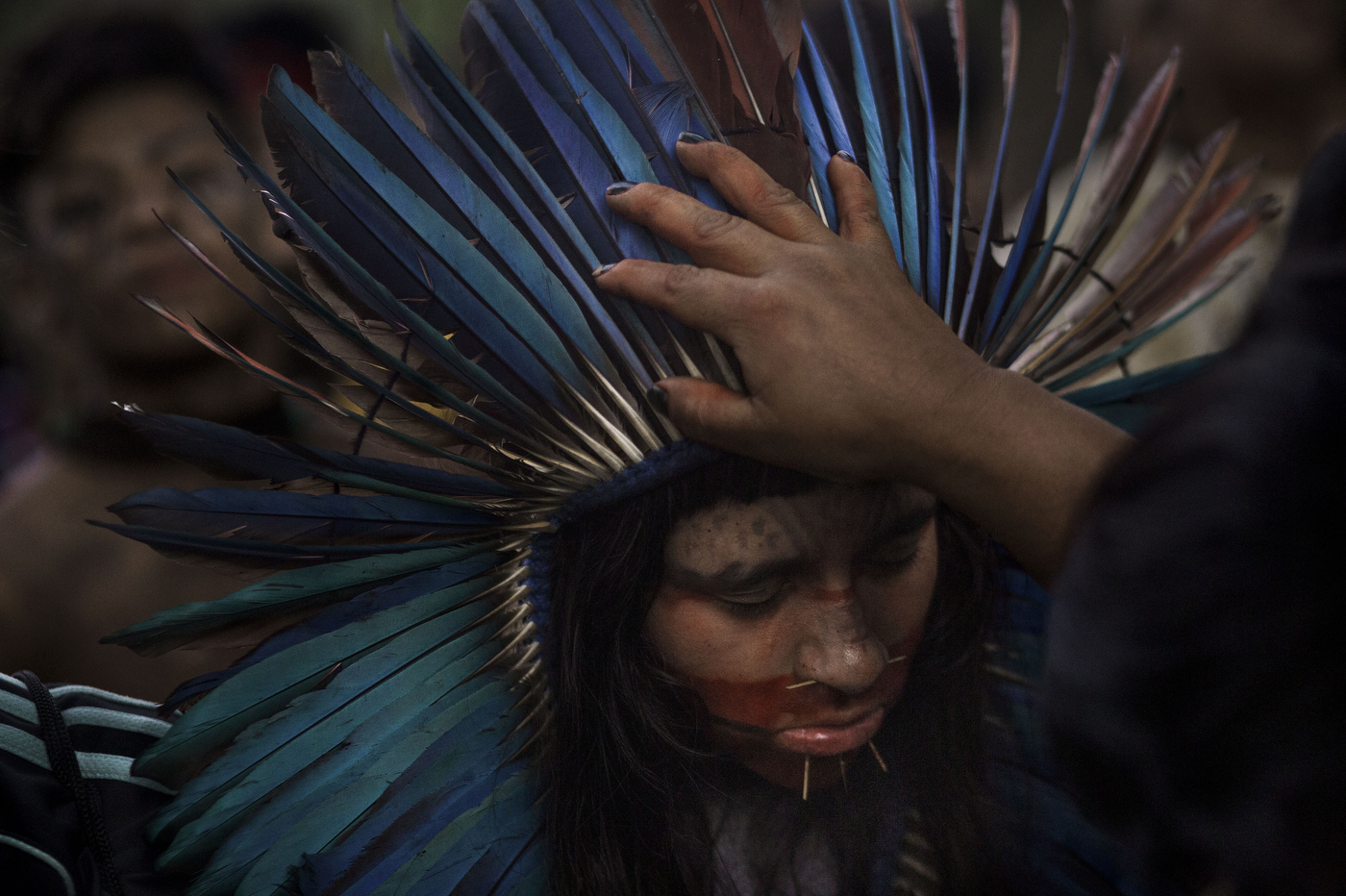
São Paulo, Brazil. March 10, 2020.
Ray Para Poty, an indigenous warrior, is blessed by a Guarani shaman before facing the São Paulo Military Police in a possible confrontation to protect the Jaraguá territory from the construction of dozens of multi-story residential buildings. *This image and its reproduction were made with the informed consent of the person photographed, their family, and the Guarani-mbyá community.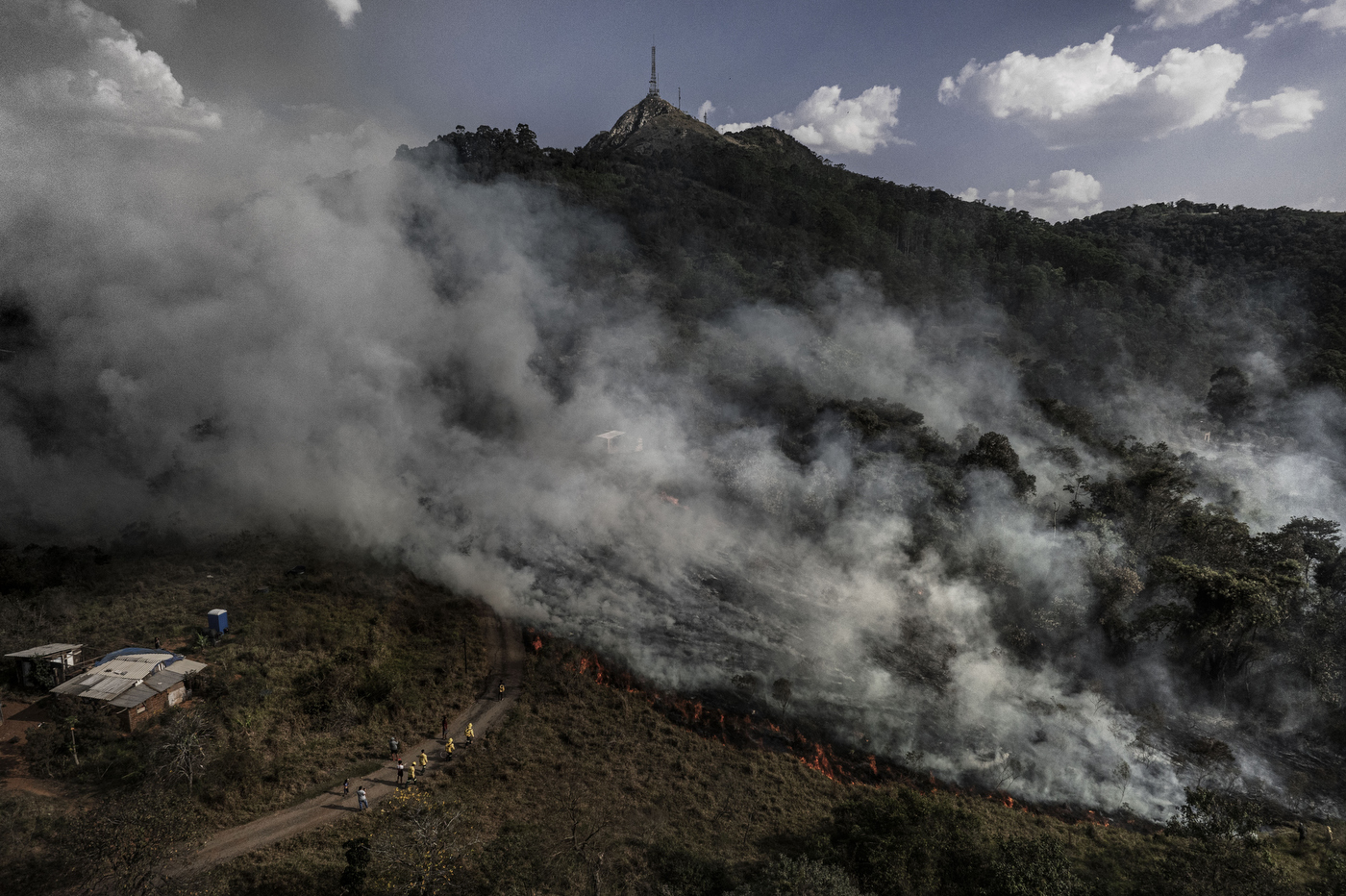
São Paulo, Brasil. August 23, 2023.
A forest fire strikes the Guarani Indigenous Land at Pico do Jaraguá. Three years after a historic fire in 2020, the Guarani fire fighting brigade, dressed in yellow suits, responds swiftly to contain the outbreaks. These fires are becoming increasingly frequent, fueled by rising temperatures from global warming, threatening all nine villages around the peak.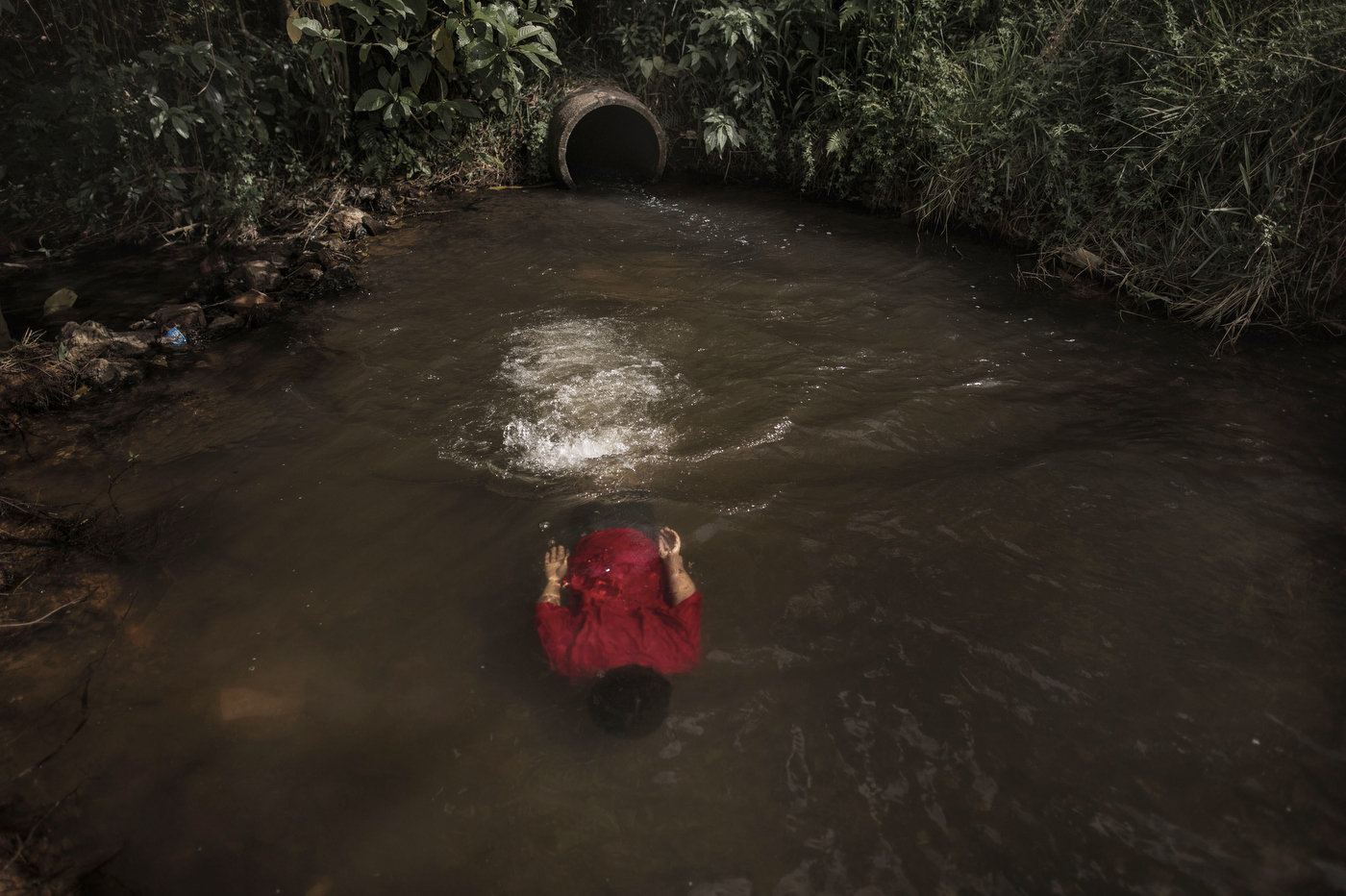
São Paulo, Brasil. March 7th, 2020.
A Guarani child swims in a river near his village, a place where his parents and grandparents once swam. This vital water source is now being diverted into pipes as São Paulo’s urban expansion and real estate development encroach on their territory.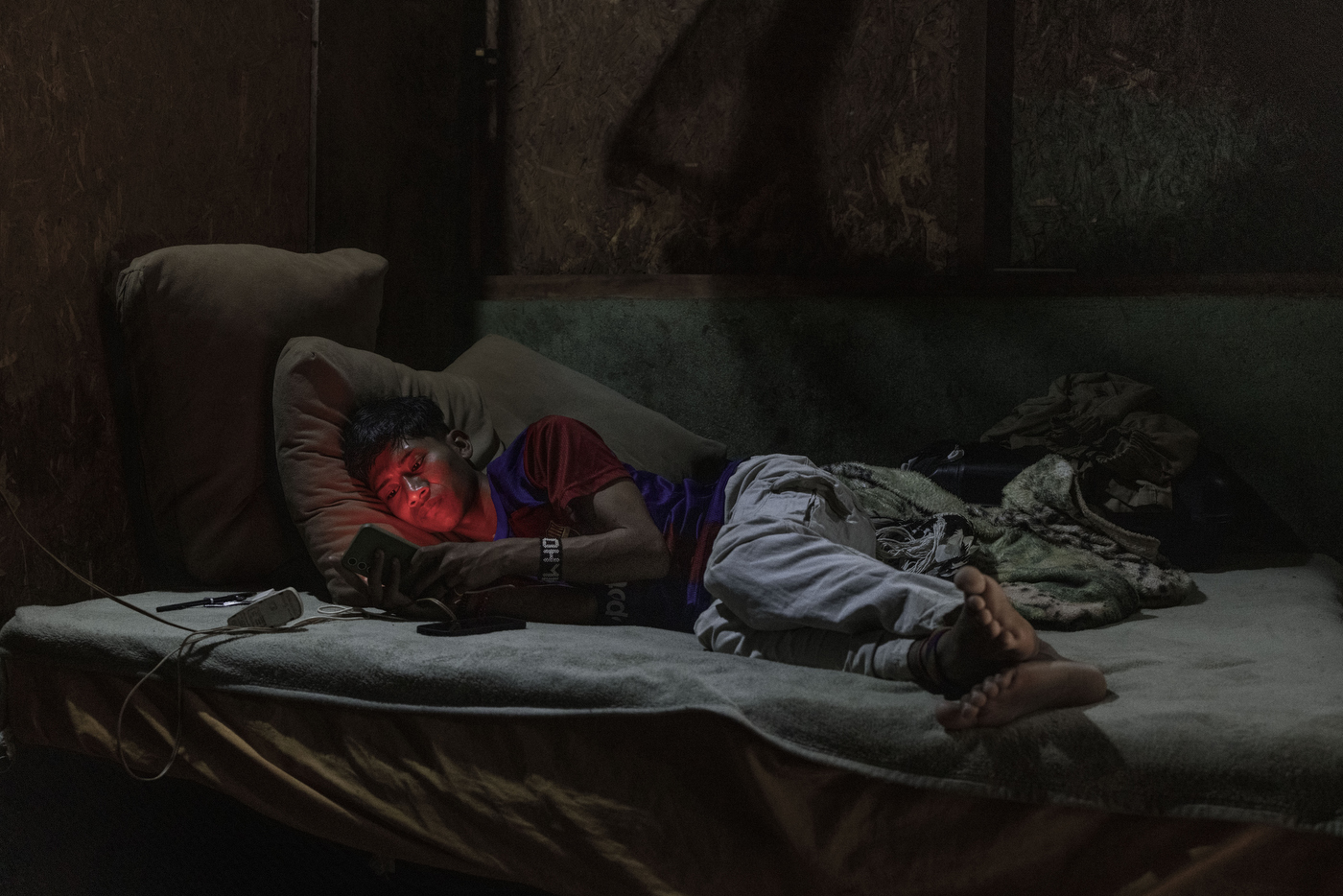
São Paulo, Brasil. October 26, 2023.
Rafael Kaje is an LGBT artist and TikToker with thousands of followers from the Pyau village. On his social media, he shares content that highlights daily life in the Guarani community and explores the impact of urban sprawl on his culture, challenging stereotypes and misconceptions about his people and way of life.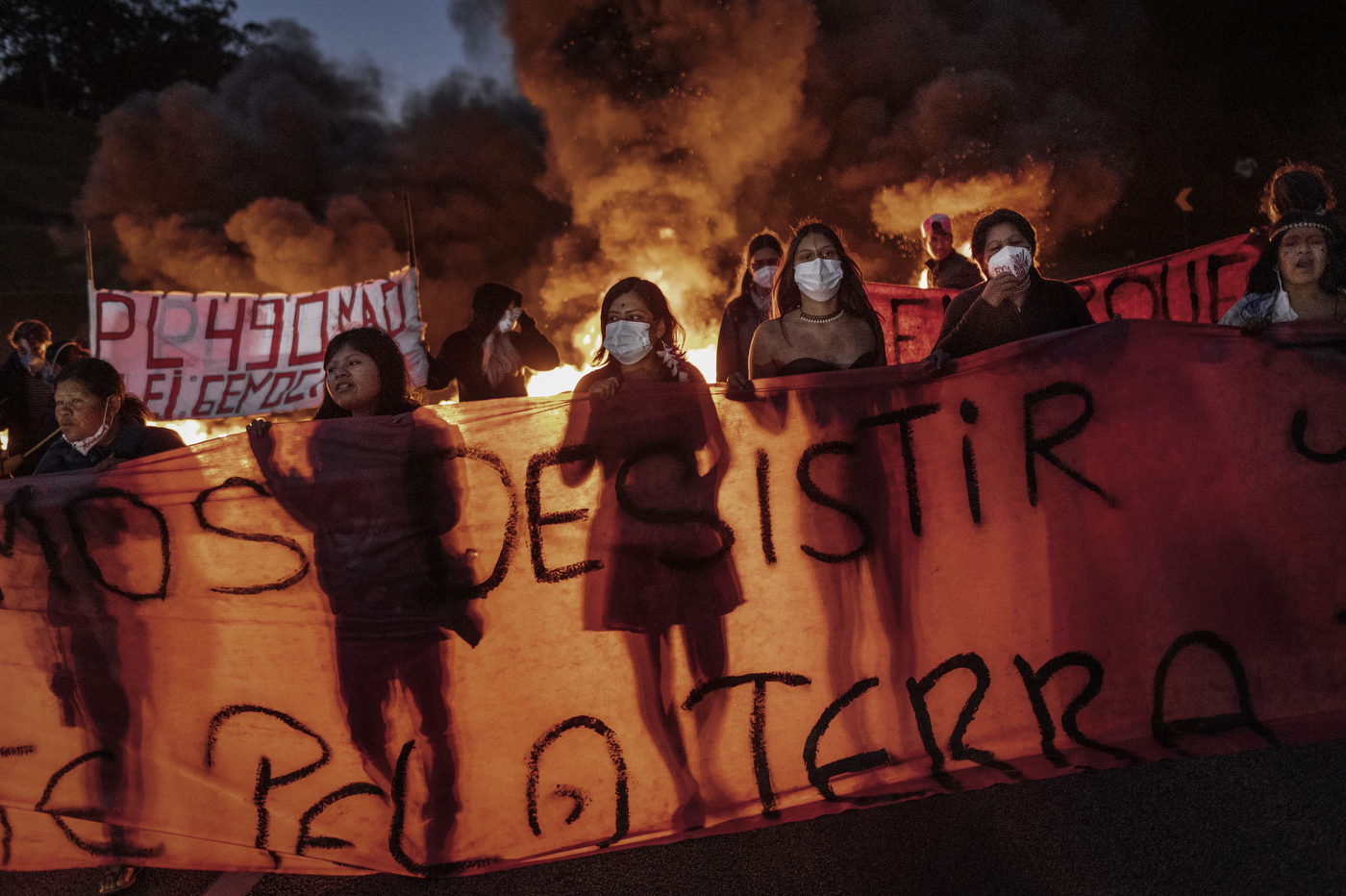
São Paulo, Brasil. June 25, 2021.
The Guarani community occupies the 10-lane Bandeirantes Highway in protest against a legislative bill that could strip them of their lands at Jaraguá Peak. This key road, which cuts through their territory, is one of the largest in the country. The demonstration disrupts traffic and draws national attention.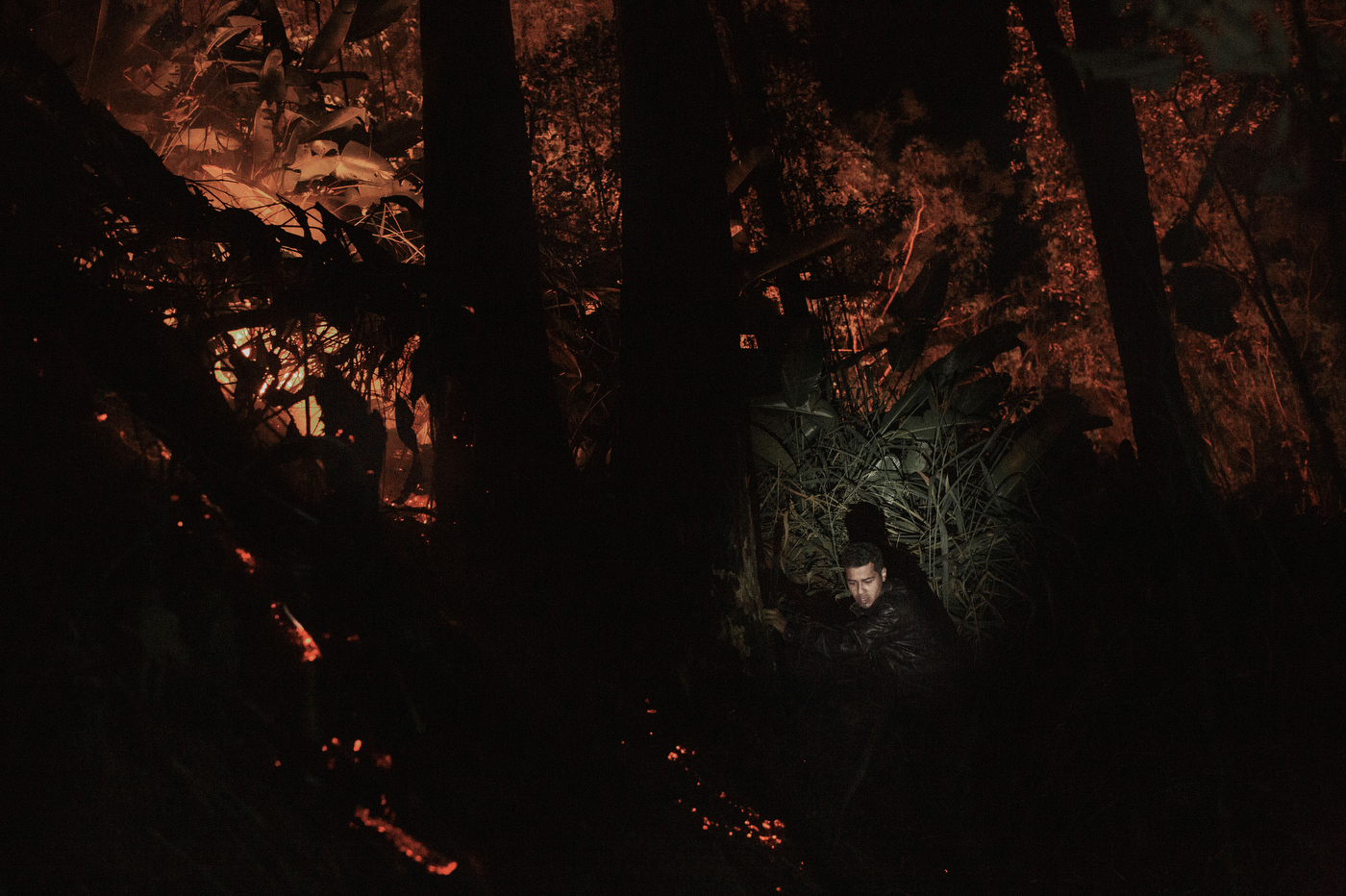
São Paulo, Brasil. June 21, 2020.
Thiago Karaí Kekupe, a young Guarani Mbya chief, battles a fire near Itakupe village alongside his companions. During this historic blaze of unknown origin, which consumes nearly 18 hectares of forest, the Guaranis work tirelessly for hours, despite lacking technical training or proper equipment.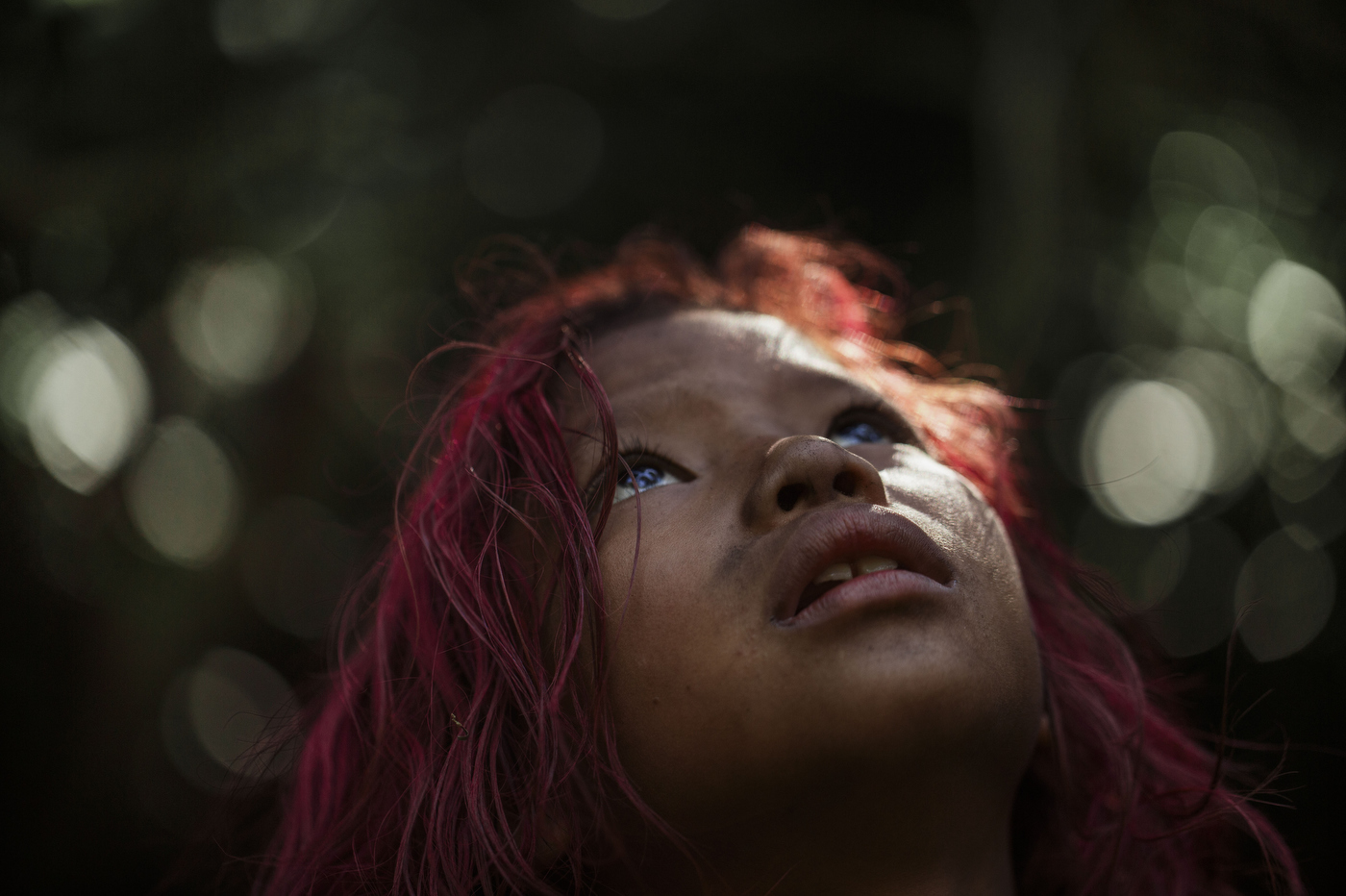
São Paulo, Brasil. June 24, 2020.
Manuela Vidal, 6, resident of the Itakupé village in São Paulo, surveys the aftermath of a devastating fire that swept through Guarani land.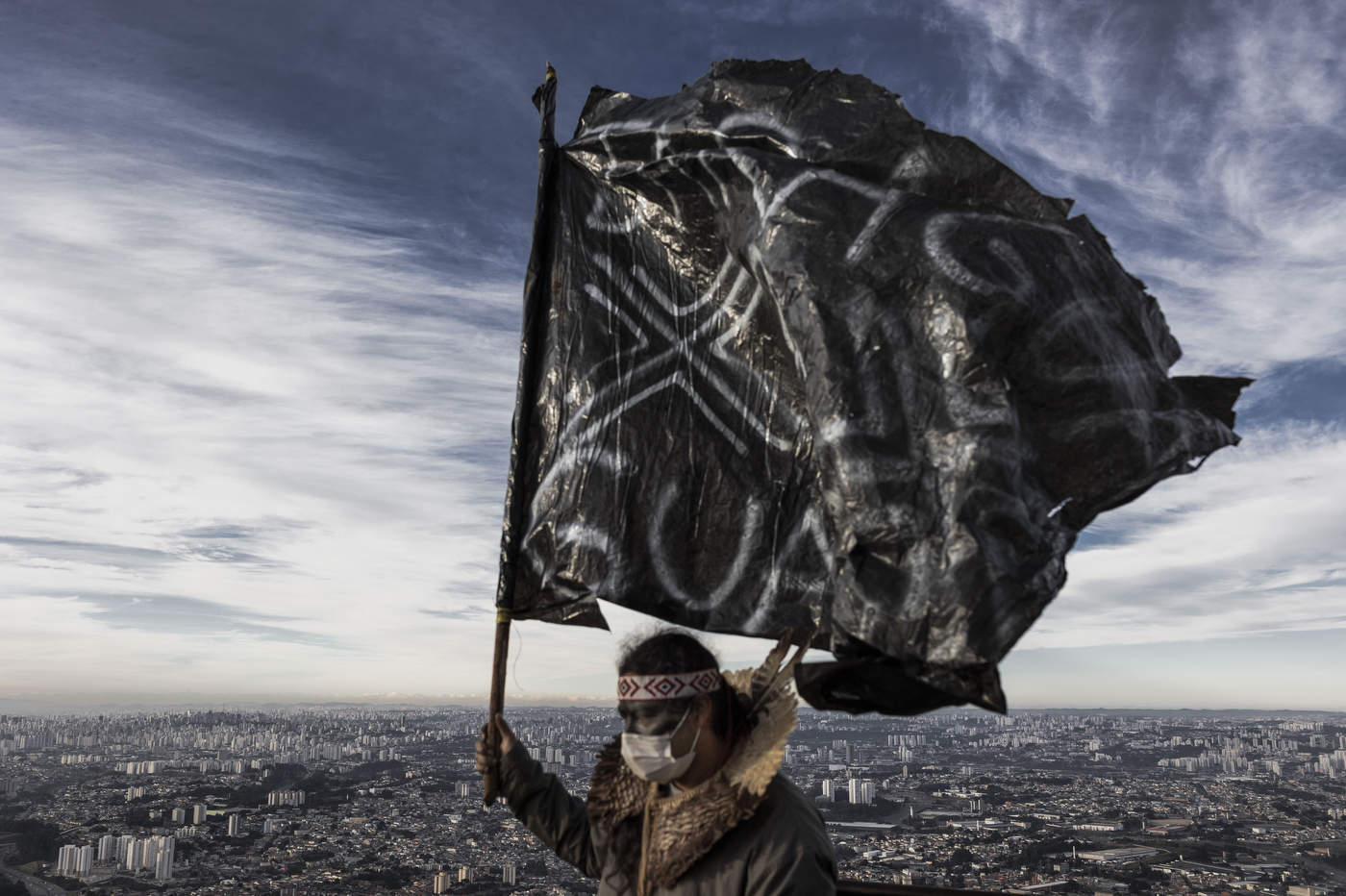
São Paulo, Brasil. June 30, 2021.
Anderson Vilar Martim, 35, a Guarani warrior, raises a flag made from discarded plastic at the summit of the Jaraguá Peak, São Paulo’s highest geographical point. Joined by hundreds of Indigenous people from nearby villages in the Jaraguá Indigenous Territory, the protest aims to disrupt telephone and television signals, highlighting the increasing legislative threat to their territorial rights.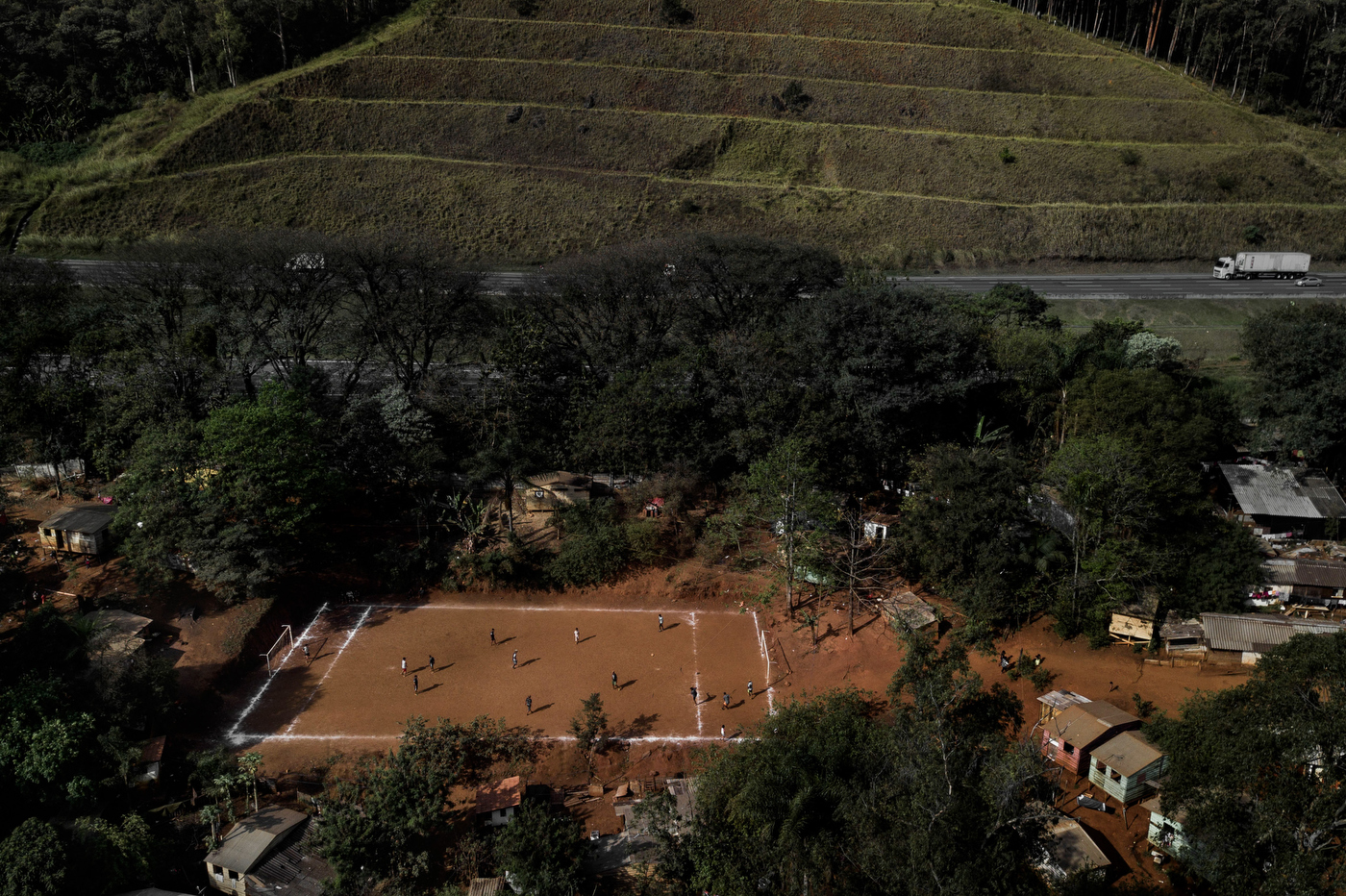
São Paulo, Brasil. August 14, 2020.
A group of young Guarani from the Pyau Village plays soccer during the social isolation of the pandemic. At the top, the Bandeirantes Highway—named after Portuguese colonizers and their descendants in São Paulo—cuts through the landscape. Built in the 2000s, the highway fragmented their territory and created a biological barrier that disrupts the movement of wildlife species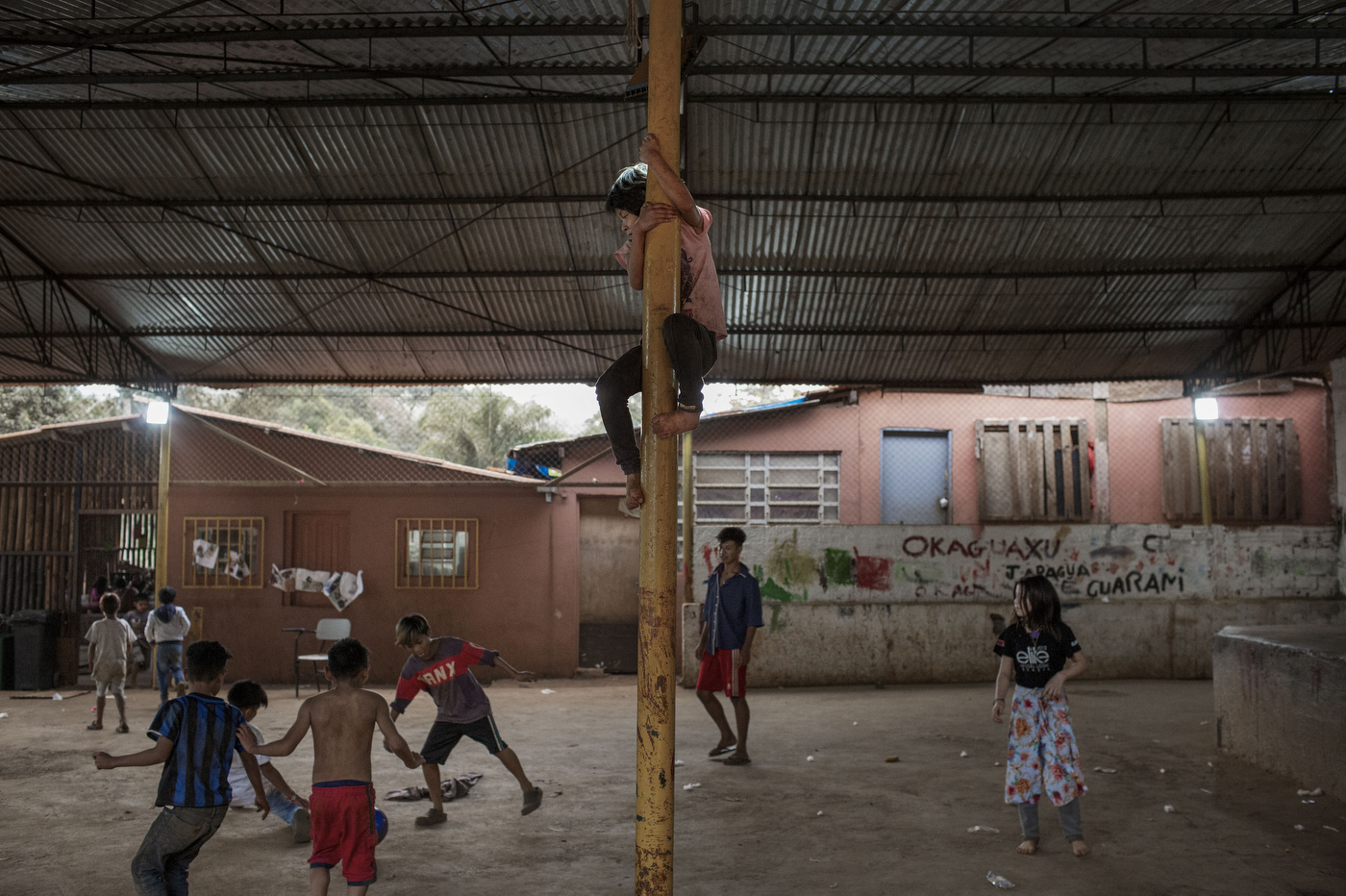
São Paulo, Brasil. August 15, 2020.
Guarani Mbya children play at Pyau village in São Paulo. The Guarani school in Jaraguá is bicultural, offering a curriculum that blends ancestral Indigenous knowledge with Western culture.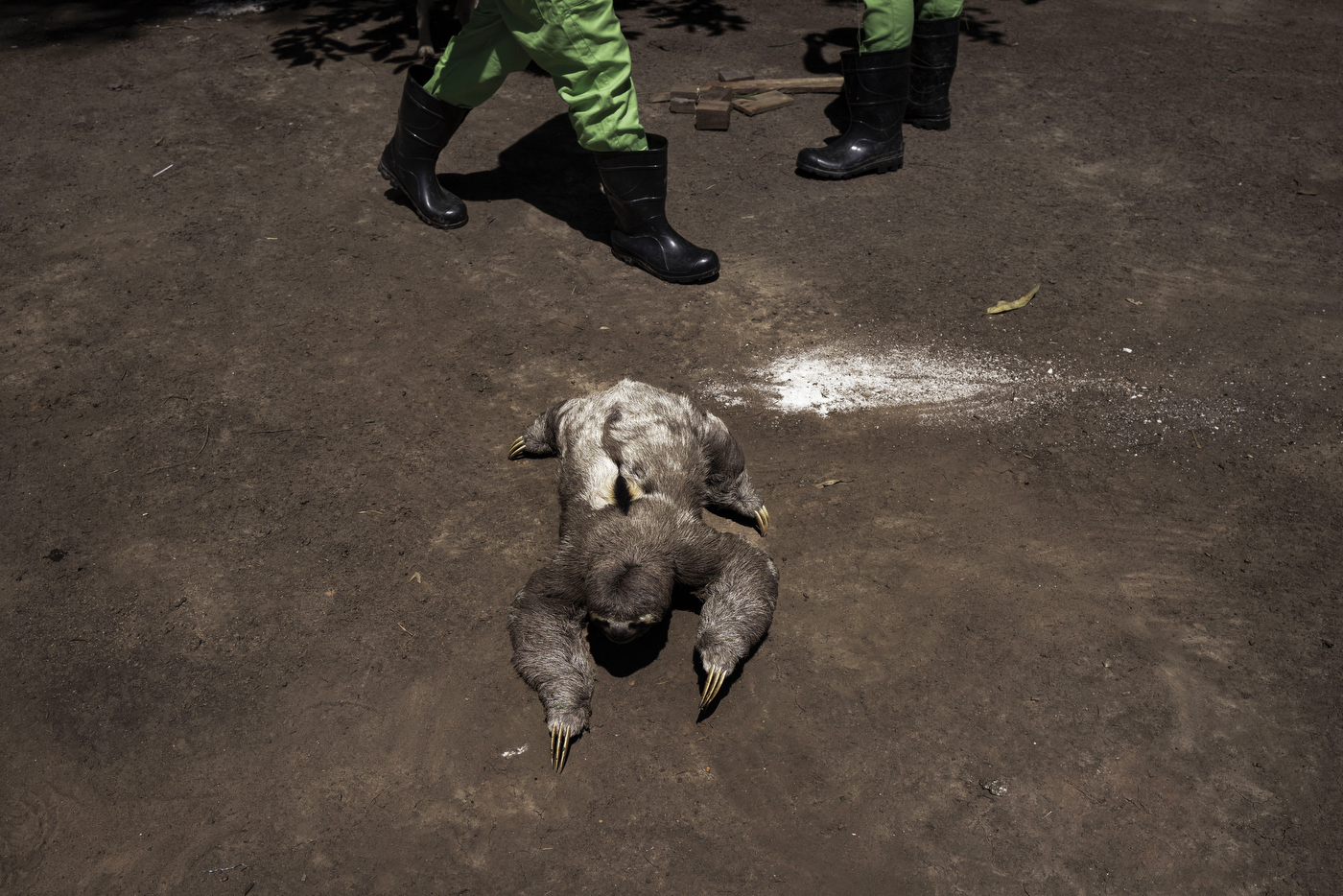
São Paulo, Brasil. March 13, 2024.
A disoriented sloth is rescued by a group of Guarani Mbya Indigenous people as it tries to cross the Bandeirantes Highway at the edge of the Jaraguá Indigenous Land. This was the second sloth rescued in a similar situation in less than a month at Pindomirim village.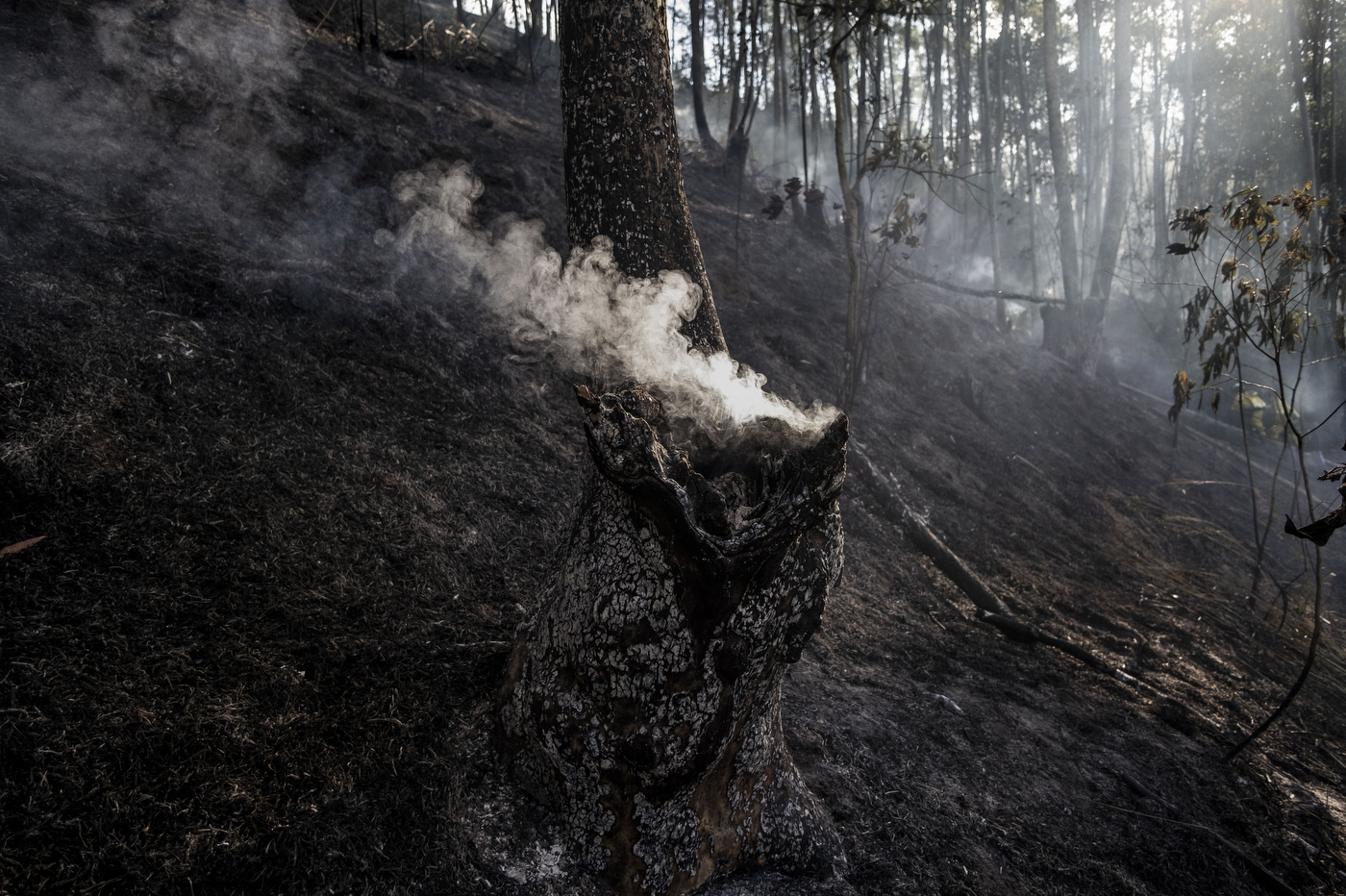
São Paulo, Brasil. August 11, 2020.
A tree burned by a forest fire on the Jaraguá Indigenous Land, near the Itakupe village. Guarani leaders suspect the fires may have been deliberately set to promote urban sprawl.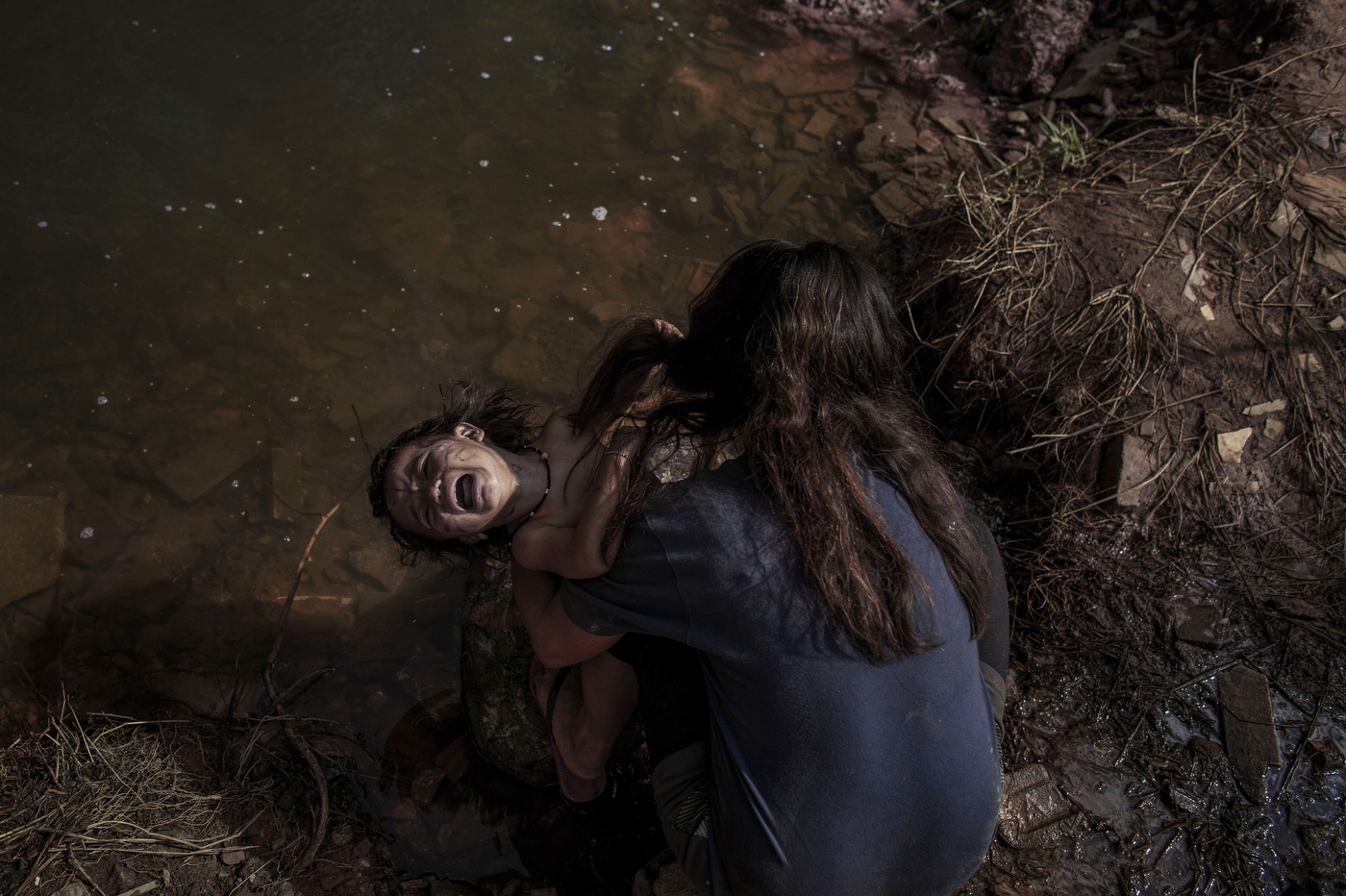
São Paulo, Brasil. March 7, 2020.
A Guarani child bathes in a polluted river near the Pyau village on the Jaraguá Indigenous Land.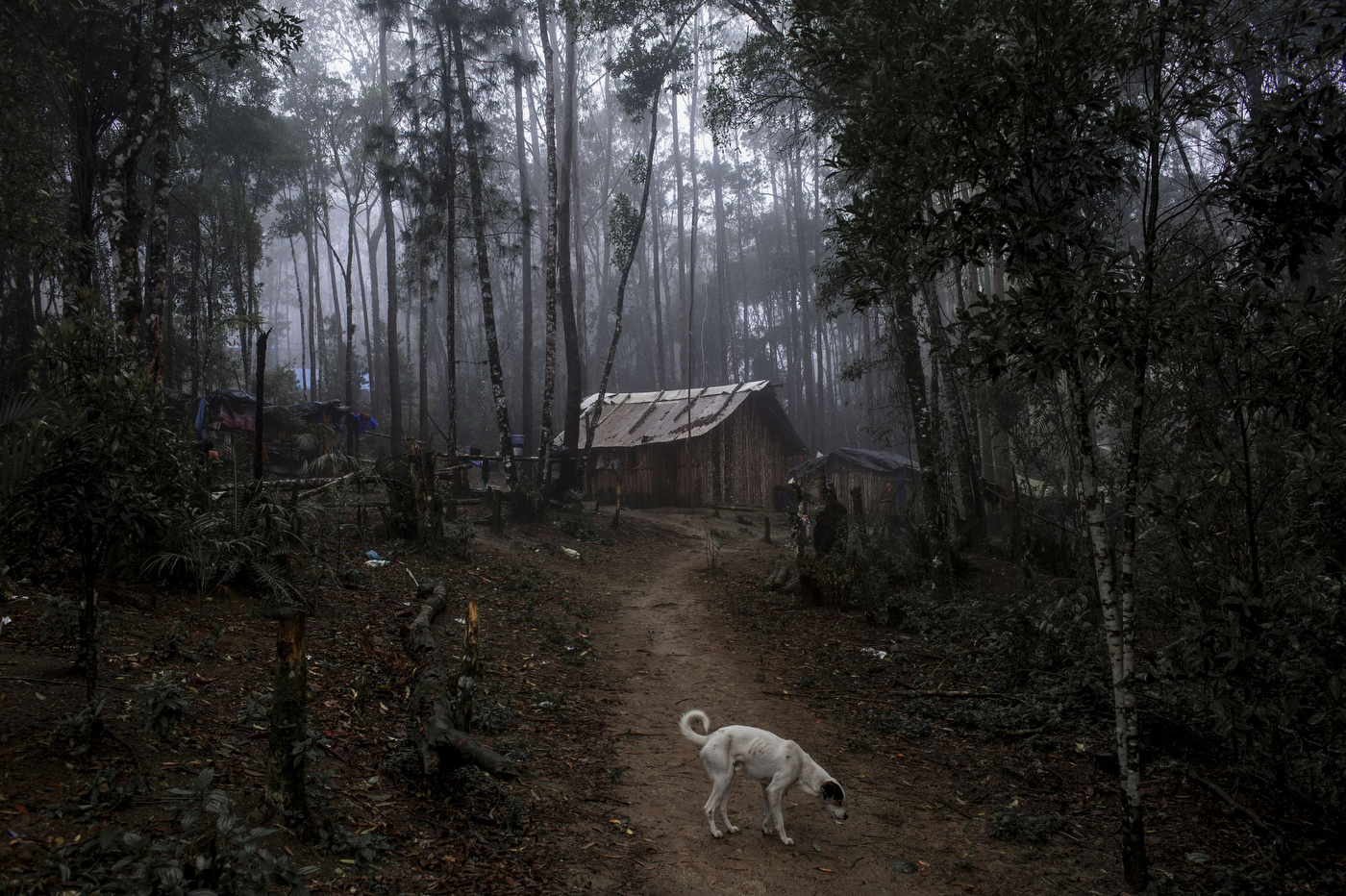
Sorocaba, Brazil. August 21, 2020.
A Guarani house stands amidst a eucalyptus plantation in the Guyra Pepó Village, situated in the countryside. São Paulo State establishes the Guyra Pepó Village as compensation for the Guarani community of Jaraguá Peak, 20 years after a road divides their territory in the 2000s.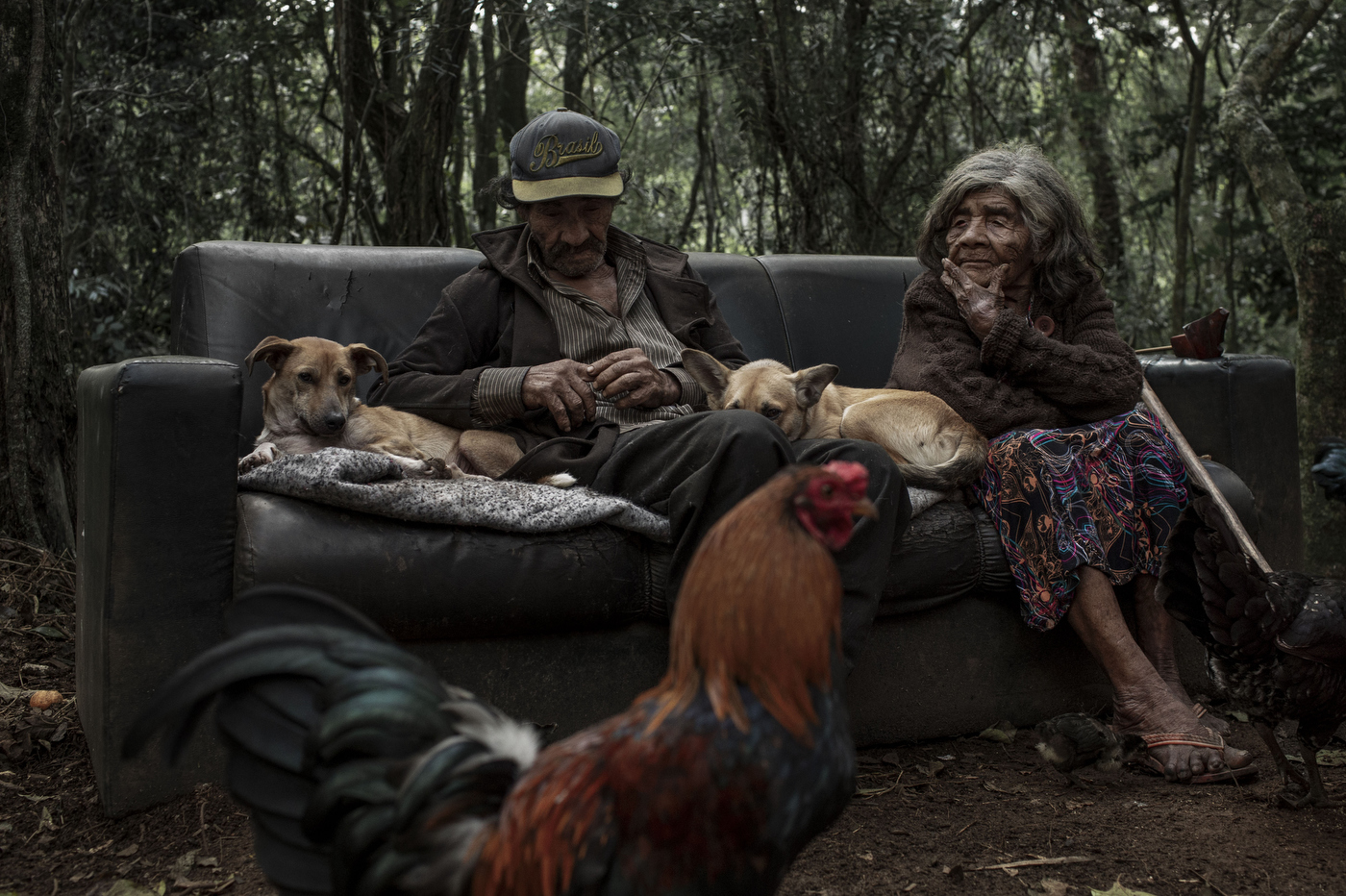
São Paulo, Brasil. August 19, 2020.
Emilia Kaxuka, 110, and her husband spend the afternoon outside their home in Itakupe village. Emilia is the oldest Guarani elder in the community. During the pandemic, she sought refuge in a more remote part of the Guarani Mbyá territory in Jaraguá, distancing herself from the encroaching urban sprawl and the threat of contagion. For Emilia, her health and longevity are attributed to maintaining the traditional Guarani diet, based on ancestral foods planted in the Jaragua Territory, such as Avaxi (corn), Jety (sweet potato), Jejy (hearts of palm), Manjio (cassava), and Manduvi (peanuts).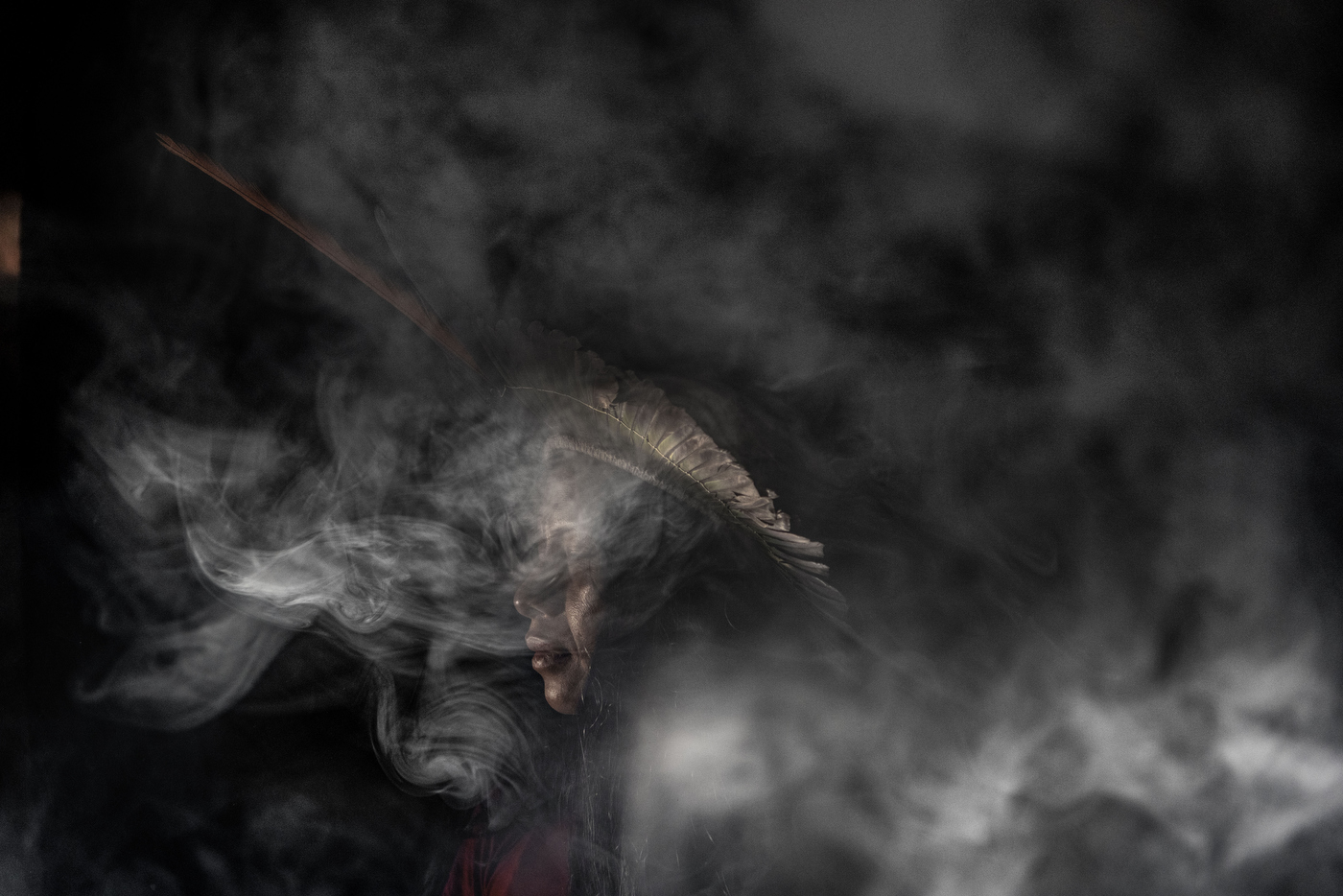
São Paulo, Brasil. November 27, 2024.
Neusa Quadros, 35, the leader of Pindomirim village, poses for a portrait while smoking her Petyngua pipe inside the prayer house.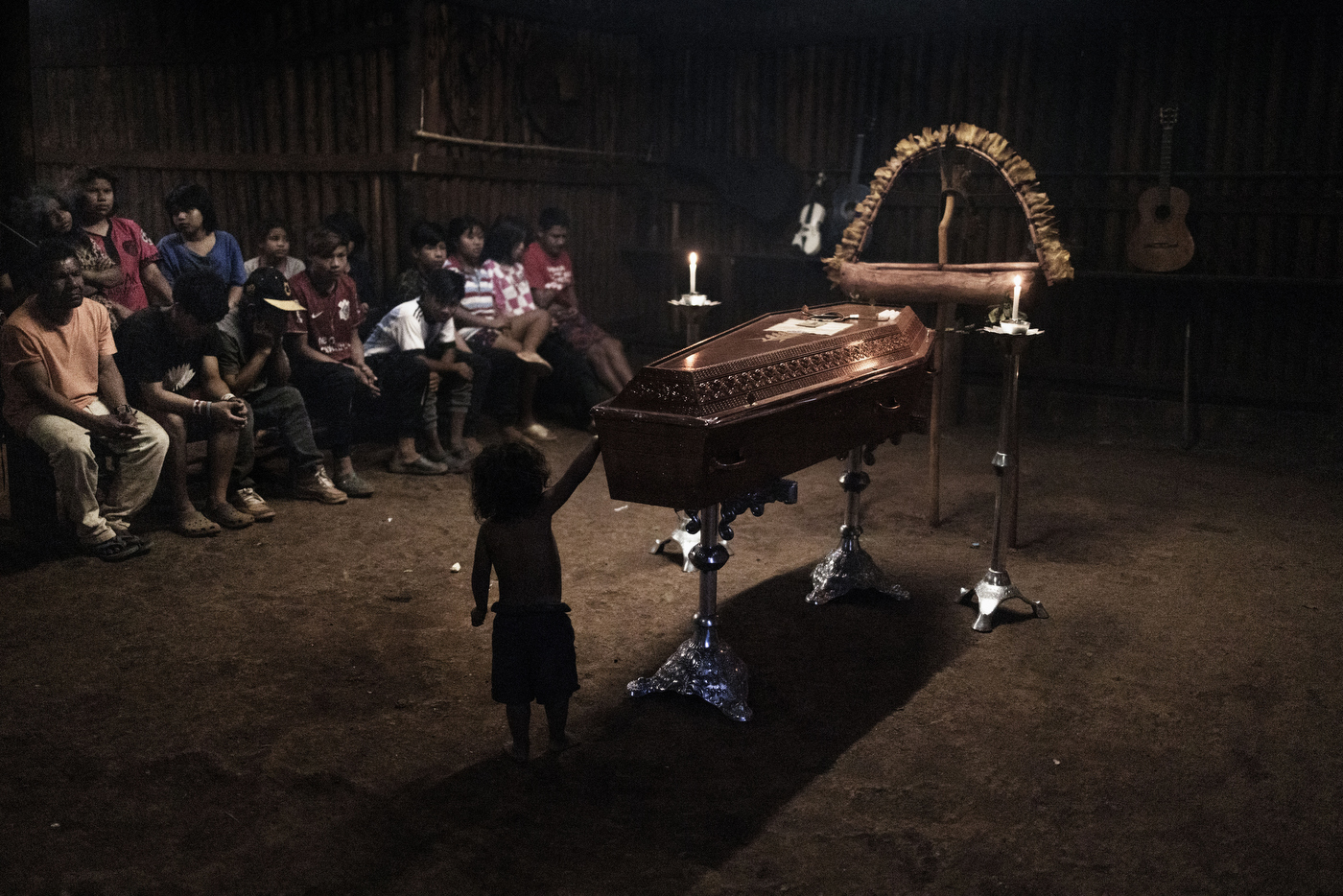
São Paulo, Brasil. August 19, 2023.
The funeral of 15-year-old Guarani Brayan Ribeiro da Silva, who was allegedly struck by a vehicle on the Bandeirantes Highway, which cuts through the Jaraguá Indigenous Land in São Paulo.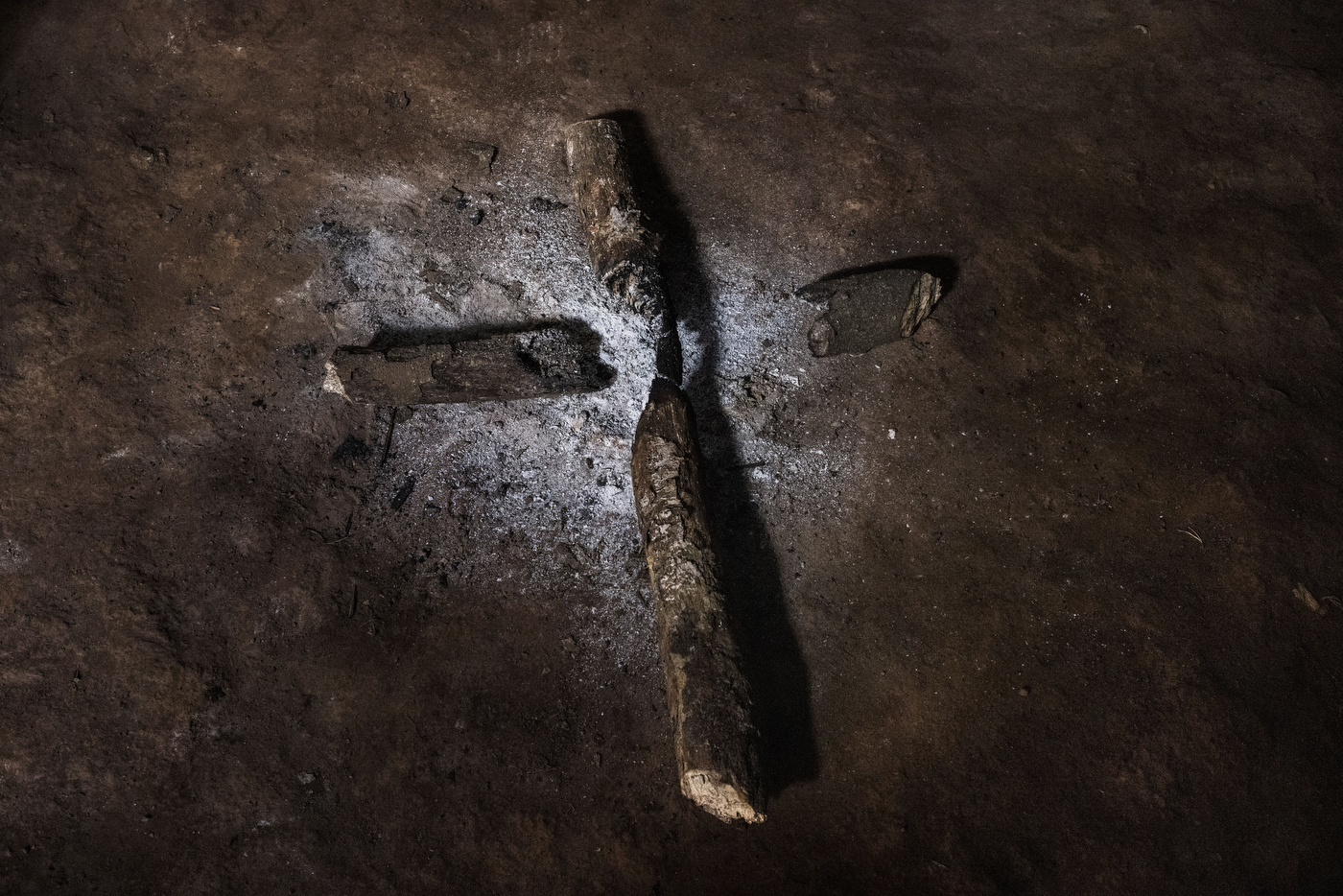
São Paulo, Brasil. December 12, 2024.
Remnants of a bonfire are found inside the Guarani prayer house in the Pyau village.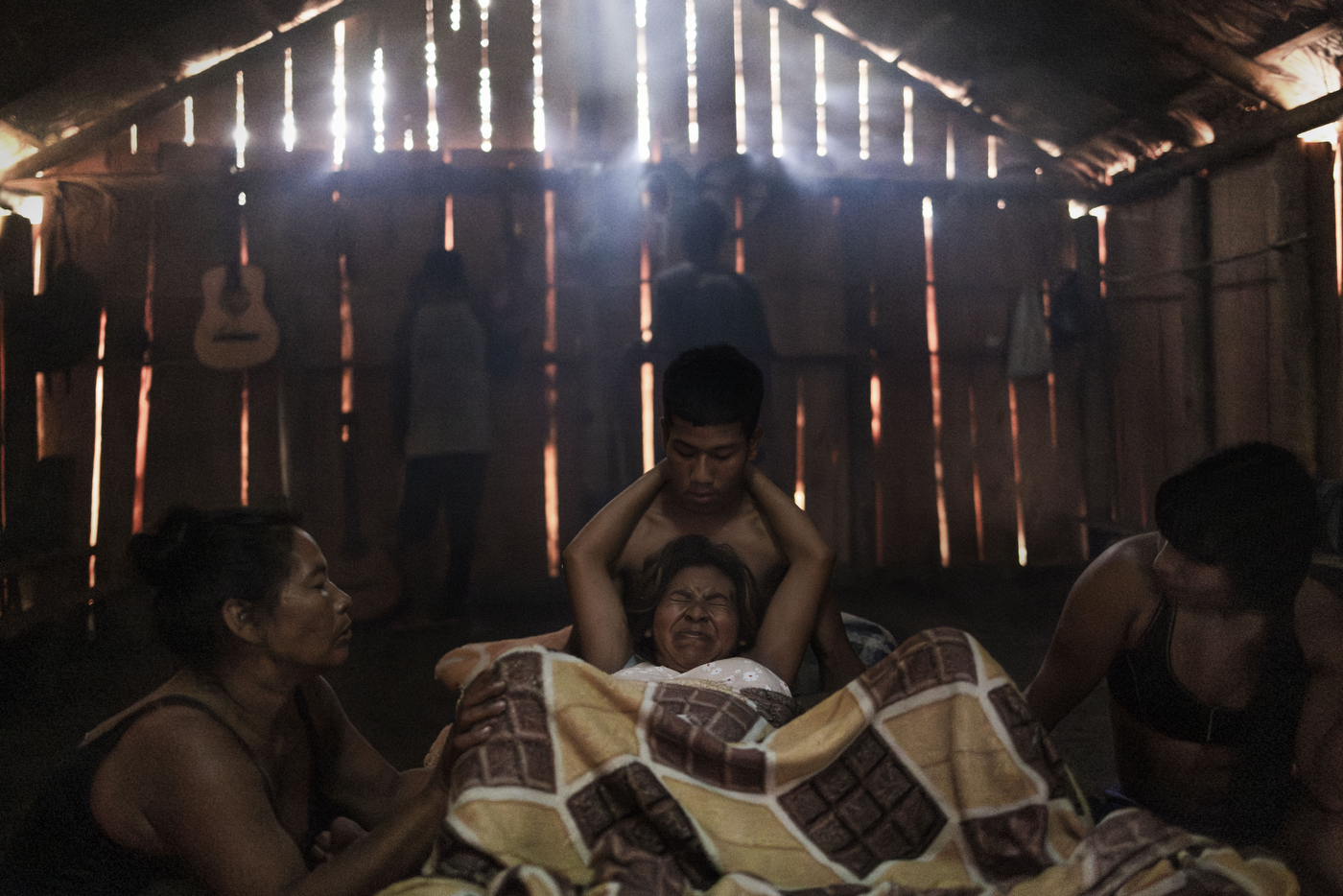
São Paulo, Brasil. October 8, 2023.
Maysa Kerexu Aquiles Benites, 15, is in labor at the prayer house in Pindomirim village, São Paulo. The birth cannot occur according to Guarani tradition there, so she is taken to the nearest hospital. On the way, her child is born on the Anhanguera Highway. Anhanguera, another road that cuts through their territory, is named “The Devil’s Path” in Guarani, as it was once used by colonizers and Bandeirantes to hunt and enslave Indigenous people.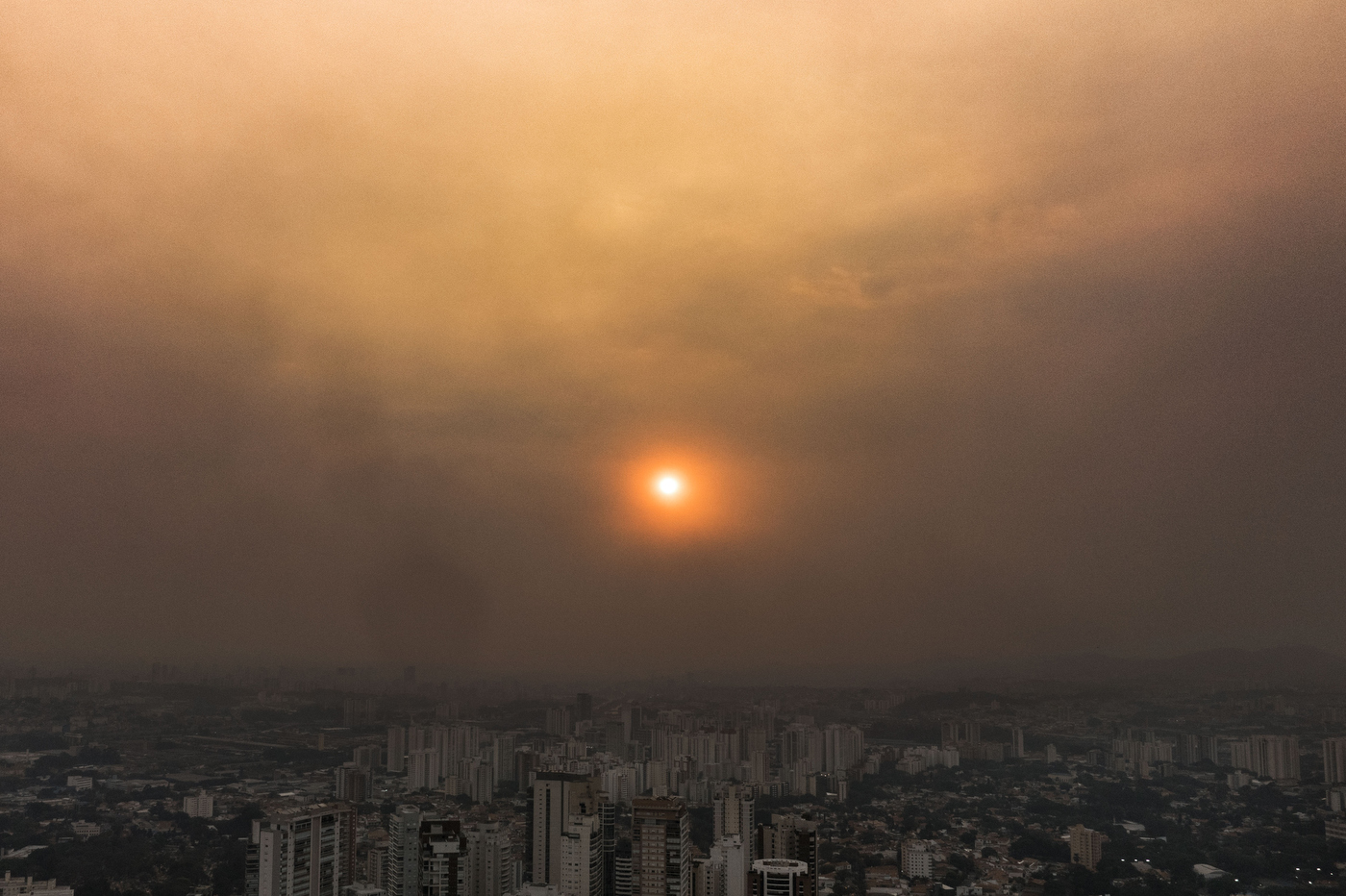
São Paulo, Brasil. August 24, 2024.
The city of São Paulo is engulfed in smoke from the burning of the Amazon and Pantanal forests during the winter, creating a hazy atmosphere with an orange sun that, for weeks, obscures the sky in the megacity. During the fires, São Paulo ranked as the large city with the worst air quality worldwide for five consecutive days, according to IQAir.
In São Paulo, Latin America’s largest city, the forest did not disappear — it was simply covered by concrete. There, amid highways, high-rises, and the cosmopolitan sprawl of 21 million inhabitants, Guarani villages endure, preserving language, spirituality, and territory. The city grew over them without seeing them, and that invisibility — more than physical distance — is the true ruin Rafael Vilela set out to document in powerful images of resilience.
He was 31 when he discovered that Indigenous peoples were still living in the city where he was born. “It took me 31 years to realize that the Guarani are still here in the city,” he admits. The revelation was not only historical; it was personal. How is it possible to grow up in a metropolis and remain unaware of the land that sustains it?
Vilela was born in 1989 in São Paulo. The son of progressive, politically active parents, he grew up surrounded by social debate. Yet it was shyness that ultimately shaped his gaze. At 16, he found in the camera a way to break his silence. “Photography allowed me to overcome my shyness and go where I otherwise couldn’t,” he says. He calls it a “guilt-free excuse” — permission to enter, to listen, to observe.
At home there were books by Sebastião Salgado. Those images, he recalls, taught him that the world was not harmonious — that it held contradiction, pain, inequality. He understood that his middle-class reality was not the whole world.
He studied graphic design to support himself, aware that the kind of photography he wanted to pursue had no commercial market. “I knew there was no commercial interest in the photography I wanted to make,” he says. Design gave him structure, management skills, and autonomy at a time when newsrooms were beginning to collapse.
He co-founded Media Ninja, a collective that transformed independent media coverage in Brazil during the 2010s — a decade of activism, street presence, and close engagement with social movements. But in 2019, he made a decision that would redefine his path: to return to the field, to the territory, to direct listening. “To place my body back at the service of reality,” he explains.
In 2020, a concrete threat accelerated that return. The Guarani community faced the possible loss of part of its territory without prior consultation. Vilela went to document the occupation and ended up camping there for weeks. What began as coverage has become a six-year relationship.
“Now it’s been six years documenting this, and I’m still learning… I’m still arriving.” Photography ceased to be the center; relationship, trust, and time became the true work.
The project was presented by POY LATAM as Forest Ruins, though the original concept comes from Indigenous thinker Ailton Krenak: “Forest Ruins.” It refers not only to felled trees but to a deeper devastation that began with European invasion — the rupture of knowledge systems, spiritualities, agricultural practices, and ways of living in balance with nature.
“It is the destruction of a way of life that existed in equilibrium with nature,” he says.
In the Guarani villages, that balance is not a metaphor. Barefoot children walk on red earth where mud is not perceived as dirt. “There is no distinction between humanity and land… it is all one single thing,” he says. That lived reality challenges the urban model that believes it governs nature.
“The idea of controlling nature… is a great lie,” he says, linking that illusion to “a civilizational crisis… that generates a climate crisis.”
Over time, Vilela understood that the project was not documenting only this ethnic group. “I thought I was documenting the history of the Guarani… and then I began to understand that I was documenting the white ignorance within myself.” The camera ceased to be an instrument to explain the other and became a tool to dismantle his own blindness.
An archaeologist once told him that what he was doing was “archaeology of the present.” In the Atlantic Forest, where organic matter quickly decomposes, oral memory preserves what the soil does not retain. To document the present is to safeguard the past. The Guarani language remains alive; children learn it before Portuguese. Five centuries after contact, the culture not only endures — it expands.
Vilela firmly rejects the narrative of extinction. “The work I’m doing is about life; it’s about the strength and vitality of the Guarani.” Today he sees progress: territorial recognition underway, greater Indigenous political visibility, and a shift in social perception. “It is an achievement of the Guarani struggle… I am just one more ally.”
Twenty minutes from his home in western São Paulo, he can step into a prayer house where almost only Guarani is spoken. That proximity is not accidental; it is a choice. His daughter is growing up in the same city that holds this living memory. Documenting this territory is not merely a professional project; it is a way of leaving her a legacy and teaching her that history does not begin with concrete.
From this experience, he now looks toward recently contacted peoples in the Amazon, convinced they hold keys to confronting the contemporary crisis. If there is one lesson he has learned from the Guarani, it is that the future is not built by dominating the land, but by recognizing oneself as part of it.
Forest ruins are not merely vestiges of the past; they are open wounds and, at the same time, seeds of continuity. For in the heart of the megalopolis, the forest still breathes — and with it, a memory that does not ask permission to exist.