
The Last Heartbeat of Peace in Colombia’s Montes de María
Photographs by Manuel Ortiz Escámez
Cartagena awakens each day facing the Caribbean like a city that knows the world is watching. Between ancient walls and colonial balconies, it embodies Colombia’s most recognizable image: color, music, history, beauty. But barely two hours away by road, the country changes its face. The salty breeze becomes hot dust; cobblestone streets give way to open dirt tracks. There, in the Montes de María, Colombia stops being a postcard and reveals itself as a territory shaped by violence—one that is still trying to close its wounds.
The day begins before sunrise in the Montes de María. The heat arrives early, and the Camino Real—now an unpaved track—forces a slow advance. It is not only a dirt road connecting María La Baja to San Jacinto. It is a scar opened by decades of abandonment, war, and dispossession. It links peasant and Afro-descendant territories that have endured massacres, displacement, and the expansion of monocultures. Here, the state arrives late. The community arrives first.
Along this track travel Aura Camargo and Geovaldis González, candidates for the House of Representatives for Special Transitional Peace District No. 8 (CITREP). They do not represent a traditional political party. They represent a promise that is about to expire.
Representation with an expiration date
To understand what is happening here, one must explain something that does not exist in other democracies around the world: the CITREP.
They were born from the Final Peace Agreement signed in 2016 between the Colombian government and the FARC guerrilla, after an armed conflict that lasted more than fifty years and left millions of victims. The agreement created sixteen seats in the House of Representatives reserved exclusively for victims of the conflict in the regions hardest hit by the war. It is an exceptional measure of political reparation: those who directly suffered the violence can occupy a seat in Congress.
But there is something crucial the world must understand: these seats have an expiration date. They exist for only two legislative terms. This will be the last. After 2030, victims will no longer have guaranteed direct representation in the Colombian Congress.
Geovaldis explains it precisely as we walk:
“We are participating as candidates in District 8 of Montes de María. The tickets must be composed of one man and one woman, and they must be endorsed by a grassroots organization from the territory. In our case, we are endorsed by Coagropel, a cooperative from the village of La Pelona, in San Onofre. That cooperative must have existed for at least five years, be rooted in the territory, and be composed of victims of the conflict.”
This is not a bureaucratic endorsement. It is a community mandate.
Aura expands the context:
“The Peace Agreement in Colombia establishes several fundamental points. The first addresses agrarian reform, recognizing that one of the persistent drivers of armed conflict has been land and the use of territory. That is why the first point is framed within comprehensive rural reform.
However, one of the country’s great historical debts has been democracy and participation—democracy understood as the possibility of serving and transforming through citizen and community participation in decision-making spaces.
From there comes point two of the Agreement, which addresses political participation, especially including victims who suffered particular harm in the armed conflict, not only from the FARC but also from paramilitary groups. That point created the Special Transitional Peace Seats, known as CITREP.”
Yet even this alternative form of representation faces obstacles. Communities denounce that traditional political clans have backed candidates who serve their interests rather than those of the victims. Moreover, on election day the voter must explicitly request the CITREP ballot; it is not automatically provided. In rural areas where electoral education remains limited, that detail can end up determining the results.
A territory marked by death
Montes de María is no ordinary territory. Aura tells us that between 1996 and 2002, 120 massacres were recorded. More than sixty percent of the land was dispossessed. Nearly ninety percent of the rural population was displaced.
What is now known as the “route of death” took shape here: the massacres of El Salado, Chengue, Macayepo, Las Brisas. They were not mere statistics. They were acts of cruelty that redrew the human map of the region.
Aura says it plainly as we stop beneath the shade of a tree:
“Montes de María endured every form of victimization: threats, kidnappings, homicides, massacres, enforced disappearance, and sexual violence. Enforced disappearance bleeds the life and soul of every woman, of every searcher, every single day.”
Montes de María is part of the CITREP precisely because of those patterns. The war here was not accidental. It was structural.
First stop: San Cristóbal
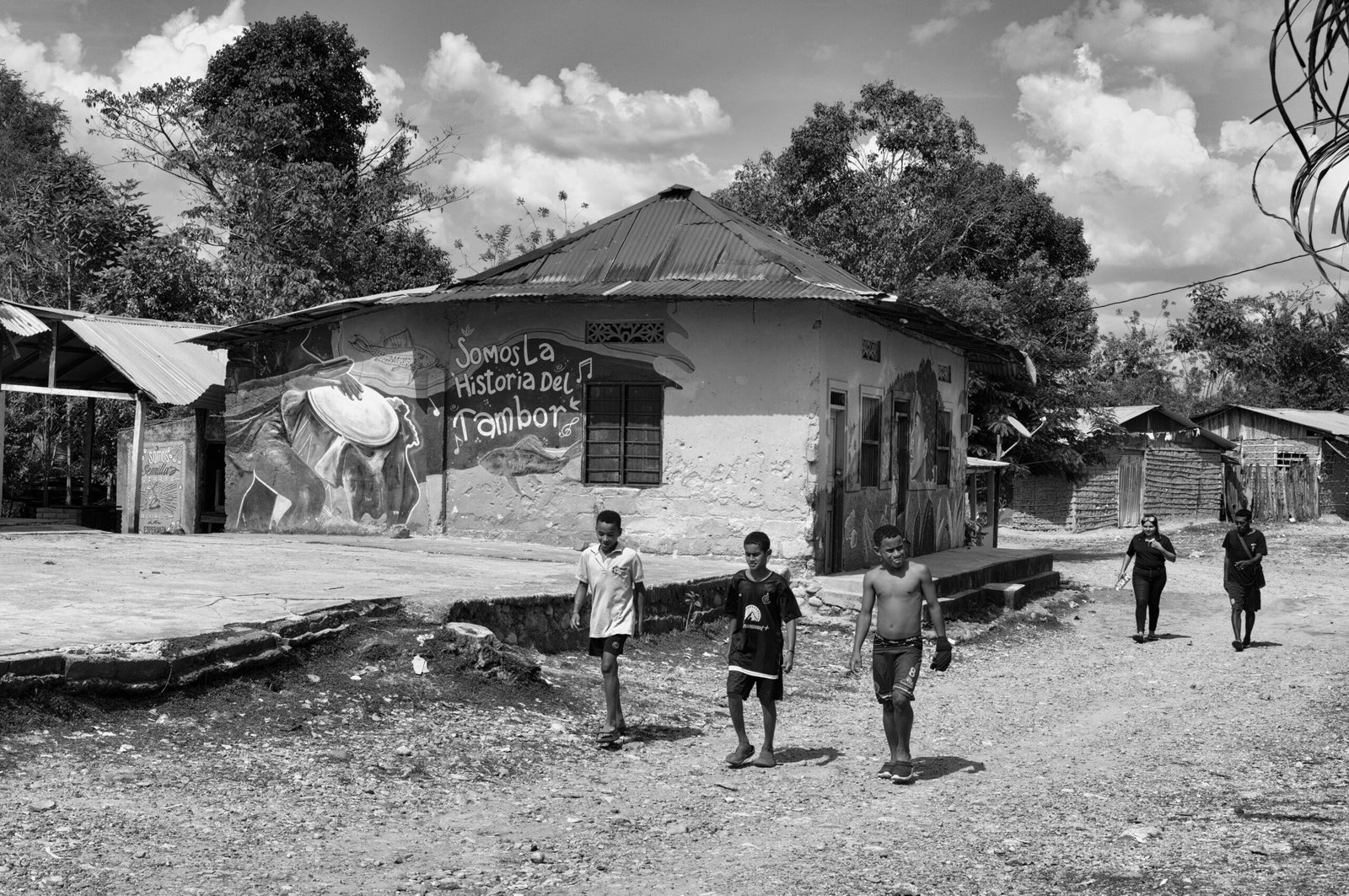
We arrive in San Cristóbal, at the foot of Cerro Maco, in the municipality of San Jacinto. There, the Eladio Ariza Black Communities Community Council resists across 2,325 hectares that embody centuries of dispossession. From bipartisan violence to the paramilitary offensive of the 1990s, this territory has been the scene of occupations, displacement, and enforced silence.
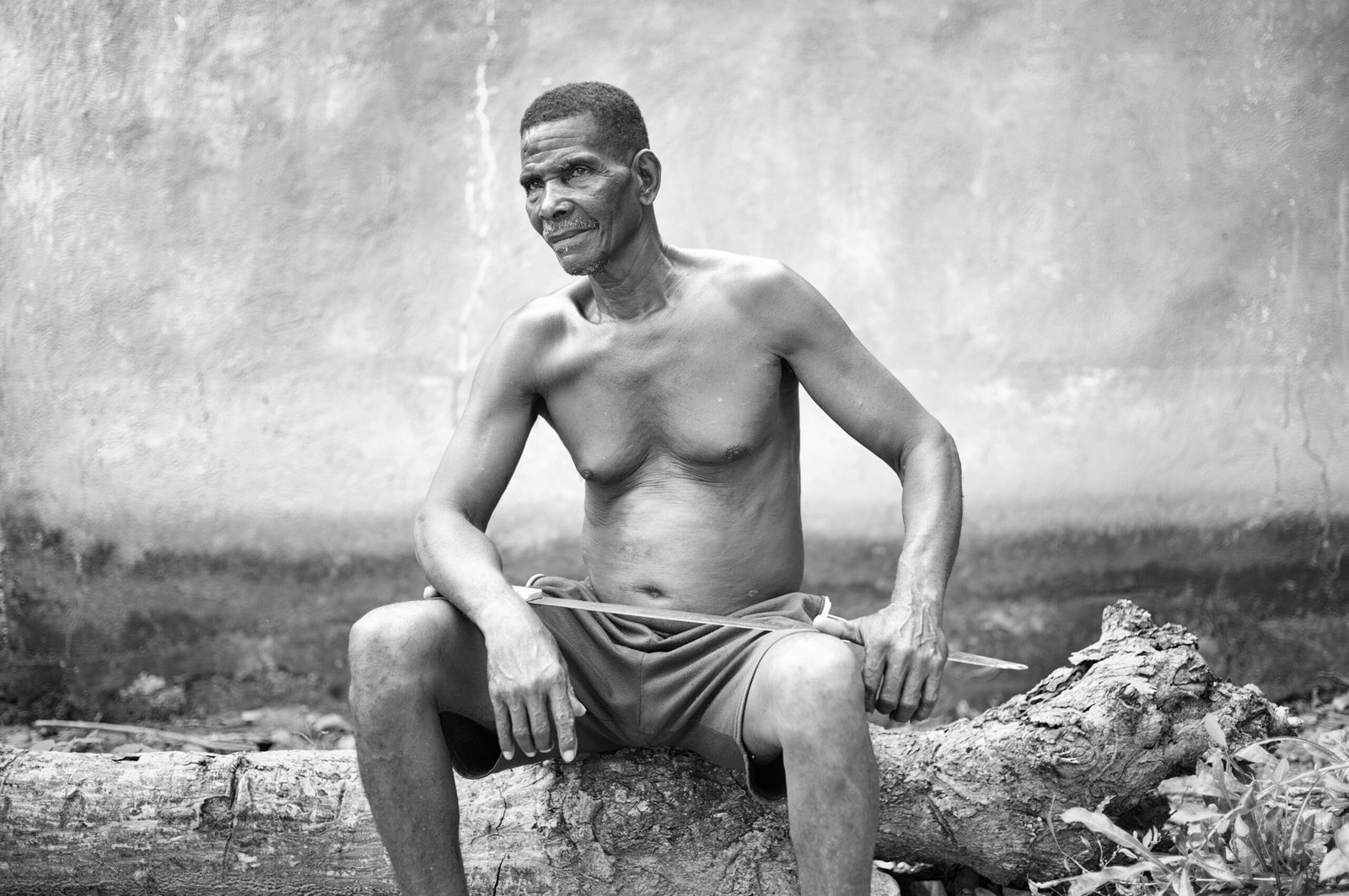
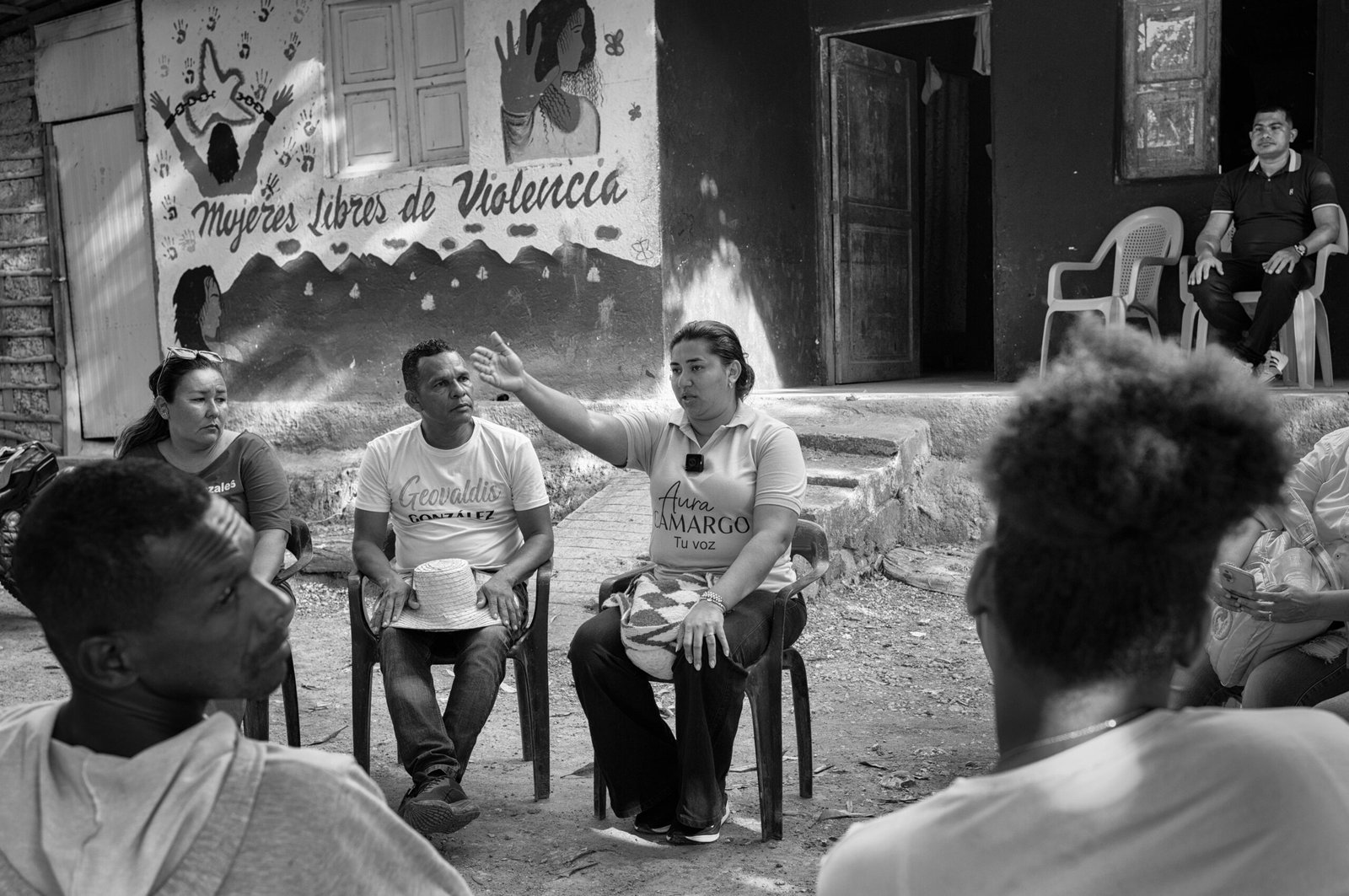
Residents receive us under a palm-roof shelter. For them, these elections are decisive. One community leader takes the floor:
“These elections matter because they are legislative. The laws enacted will govern us nationwide. We need whoever arrives to understand the people, the peasantry, Black communities, and pluriethnic, rural diversity. But if that understanding does not translate into concrete decrees and laws, we will not move forward or see real benefits.”
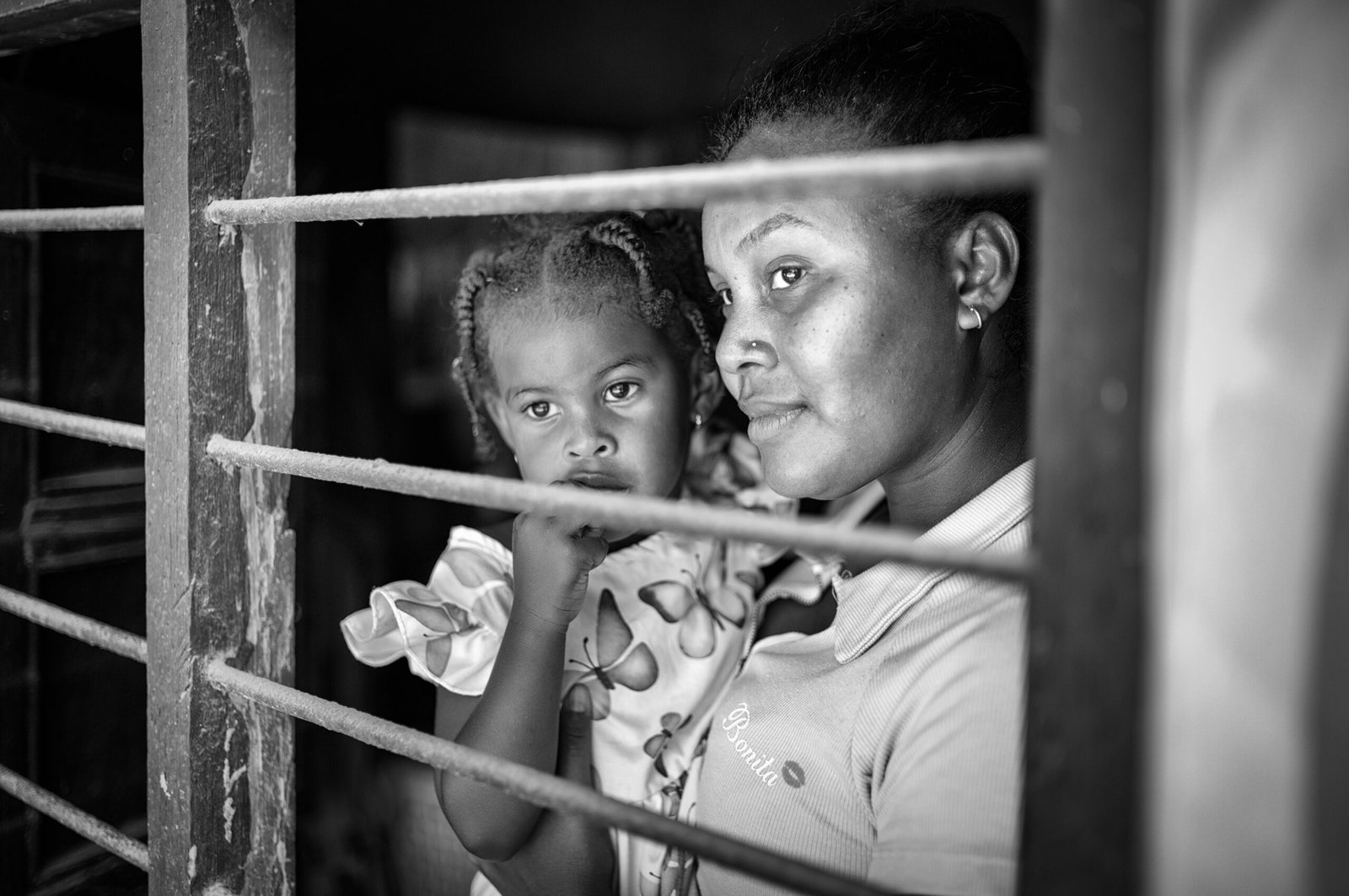
Aura and Geovaldis listen. They take notes. Then they present their proposals. They do not speak in generic promises: they speak of land restitution, collective land titles, and halting the expansion of oil palm plantations that have been closing in on communities.
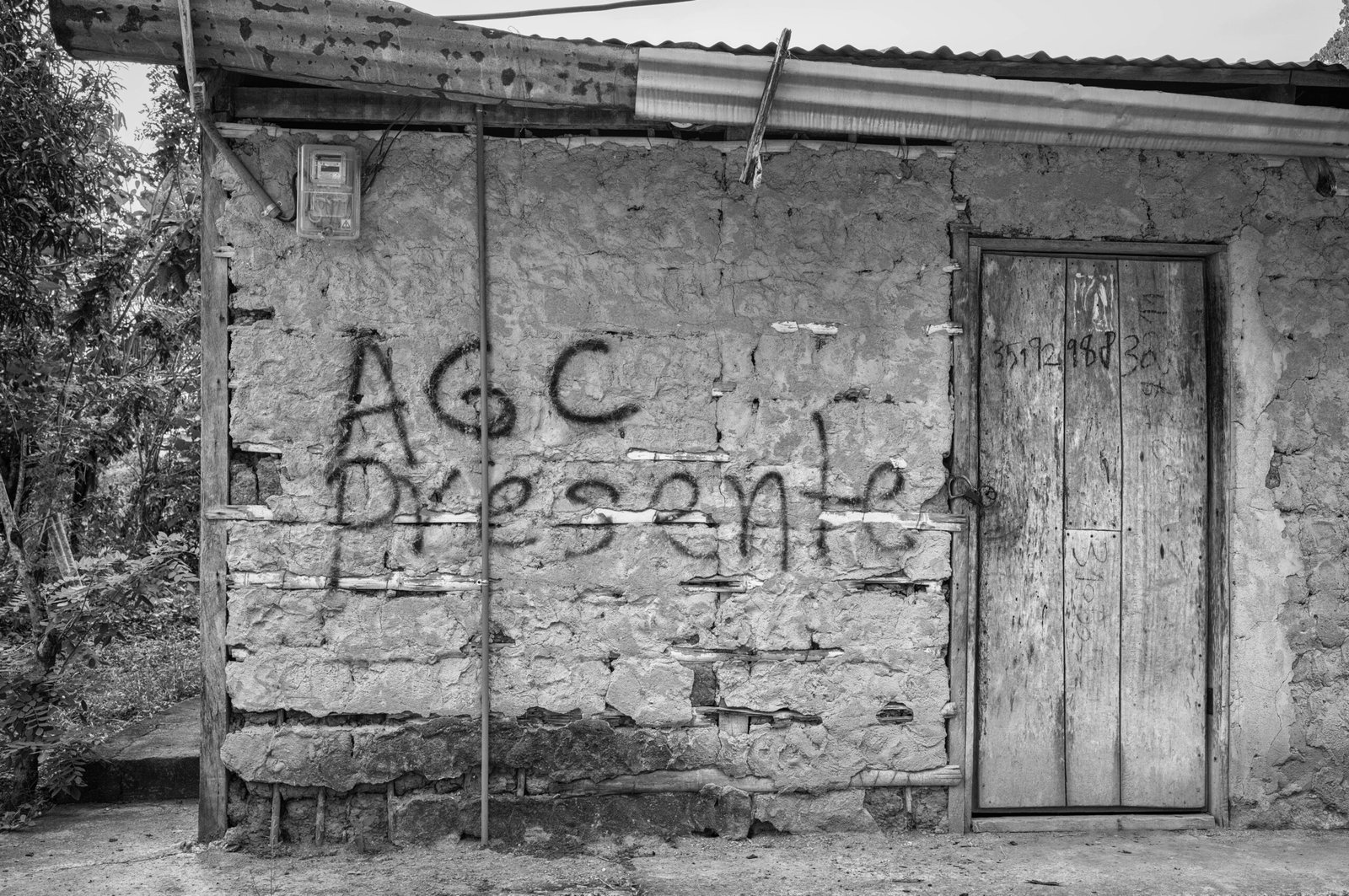
As we walk through San Cristóbal, reality asserts itself: posters of traditional candidates cover mud-brick walls; graffiti from the Gaitanista Self-Defense Forces of Colombia (AGC) breaks into daily life.
Second stop: La Suprema
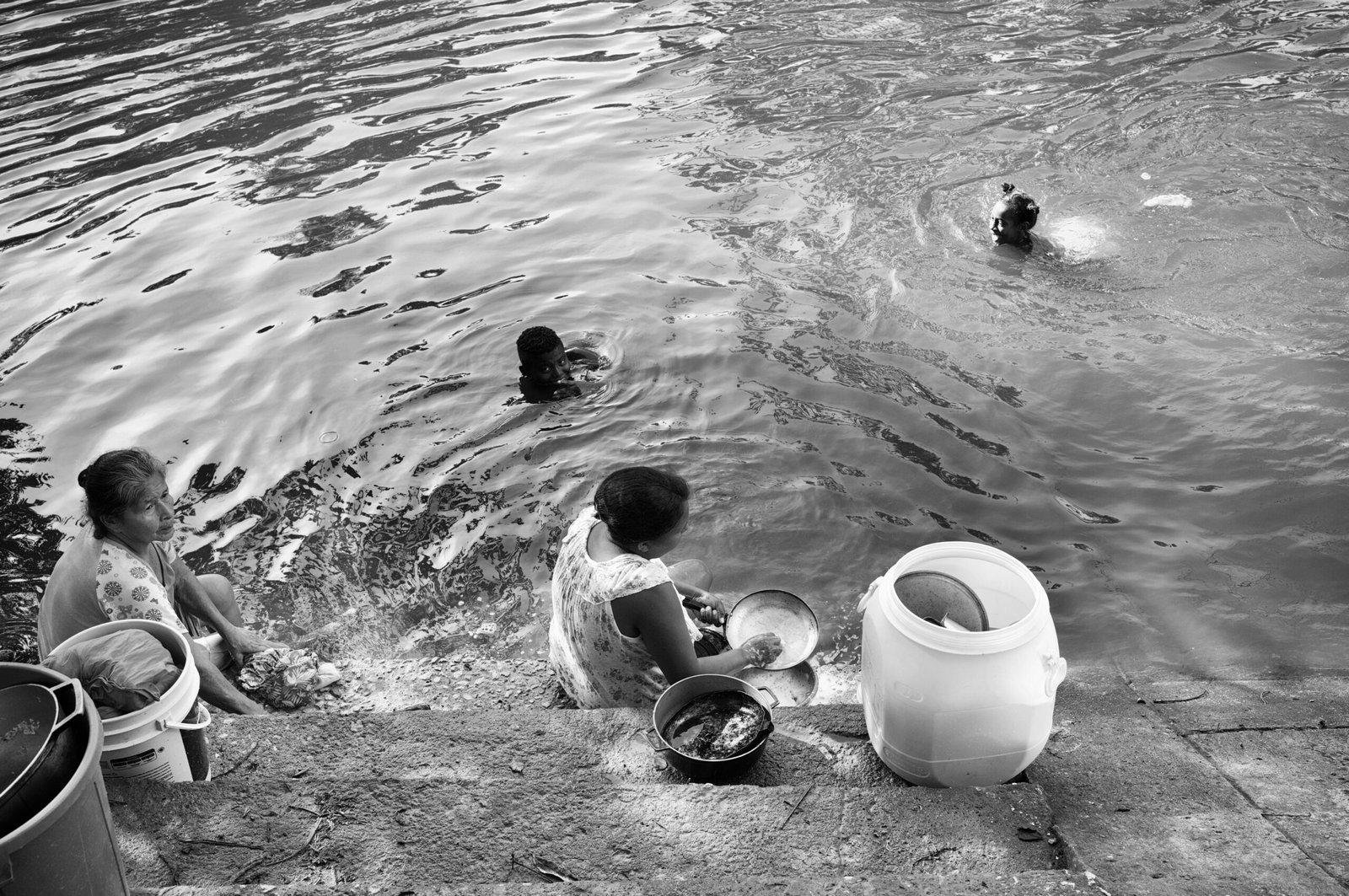
From San Cristóbal, the road descends toward La Suprema, a village in the township of Matuya, in María La Baja. Here the struggle has a concrete name: water.
For years, the community has denounced contamination of water sources, the closure of historic pathways, and damage associated with the expansion of oil palm monoculture. Companies such as Oleoflores, one of the most influential palm groups in Colombia’s Caribbean region, have been singled out by communities for conflicts related to land and water.
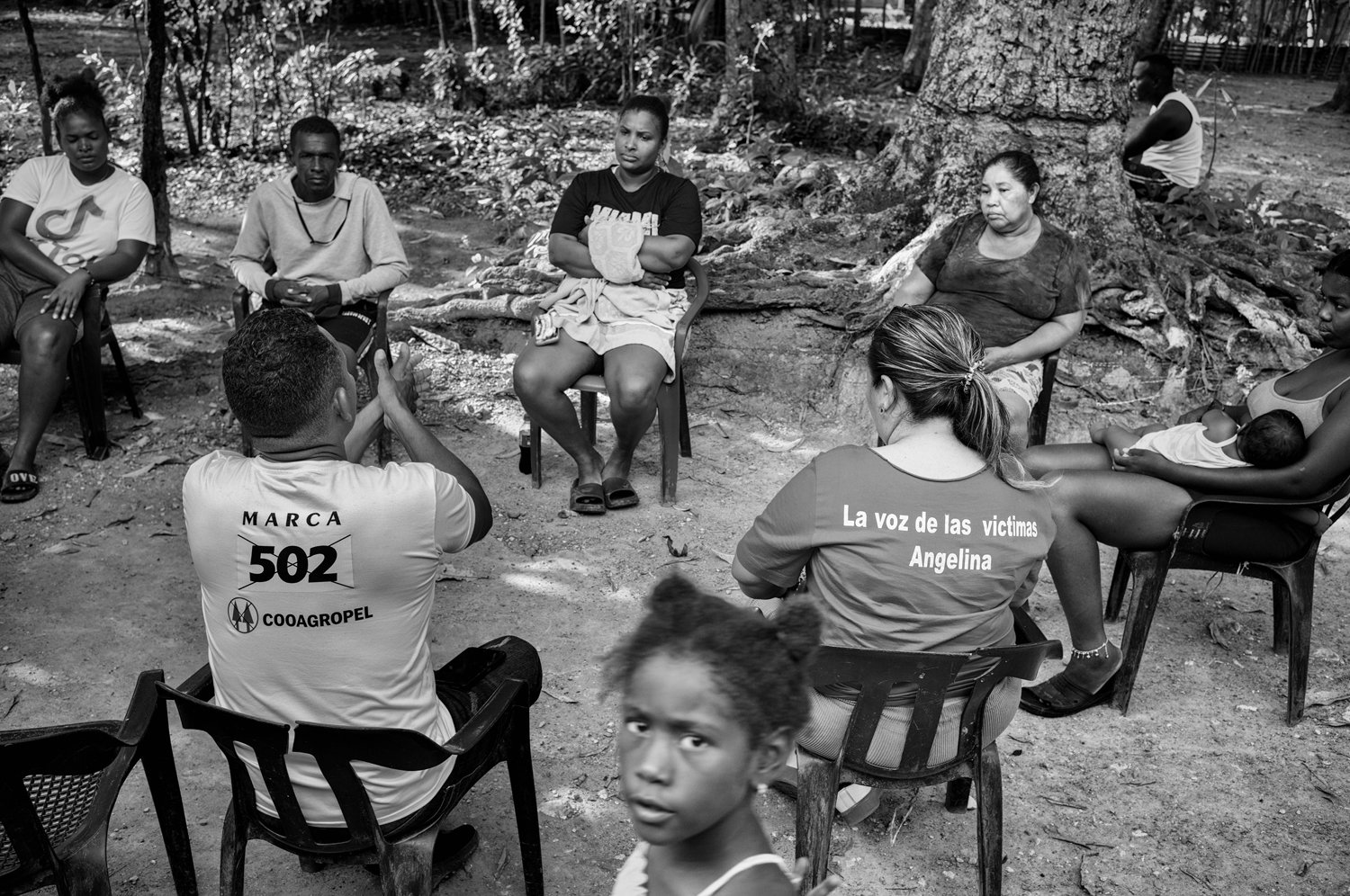
After sitting in a circle under the sun, listening to the community, and presenting their candidacy, one thing becomes clear: violence does not always require weapons. Sometimes it takes the form of state silence, judicial exhaustion, and daily obstacles to exercising basic rights—including the right to vote.
Campaign under pressure
Aura and Geovaldis’ campaign advances amid intersecting and mutually reinforcing risks. It is not only the armed threat that persists in the territory, but also political barriers, economic inequality, and structural obstacles that condition every step they take.
Montes de María remains a region with the presence of armed groups. Reports from the Ombudsman’s Office point to the hegemonic control of the Gaitanista Army of Colombia in several areas.
Geovaldis acknowledges the risk:
“Of course there is the possibility of an attack against us. I have been a critical leader who has challenged political machines, but I had never entered electoral politics before. Today there is a risk against our integrity and against the integrity of the leaders who are carrying out civic education in the territory.”
Armed threat is compounded by structural inequality. They lack political machines and robust financing. The state advances meant to guarantee mobility in rural zones have not been disbursed.
Aura says it plainly:
“This campaign has been sustained by organizations, communities, and communal kitchens. There are real limitations to the effective participation of women and community leaders.”
Being a woman in politics adds another layer:
“Being a candidate today means confronting limits that men do not experience. For us, the weight of motherhood, the home, and caregiving appears.”
An agenda born from the territory
Aura insists her candidacy is not an individual project:
“I believe I am a candidate not because I am Aura, but because of what Montes de María represents. I am a riverine, peasant, Black woman. This campaign is born from the needs of the territories, for the territories, and with the territories.”
Her legislative agenda is structured around five pillars built from years of community work: land and territory with environmental justice and an ethnic and gender lens; comprehensive reparation; youth and intercultural rural education; mental health; and human security.
“We cannot speak of land without speaking of real restitution. We cannot speak of reparation without including women heads of household and ethnic communities. We cannot speak of development without speaking of mental health,” she explains.
Why the world should pay attention
For Geovaldis, what happens in these elections has implications beyond Colombia’s borders:
“We must pay close attention to these elections in Colombia because history is already being made. If we do not have a strong legislative team that thinks about life, land, nature, and humanity, whichever president is in office will face difficulties.”
As the sun sets behind the hills, Aura expands the call:
“International observation in rural areas is extremely important, because that is where elections are won or lost. If we have international observers who can verify the process, we prevent traditional political machines—many historically linked to drug trafficking and regional clans—from stealing the elections.”
For her, the international gaze should not only observe the electoral process but understand the political tensions shaping the country and the external influences that have historically weighed on Colombia.
“When global powers like the United States intervene, they often try to fragment participatory democracy in countries around the world. Their historical logic has been divide and rule. The greater the fragmentation in territories, the easier it is for them to achieve their objectives.”
For Aura, what is at stake in these elections is not merely who will occupy a seat in Congress, but a deeper dispute between two ways of understanding the country:
“The far right is using every strategy to claim they are right and that we—Black men, Black women, ordinary people who have historically not held positions of power—are not. They have not allowed this presidential term to govern in peace because they insist that oligarchies, elites, and mafias are the only ones who are right. But what they have left behind is destruction and impoverishment; what they have brought to our territories is a new form of enslavement.”
Yet if there is one thing clear in Montes de María, it is that resistance is not new. Aura speaks with the certainty of someone who knows her history:
“Colombians possess deep capacities for resistance, resilience, and persistence. We have built dignity from who we are and for who we are. Black men and women have made structural contributions that have transformed public policy and changed the course of our country. We are not only culture, music, or gastronomy.”
Democracy from the community
While in major cities the campaign is measured in billboards and televised debates, in Montes de María it is measured in kilometers walked under the sun. It is measured in assemblies, in memory, in trust. It is measured in communal kitchens sustaining a campaign without financing.
Here, politics does not descend by helicopter. It walks the dirt road.
On March 8, Colombia will elect a new Congress. But in Montes de María something more intimate and more historic will be decided: whether the voice of those who survived the war will continue to have its own seat at the center of power, or whether that window will close permanently.
Colombia attempted something unprecedented: to transform reparation into political representation. To allow those who endured the war to legislate the future. That experiment now enters its final phase.
The question that remains open is simple and profound: can political representation born from victims survive in a system marked by inequality, violence, and economic power?
And that answer should not be indifferent to the world.