
The Anthropocene as a Crisis of Reciprocity
Beyond geology, the Anthropocene reveals a rupture in relational balance. From Iceland’s lava fields to the night of Yasuní, this essay questions the narrative that places humanity at the center.
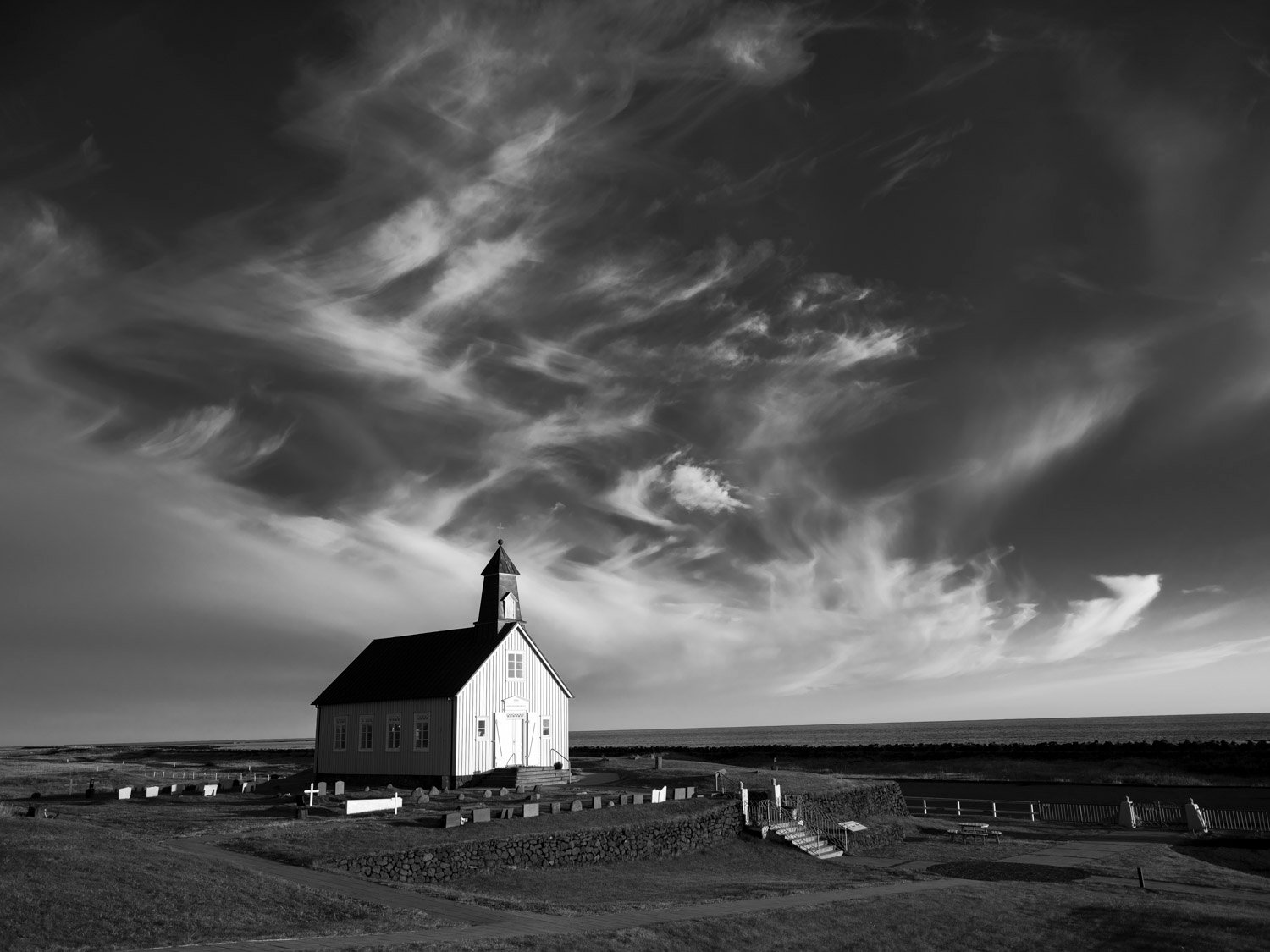
Strandarkirkja is a small church on the southern coast of Iceland. Legend has it that in the twelfth century a group of sailors, caught in a colossal storm and on the verge of shipwreck, vowed to build it if they survived (Selvogur).
In this place, two opposing visions of the world and of nature collide. On the one hand stands the drive of all monotheistic religions to eradicate idolatries and polytheisms. The sole source of all that exists, the only creator, is God—unique, indivisible, and omnipotent. On the other hand are the beliefs shared by many Celtic and Viking peoples, who granted presence and agency to distinct elements of nature: Þórr, or Thor, god of thunder; Njörðr, or Njord, god of the seas and the wind; the Jótnar, giants of fire, ice, and mountain.
The idea that the world is animated—that nature possesses its own capacity for response, governance, and decision—was systematically extirpated from Western thought.
Most Icelanders are Lutheran, yet in Reykjavík untouched plots of land are preserved so that gnomes may dwell there. Many still believe in the Huldufólk, the hidden people of elves, gnomes, and other benign or malevolent beings who share life with humans.I was in Iceland in 2024. Minutes from Strandarkirkja, Route 427 was closed. Helicopters hovered incessantly over the coast; police officers and firefighters prevented anyone from approaching Grindavík, the small town threatened with disappearance by the fury of the volcano Stóra-Skógfell. It is a ritual that repeats itself year after year: fire rising from the depths of the earth, the overwhelming and persistent ice, the wind that unsettles the sea, the cold that defeats even the most resilient. Until the ninth century, when Ingólfur Arnarson founded what is now Reykjavík, Iceland was thought to be uninhabitable (Kristinsson, 2026).
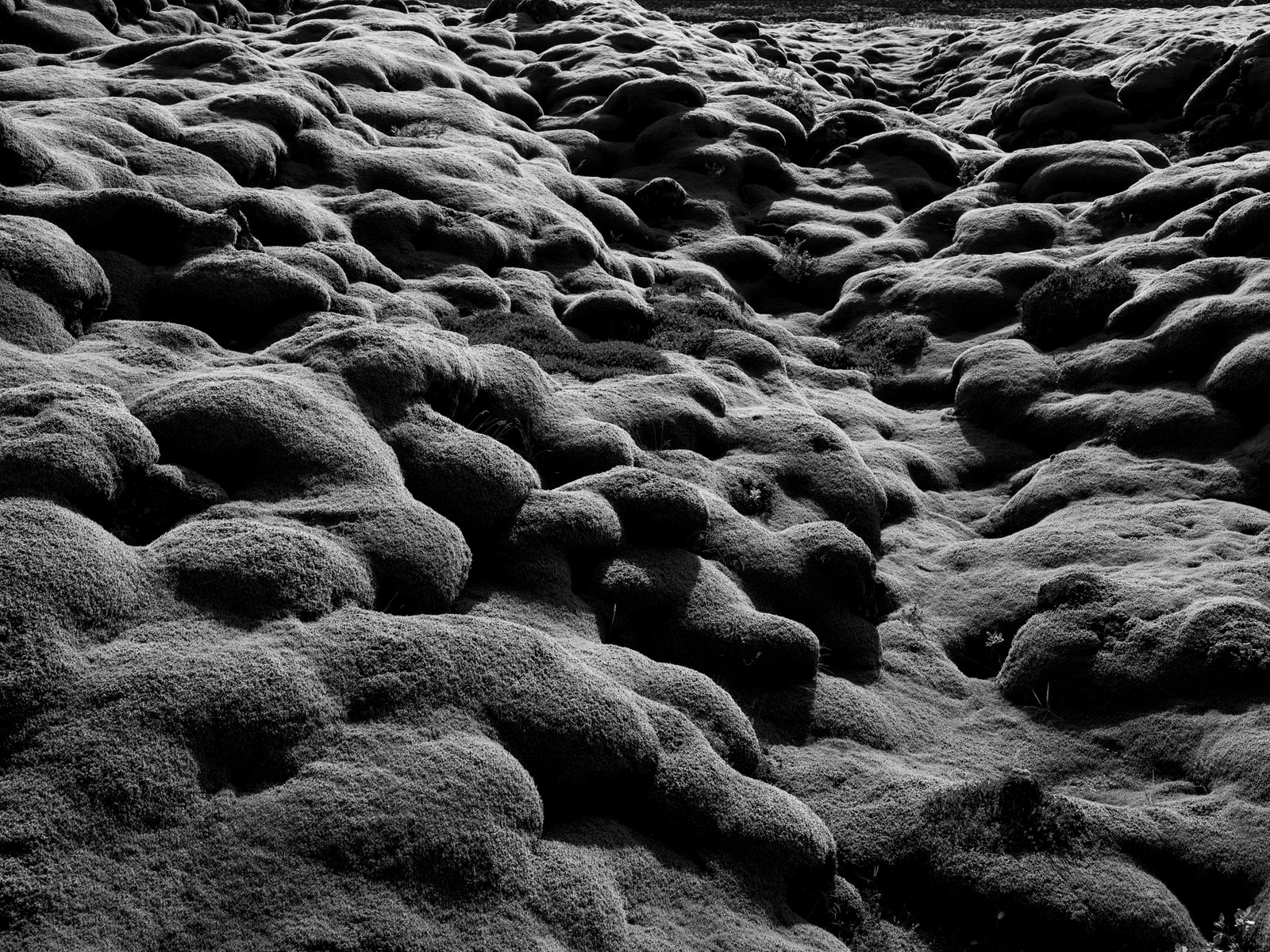
I have experienced the sensation of standing at the threshold of a different geological time in very few places in the world. There, in those volcanic expanses of southern Iceland, where no human trace is perceptible, one encounters vast fields of petrified lava, covered with a moss so systematic and persistent that not a single square centimeter is devoid of life. I find myself looking into a time long before the existence of humanity.
In that brutal wind I perceive the indifference—or perhaps the internal logic—of a land that preceded us and will surely outlast us. Moss is one of the oldest forms of life on Earth. It has no roots. It possesses neither a vascular system, nor flowers, fruits, or seeds. It is minute. Its wonder and diversity can only be discovered if one approaches with a magnifying glass and allows oneself to look at the world from its diminutive perspective (Kimmerer, 2003).
Scientists estimate that mosses have been here for approximately 470 million years, and that they played a fundamental role in cooling the planet, eventually making life possible (Ghosh, 2012). The power of moss lies in its intimate adaptation to place, in its inhabiting that delicate frontier between air and earth. It has chosen to colonize these unimaginably complex fields—filled with cavities, ridges, and minute valleys formed by the cooling of once-fluid, almost liquid lava.
There, in those fields, lie the probable recipes of life itself: the heat of volcanoes, water filtering through lava, minerals reacting with one another, the relentless energy of wind and fire. Over time, those elemental forces made it possible for the first protocells to begin to form.
We humans are a spark in the night of time, a flash, a lightning strike. Although today one can see from space the lights of our cities, we know perfectly well that when our species disappears—and it will disappear, because at some point our planet will no longer be able to sustain us—the profound and mysterious night of the more-than-human will return.
When we speak of the Anthropocene, rather than a great geological era, I understand it as an ecological phase—a rupture of reciprocity among living beings caused by the shortsighted preeminence of our species. That violation of nature is not a geological, cosmic, or theological event, but a clumsy stumble we inflict upon ourselves: will we drink oil, eat money, breathe electromagnetic waves?
The term Anthropocene was introduced by Paul J. Crutzen and Eugene F. Stoermer in 2000 to describe the growing impact of human activity on the Earth system (Crutzen & Stoermer, 2000). Crutzen later developed the idea in Nature, suggesting that human influence had become a geological force comparable to natural processes (Crutzen, 2002). From its origin, the Anthropocene was a conceptual proposal before becoming an attempt at formal stratigraphic recognition.
However, in 2024 the International Commission on Stratigraphy took a binding decision regarding the Anthropocene as a geological epoch:
It is with the delegated authority of the IUGS President and Secretary General and on behalf of the International Commission on Stratigraphy (ICS) that the vote by the ICS Subcommission on Quaternary Stratigraphy (SQS) to reject the proposal for an Anthropocene Epoch as a formal unit of the Geologic Time Scale is approved (…).
Despite its rejection as a formal unit of the Geologic Time Scale, the Anthropocene will nevertheless continue to be used not only by Earth and environmental scientists, but also by social scientists, politicians, economists, and the public at large. It will remain an invaluable descriptor of human impact on the Earth system (International Commission on Stratigraphy [ICS], 2024).
The decision is significant. It is not merely a technical debate among geologists, but a refusal to formally inscribe the human being as a structural marker of deep time. The Anthropocene is not, at least for now, an established scientific unit, but a proposal—a narrative that is ecological and cultural more than technical.
When James Hutton (1899/1795), one of the founders of geology, argued that the processes shaping the Earth are slow—astonishingly slow—the reaction was fierce. His contemporaries understood the implications: if geological time stretches into a nearly inconceivable past, the human being no longer occupies the center of Earth’s history (Hutton, 1899/1795; Kirwan, 1799). The idea of an “abyss of time” in which humanity was absent was vertiginous. Hutton displaced the human being from the center of time, just as Copernicus displaced us from the center of space.
The concept of the Anthropocene seems to move in the opposite direction. It insists that our presence must be inscribed within the geological scale—that the brief interval of our existence, intense, destructive, transformative, deserves to become an epoch.
But the history of the Earth does not require our validation. Life appeared approximately 3.8 billion years ago. Homo sapiens has existed for roughly 300,000 years. If we compress the history of the planet into a single year, our species would emerge on December 31, only minutes before midnight. To claim that this fleeting instant redefines the totality of geological time reveals, perhaps, more about our anxiety than about the Earth itself.
The Garden of Carolina
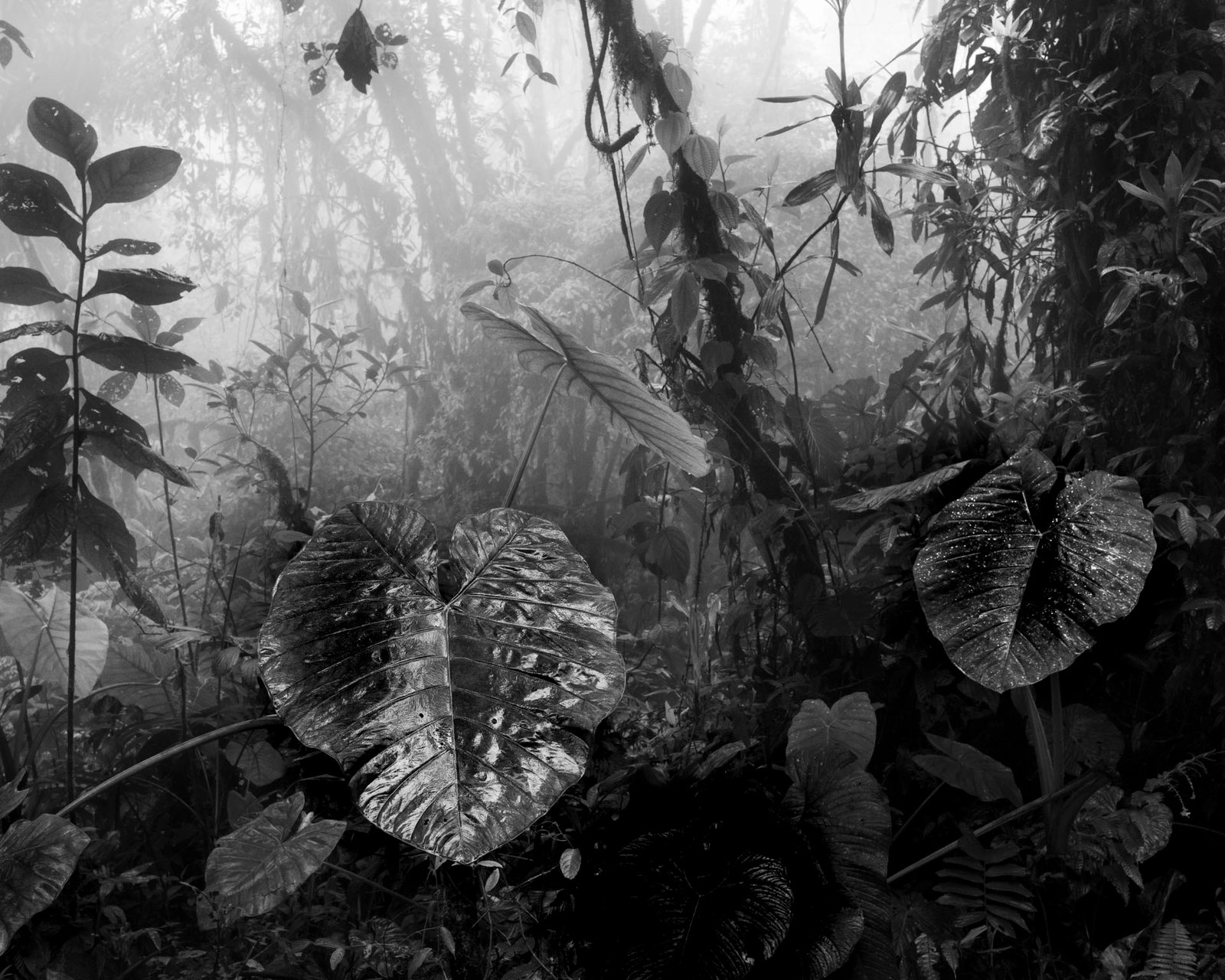
My beloved Carolina—my gardener and architect of landscapes—died in a traffic accident in 2013. She maintained that it is impossible to defend nature through reason alone, that conservation must first and foremost be an act of tenderness.
I spent countless hours with her while she designed or worked in her gardens in rubber boots. She would say:
How is a garden made? Slowly, with care and with enormous tenderness. In the same way that affection grows, in the same way that a house is converted into a home. Just as people gradually put so much of themselves in our heart that one day they are there to stay.
There is nothing magical or automatic about it, making a garden requires perseverance. First its outlines are drawn; it is given an easily understood and human dimension. Then it is sown, it is watered, it is awaited, it is trimmed and then again awaited. Constructing a garden is an act of appropriation, a personal dialogue with nature and its cycles.
So if a garden is to be an actual garden, I must become its gardener. I must domesticate it. Make it mine. Mine in affection, mine in invested time, mine in my ability to evoke it when I am not there (Corral Vega, 2013, p. 8).
That idea—that we, the conscious, the responsible, the progressive, are the ones who care for nature—strikes me now as profoundly arrogant. It is nature that cares for us all, for those who claim to defend her and for those who do not. She gives us the food that nourishes us, the water that restores our fluidity, the air that revitalizes our blood. She allows us, sustains us, and supports us, like every precious mother.
Noctalgia
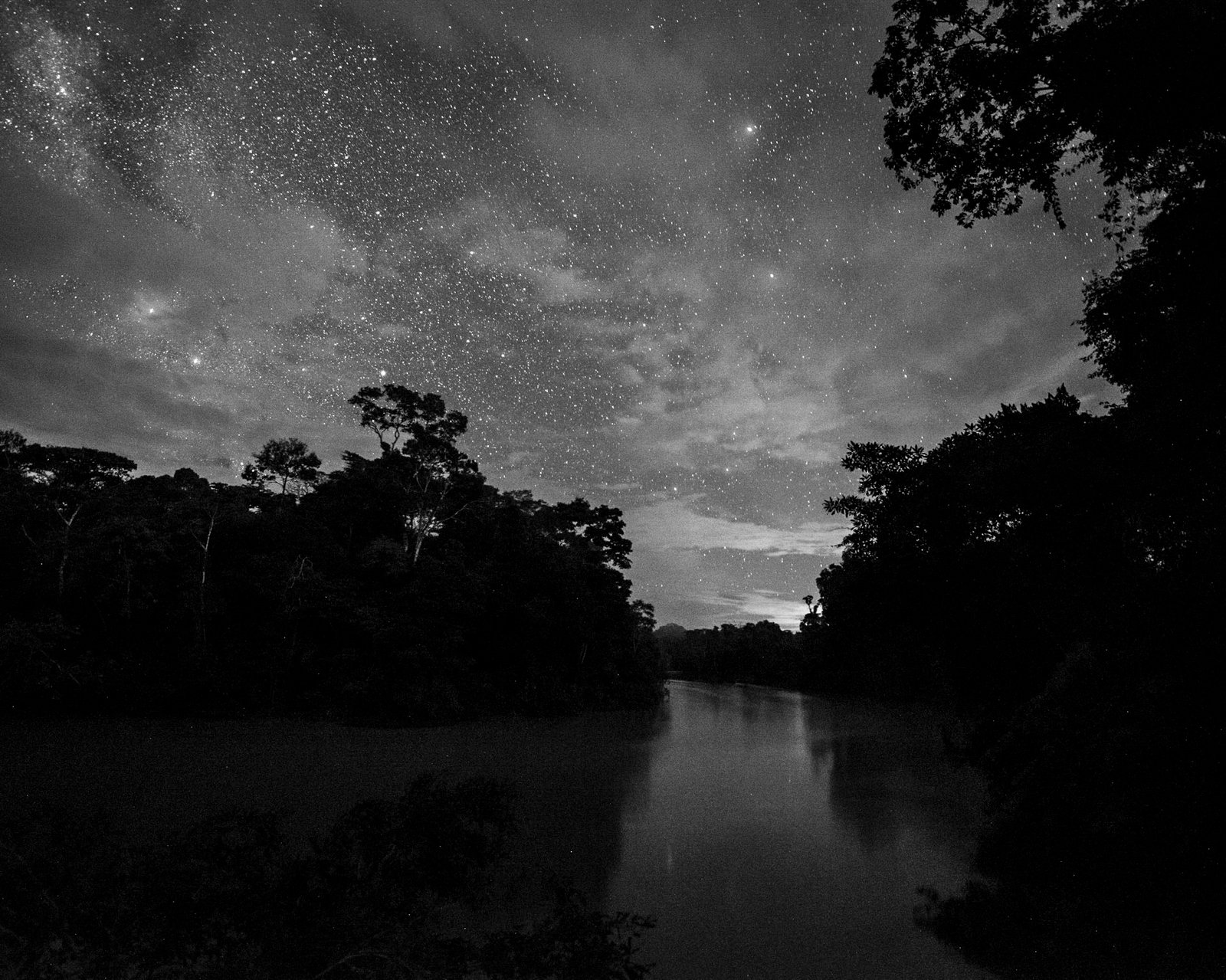
I recently traveled to Yasuní, to the station of the Universidad San Francisco de Quito, a place that always moves me deeply. The hum of the generator stopped, and the sound of the tropical forest became a seething, shrill swarm of invisible creatures. The Milky Way stretched lazily across the canopy. There, beside the river, in absolute darkness, I once again felt like a defenseless child, confronted by mystery. The tropical forest is life in all its force—the delirious complexity of an indecipherable and joyous puzzle in which we are merely one more piece. It is the biological antipode of the elegant simplicity of Iceland’s volcanic plains.
I breathed deeply; the humid, heavy air felt foreign, almost unsuitable for humans. Inhaling brought discomfort, exhaling relief. I was in the land of innumerable insects, of pumas, anacondas, capybaras, sloths, toucans, spider monkeys, glass frogs, and that indescribable explosion of green. A world that connects and converses directly with the cosmos, requiring no human intermediaries. I was immersed in a darkness so unsettling that my eyes could register nothing. I could not tell with certainty what was above and what was below. I had the sensation of floating in a cosmic void. I felt like an intruder, an impostor—a human being who wished to feel curiosity and could only feel fear before the impenetrable night.
The sound of the forest, that unspeakable tumult, is a symphony of diversity. Why—toward what end—so much diversity?
Long nighttime exposures from my camera revealed that even there, in the heart of the Amazon, oil wells and small settlements fractured the darkness, projecting a pinkish glow into the sky.
Donna Haraway (2016) insists that we need stories that teach us how to live and die well on a wounded planet:
Grief is a path for understanding the life and death we share and that entangle us; we humans must grieve, because we are part of this unraveling fabric. Without sustained remembrance, we cannot learn to live with ghosts and thus cannot think. Like the crows and with the crows, living and dead, our fate is bound in one another’s company.
In our hyper-illuminated cities, where everything can be distinguished, the mystery of the night sky is devoured by a limited, milky, predictable ceiling. Instead of the unfathomable expanse of a star-filled night, there is artificial light—the overwhelming glow of our cities and their lamps. With clarity we regain control; ghosts and invisible creatures withdraw; the bodily sensation that we exist in the cosmos—unfathomable and without final explanation—disappears.
The word noctalgia—a combination of nocturnal and nostalgia—was proposed by Vanessa Lowe (2024) in her podcast Nocturne. It names that profound longing felt by urban dwellers, separated from the night and its subtle cosmic sparks, distanced from the wild, untamed, dark, telluric world.
Narratives restore complexity and allow us to imagine forms of coexistence. There is a world beyond the human, a symphony of invisible creatures that do not need us in order to exist and that, nevertheless, sustain us. The greatest human arrogance is to believe that we are the protagonists of the story.
References
Cormack, M. (2009). The economics of devotion: Vows and indulgences in medieval Iceland. Viking and Medieval Scandinavia, 5, 41–63. http://www.jstor.org/stable/45019119
Corral Vega, P. (2013). Un jardín para Carolina. In Jardines silvestres del Ecuador (p. 8). Harmonia Terra.
Crutzen, P. J., & Stoermer, E. F. (2000). The “Anthropocene.” Global Change Newsletter, 41, 17–18.
Ghosh, P. (2012, January 31). Humble moss helped to cool Earth and spurred on life. BBC News. https://www.bbc.com/news/science-environment-16814669
Haraway, D. J. (2016). Staying with the trouble: Making kin in the Chthulucene. Duke University Press.
Hutton, J. (1899). Theory of the Earth, with proofs and illustrations (Vol. 3). Geological Society. (Original work published 1795)
International Commission on Stratigraphy. (2024, March 5). Joint statement by the IUGS and ICS on the vote by the ICS Subcommission on Quaternary Stratigraphy. https://stratigraphy.org/news/152
Kimmerer, R. W. (2003). Gathering moss: A natural and cultural history of mosses. Oregon State University Press.
Kirwan, R. (1799). Geological essays. D. Bremner.
Kristinsson, V. (2026, February 9). Iceland—Viking settlement, geothermal energy, volcanic activity. Encyclopaedia Britannica. Retrieved February 13, 2026, from https://www.britannica.com/place/Iceland/History#ref662192
Lowe, V. (2024, June 1). Noctalgia [Podcast]. Nocturne. https://www.nocturnepodcast.org/noctalgia/
Selvogur, Ölfus, Strandarkirkja Church—Mysteries of Iceland. (n.d.). Mysteries of Iceland. Retrieved February 13, 2026, from https://mysteriesoficeland.com/greinar/strandarkirkja